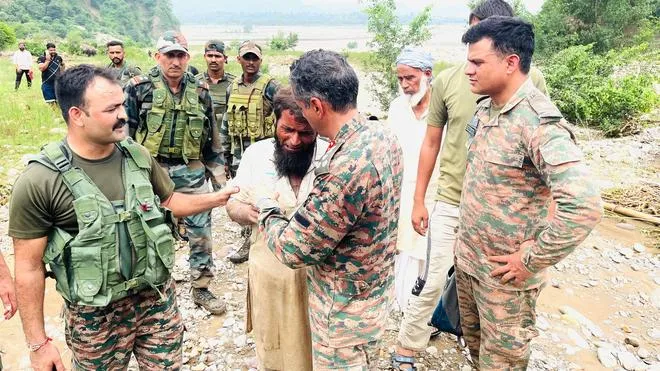
Severe cloudbursts followed by landslides wreaked havoc in Kathua district of Jammu and Kashmir, causing widespread damage and claiming at least seven lives. The sudden deluge triggered flash floods, destroyed houses, and left several villages cut off, exposing once again the fragile topography of the Himalayan region. Authorities have launched rescue and relief operations, but challenging terrain and continued rainfall are complicating efforts. The tragedy underscores the growing vulnerability of mountain communities to extreme weather events, which scientists increasingly link to changing climate patterns.
---
A Night of Destruction
The disaster struck when heavy rains lashed parts of Kathua, triggering cloudbursts in remote villages and causing landslides that swept through homes and agricultural land. Eyewitnesses described scenes of panic as gushing water and mudslides engulfed houses, trapping residents inside. At least seven people have been confirmed dead, with fears that the toll could rise as rescue teams gain access to remote areas.
Rescue Efforts Underway
District authorities, supported by disaster response forces and local volunteers, immediately launched relief and rescue operations. However, persistent rainfall and unstable terrain are slowing efforts to clear debris and reach stranded villagers. Heavy machinery has been deployed to reopen blocked roads, while temporary shelters are being set up for families who have lost their homes.
Infrastructure and Connectivity Hit
Landslides have severely damaged road networks, cutting off access to several hamlets in the district. Electricity and communication lines were disrupted, further complicating coordination of rescue operations. The damage to infrastructure has raised concerns over the preparedness of hill districts in facing recurring natural calamities.
Rising Climate Concerns
Experts warn that the Himalayan region has become increasingly prone to extreme weather events such as cloudbursts, flash floods, and landslides. While these are not new phenomena, their frequency and intensity have grown in recent years. Scientists point to erratic rainfall patterns, deforestation, and unplanned construction as key contributors to the rising vulnerability of mountain communities.
Government Response and Rehabilitation
The administration has announced immediate relief for affected families, including ex-gratia compensation for the next of kin of the deceased. Teams are conducting damage assessments to determine the scale of losses to property and farmland. Officials have also emphasized the need for long-term mitigation strategies, including better forecasting systems, improved infrastructure planning, and awareness campaigns for residents in vulnerable zones.
---
Conclusion:
The Kathua tragedy serves as a stark reminder of the fragile balance between human settlements and the Himalayan ecosystem. As rescue operations continue and survivors attempt to rebuild their lives, the incident underscores an urgent need for sustainable disaster preparedness and resilient infrastructure in Jammu and Kashmir’s mountain districts.
Comments