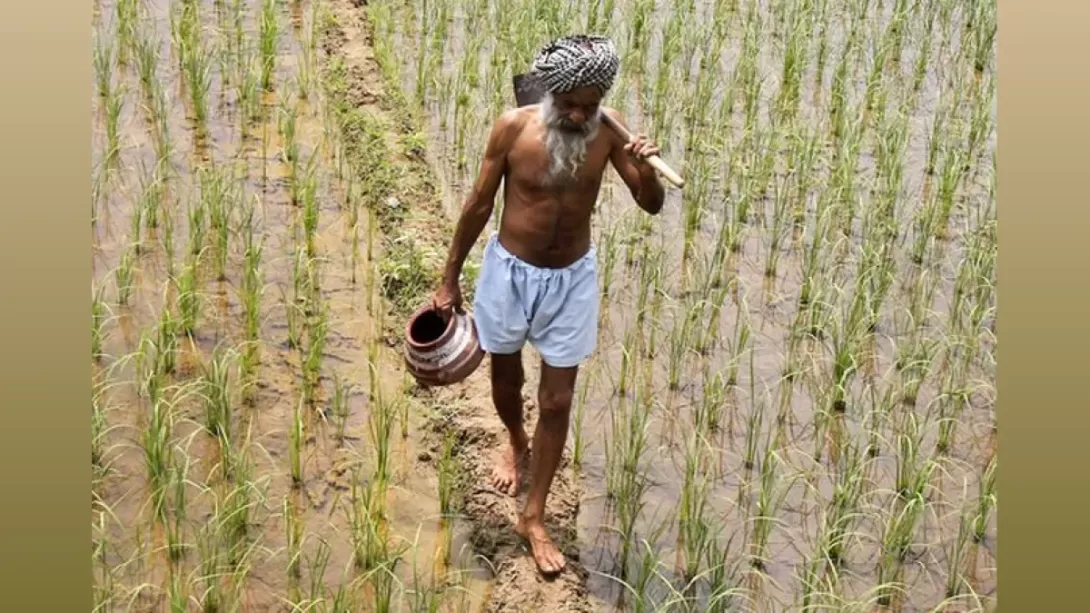
Maharashtra, one of India’s agricultural powerhouses, is bracing for a notable decline in soybean cultivation this year, with the sown area projected to shrink by 200,000 hectares. The drop is rooted in a combination of depressed market prices, erratic rainfall, delayed procurement, and volatile policy decisions on imports. While soybean has long been regarded as a profitable Kharif crop, especially in regions like Marathwada, recent experiences have left farmers disillusioned. Despite the downturn, the state government maintains that seed and fertiliser supplies are adequate, and broader targets for food grain and oilseed production remain intact.
Soybean Loses Favor Among Maharashtra’s Farmers
Maharashtra’s agriculture department has projected that soybean cultivation during the 2025 Kharif season will fall to 50 lakh hectares from 52 lakh hectares the previous year—a decline of two lakh hectares. This reduction is largely attributed to discouraging financial returns from the previous harvest season, which saw farm-gate prices dip well below the minimum support price (MSP).
Although the Union government had declared an MSP of Rs. 4,892 per quintal for soybean, farmers reportedly received prices ranging between Rs. 3,900 and Rs. 4,400 per quintal in the open market. The limited procurement by government agencies, coupled with price manipulation by private traders, has led to widespread disillusionment.
“The MSP is meaningless if procurement doesn’t match production,” said Shrinivas Kadlag, a farmer from Ahilyanagar. “We were left at the mercy of traders who exploit the gap.”
Structural Challenges and Market Pressures
The soybean market has also been influenced by external policy decisions. In previous years, particularly during 2021–22 when domestic prices surged due to increased demand, the All India Poultry Association successfully lobbied for imports of soybean meal. This move, while beneficial to poultry producers, triggered a price crash that hurt soybean growers across the country.
Farmer leaders argue that such interventions disproportionately affect small cultivators. “Soybean to Marathwada is what sugarcane is to western Maharashtra,” said Manik Kadam of the Swabhimani Shetkari Sanghatana. “The government’s inconsistent stance on imports creates price instability that ultimately punishes farmers.”
Moreover, poultry industry players have been accused of strategically working to keep soybean prices in check. The resulting income volatility has prompted many cultivators to consider shifting to alternative crops that promise more stable returns.
Rainfall Uncertainty and Delayed MSP Procurement
Beyond pricing concerns, erratic rainfall and unpredictable weather patterns have played a significant role in reducing enthusiasm for soybean. Crop damage due to unseasonal showers or dry spells has become more common, undermining yield stability. Delays in procurement under the MSP framework have further compounded losses, leading to mounting frustration among cultivators.
Officials concede that poor returns from the previous season, combined with a lack of timely government intervention, may be influencing farmers' decisions to diversify to other crops this year.
Resource Planning and Input Availability
Despite the shrinking soybean acreage, Maharashtra’s agriculture department has assured stakeholders of robust planning and adequate input supplies across all major crops. The state has set a crop sowing target covering 144.97 lakh hectares, which includes cereals, pulses, oilseeds, and cotton.
Seed reserves appear to be healthy. Against a requirement of 19.14 lakh quintals of seeds across all crops, the state currently holds 25.08 lakh quintals. Specifically for soybean, 13.25 lakh quintals of seeds are needed, while the available stock stands at 17.15 lakh quintals.
For cotton, the government has retained a cultivation target of 41 lakh hectares—identical to last year—with 1.22 lakh quintals of seed in stock, exceeding the 82,000 quintals required. Rice cultivation is projected to cover 15.25 lakh hectares, backed by an inventory of 2.92 lakh quintals of seed against a need of 2.19 lakh quintals.
Director of Quality Control, Sunil Borkar, affirmed that rigorous seed inspections will be conducted to ensure only high-quality inputs are used for sowing. “There are sufficient reserves for key crops like soybean, rice, tur, moong, and urad. Quality control will be enforced to protect yield potential,” he said.
Fertiliser Supplies and Production Targets Remain Unaffected
The state has secured a fertiliser quota of 46.82 lakh metric tonnes for the upcoming season, with 25.57 lakh tonnes already in stock. In the 2024 Kharif cycle, total usage stood at 44.30 lakh tonnes, placing current reserves in a comfortable position to meet seasonal demand.
Officials also reiterated their commitment to achieving the state’s food grain and oilseed production target of 204.21 lakh tonnes for the season. “Our logistical preparedness for fertiliser and seed supply remains strong. Farmers should not worry about input shortages,” said an agriculture department spokesperson.
Conclusion: A Crop at a Crossroads
Soybean, once seen as a dependable cash crop in Maharashtra, now finds itself at a crossroads. Plummeting prices, inconsistent policy decisions, and climate variability have all eroded farmer confidence. While the state has taken steps to ensure input availability and maintain overall production targets, the shifting sentiment among farmers signals deeper systemic issues.
Until market mechanisms become more transparent and government procurement more responsive, soybean cultivation may continue to lose ground to alternative crops. As Maharashtra's farmers recalibrate their strategies in pursuit of profitability and sustainability, the future of soybean remains uncertain—but far from irrelevant.
Comments