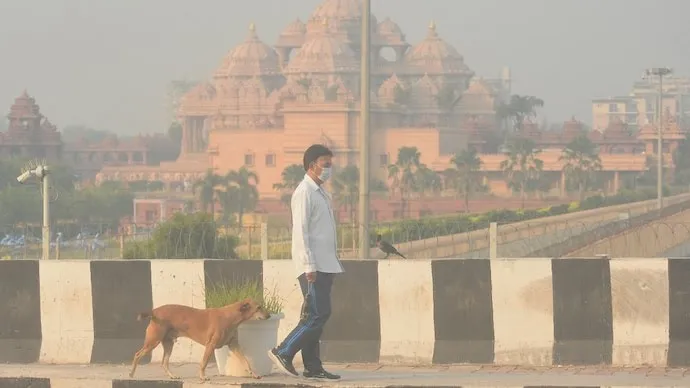
Delhi’s air quality has plummeted once again, marking a significant rise in pollution levels despite recent cloud seeding operations intended to induce artificial rainfall. The initiative, aimed at mitigating smog and improving visibility, failed to yield the expected results as meteorological conditions turned unfavorable. Consequently, the Air Quality Index (AQI) in several parts of the capital crossed the “severe” threshold, prompting health warnings and renewed public concern. Authorities now face mounting pressure to adopt sustainable and effective measures as residents grapple with hazardous air conditions—an annual environmental crisis that continues to challenge both policy and science in India’s capital.
---
A Crisis Deepens Despite Technological Interventions
Delhi’s annual struggle with air pollution has once again escalated, with recent efforts at cloud seeding offering little respite. The operation, which involved dispersing silver iodide and sodium chloride into the atmosphere to trigger rainfall, was expected to help clear particulate matter. However, inadequate cloud formation and fluctuating humidity levels rendered the attempt largely ineffective.
As a result, the AQI readings in major regions, including Anand Vihar, Punjabi Bagh, and Dwarka, surged past the 450 mark—well above the safe limit of 100 set by environmental standards. The failure of the artificial rain initiative underscores the growing complexity of managing pollution in the face of climatic unpredictability.
---
Cloud Seeding: Promise Versus Reality
Cloud seeding, though scientifically viable under ideal conditions, remains a challenging process that depends heavily on natural cloud density and moisture levels. Experts explain that while the technology can amplify rainfall, it cannot generate precipitation in the absence of conducive atmospheric parameters.
The Delhi administration, in collaboration with meteorological scientists, had initiated the experiment as an emergency measure amid deteriorating visibility and rising public health concerns. However, the operation’s limited impact has reignited debate about the efficacy of reactive, short-term solutions in combating the capital’s chronic air quality crisis.
---
Environmental and Health Repercussions
The spike in air pollution has once again pushed Delhi into the global spotlight for poor air quality. The dense smog layer, resulting from vehicular emissions, industrial discharge, and stubble burning across neighboring states, has trapped harmful pollutants close to the ground.
Medical professionals have raised alarms over a surge in respiratory ailments, eye irritation, and throat infections. Vulnerable groups—particularly children and the elderly—remain at heightened risk, with schools advised to limit outdoor activities. Several hospitals have reported an uptick in patients suffering from asthma attacks and chronic obstructive pulmonary disease (COPD) due to the hazardous air.
---
Policy and Accountability: The Broader Question
While the cloud seeding experiment reflects the authorities’ willingness to explore innovative approaches, it also highlights a reactive policy pattern. Environmental analysts argue that sustainable solutions—such as stricter emission controls, investment in clean energy, and regional coordination to manage crop residue burning—are critical for long-term improvement.
The persistent recurrence of toxic smog each winter points to systemic lapses in enforcement and accountability. Despite periodic bans on construction dust and vehicular restrictions under the Graded Response Action Plan (GRAP), the cumulative impact has remained limited. Experts insist that without consistent year-round policy implementation, Delhi’s environmental recovery will remain elusive.
---
Public Sentiment and the Path Forward
Public frustration is palpable as residents continue to endure declining air quality with little visible relief. Many citizens have expressed skepticism over temporary measures like cloud seeding, calling instead for transparent data reporting and stronger cross-state collaboration.
Environmental groups have urged policymakers to focus on renewable energy adoption, improved public transport infrastructure, and stricter monitoring of industrial emissions. The demand for accountability is rising as health and productivity losses linked to pollution continue to inflict economic damage estimated in billions of rupees annually.
---
Conclusion: A Wake-Up Call for Sustainable Action
The failure of cloud seeding to alleviate Delhi’s pollution crisis serves as a stark reminder that technology alone cannot resolve deeply entrenched environmental challenges. It underscores the urgent need for a holistic, science-driven approach that integrates long-term planning with immediate interventions.
As winter intensifies, the capital stands at a crossroads—either to persist with short-lived fixes or to embrace transformative environmental governance. For millions of Delhi’s residents, clean air is not merely a comfort but a fundamental right—one that demands both political will and collective responsibility.
Comments