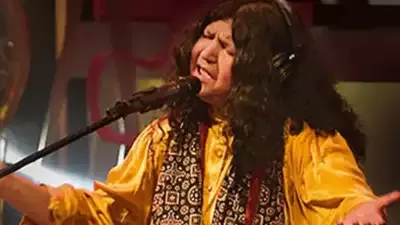
Renowned Pakistani Sufi singer Abida Parveen's Instagram account has been restricted in India, a move attributed to compliance with a legal request. This action is part of a broader wave of restrictions on Pakistani celebrities' social media profiles following the deadly terrorist attack in Pahalgam, India, on April 22, 2025. The attack, which resulted in the deaths of 26 civilians, has led to heightened tensions between India and Pakistan, prompting the Indian government to take measures against Pakistani digital content creators and influencers.
The Pahalgam Attack: A Catalyst for Diplomatic Strain
On April 22, 2025, a mass shooting occurred in the Baisaran Valley near Pahalgam, Anantnag district, Jammu and Kashmir. The assailants, identified as five armed militants, opened fire on tourists, resulting in 26 fatalities and 20 injuries. The majority of the victims were Hindus, and the attack is considered the deadliest on civilians in India since the 2008 Mumbai attacks. The Resistance Front (TRF), an offshoot of the Pakistan-based terrorist group Lashkar-e-Taiba, initially claimed responsibility, citing opposition to Indian government policies allowing non-Kashmiris to settle in the region. However, four days later, the group retracted its claim of responsibility.
In response to the attack, the Indian government implemented several measures, including suspending the Indus Waters Treaty with Pakistan, closing the main border crossing between the two countries, and expelling Pakistani military advisers from the Indian High Commission. These actions have significantly strained diplomatic relations between India and Pakistan.
Social Media Restrictions: A Wider Clampdown
Following the Pahalgam attack, the Indian government has intensified its scrutiny of Pakistani digital content creators. Instagram has restricted access to the profiles of several prominent Pakistani celebrities, including Abida Parveen, Fawad Khan, Atif Aslam, Mahira Khan, and others. Users attempting to view these profiles from India encounter a message stating, "Account not available in India. This is because we complied with a legal request to restrict this content."
This wave of restrictions is not limited to Instagram. The Indian government has also banned 16 Pakistani YouTube channels, including those of Shoaib Akhtar, Arzu Kazmi, and Syed Muzammil Shah, citing concerns over the spread of provocative and communally sensitive content.
Abida Parveen: A Cultural Icon
Abida Parveen, born on February 20, 1954, in Larkana, Sindh, Pakistan, is one of the most celebrated Sufi singers globally. She is renowned for her soulful renditions of Sufi poetry and has been honored with Pakistan's highest civilian awards, including the Nishan-e-Imtiaz. Her music transcends borders, and she has a significant following in India. Despite offers from Bollywood filmmakers, Parveen has declined to sing for Indian films, citing her Sufi faith and commitments.
Implications of the Restrictions
The restriction of Abida Parveen's Instagram account in India underscores the growing impact of geopolitical tensions on cultural exchanges. Social media platforms, once seen as neutral grounds for artistic expression, are increasingly becoming battlegrounds for political and diplomatic disputes. For artists like Parveen, whose work promotes peace and cultural understanding, such restrictions can hinder their ability to connect with audiences across borders.
While the Indian government's actions are framed as measures to protect national security and public order, they also raise questions about the role of digital platforms in fostering cross-cultural dialogue. The challenge lies in balancing national interests with the preservation of artistic freedom and cultural exchange in an interconnected world.
Comments