The four-day military confrontation between India and Pakistan earlier this month may have concluded with both nations proclaiming victory and reasserting their defense postures, yet a quiet third party appears to be reaping substantial benefits from the exchange: China’s defense sector. Triggered by a brutal militant attack in Indian-administered Kashmir, the conflict quickly escalated into a high-tech standoff involving advanced fighter jets and drone warfare. While India deployed a fleet of Russian and French-made aircraft, Pakistan relied heavily on Chinese-designed J-10 and JF-17 jets—potentially marking a turning point in the visibility and credibility of Beijing's military hardware on the global stage.
Origins of the Flare-Up: A Tragedy in Kashmir
Tensions reignited on May 7 after a horrific militant assault in Pahalgam, Kashmir, where 26 civilians—mostly tourists—were killed in an attack that Delhi squarely blamed on Pakistan-backed extremist groups. The Indian government responded swiftly with Operation Sindoor, a cross-border counter-offensive targeting alleged terrorist infrastructure inside Pakistan.
The attack, which was notable for its brutality and its location in a popular tourist destination, elicited public outrage across India. The government’s retaliatory measures were aimed at the headquarters of Lashkar-e-Taiba and Jaish-e-Mohammed—two outfits long accused of fostering militancy in the region.
Military Maneuvers: Drones, Missiles, and Supersonic Tensions
What followed was a rapid military escalation involving state-of-the-art weaponry. India’s aerial response was carried out using a combination of French Rafale and Russian Sukhoi fighter jets. Pakistan countered with J-10 and JF-17 aircraft—both co-produced with China and a cornerstone of the Pakistan Air Force’s modernization efforts.
Both sides claimed that their jets refrained from violating each other’s airspace, instead launching standoff strikes. Reports of downed aircraft, including Pakistan's unverified claim of shooting down six Indian planes, stirred speculation, although Delhi has yet to confirm or deny these assertions.
When questioned, Indian Air Marshal A.K. Bharti deflected from specifics but affirmed that India had “achieved its objectives” and confirmed that all Indian pilots had returned safely.
Pakistan’s Claims and India’s Silence
Pakistan’s Ministry of Defence claimed significant operational success, asserting that its air force had neutralized multiple Indian aircraft, including at least one Rafale—India’s high-profile acquisition from France. These statements were amplified by media within Pakistan but met with notable restraint from Indian officials.
Delhi, for its part, stated that over 100 militants were eliminated in the cross-border offensive, and reiterated that it had targeted only terrorist infrastructure, not civilian or military assets. Meanwhile, reports of aircraft crashes in Punjab and Jammu and Kashmir surfaced in independent media outlets but have not been addressed by the Indian government.
China’s Silent Windfall: A Strategic Showcase
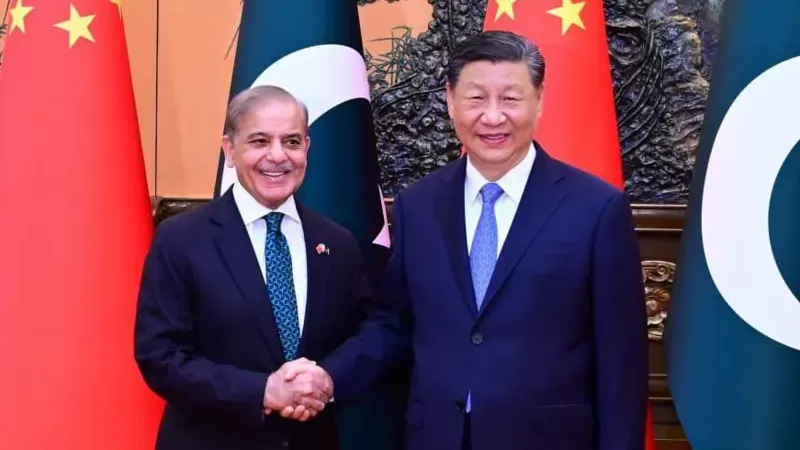
Amid this complex geopolitical theater, the prominence of Chinese-built jets in Pakistan’s air defense narrative has cast a spotlight on China’s military-industrial ambitions. The J-10 and JF-17’s operational deployment in a high-stakes conflict provides Beijing with a real-world showcase of its aerospace capabilities. This visibility could bolster China’s efforts to attract new buyers for its defense exports, particularly among nations seeking cost-effective alternatives to Western weaponry.
Moreover, the performance of Chinese jets against battle-hardened Russian and NATO aircraft may inform procurement strategies in countries that remain non-aligned or wary of Western geopolitical entanglements.
The Unanswered Questions and the Road Ahead
Despite the ceasefire, ambiguity remains over the true toll and tactical outcomes of the engagement. Neither India nor Pakistan has offered a full accounting, and the absence of independently verified data fuels speculation and misinformation.
Still, one fact is clear: the rapid militarization and international sourcing of defense equipment in South Asia continue to escalate regional volatility. As India leans on partnerships with France and Russia, and Pakistan deepens its strategic alignment with China, the subcontinent is evolving into a key arena for global defense influence.
Conclusion: A Regional Conflict with Global Ripples
Though brief, the recent India-Pakistan conflict underscores the growing complexity of regional skirmishes in a world where geopolitical alliances, defense technologies, and economic interests are increasingly interwoven. As India and Pakistan retreat from the brink—again—questions of deterrence, military credibility, and foreign influence loom larger than ever. And while the guns may have fallen silent, the battle for strategic relevance is only just beginning—especially for China’s fast-expanding defense juggernaut.
Comments