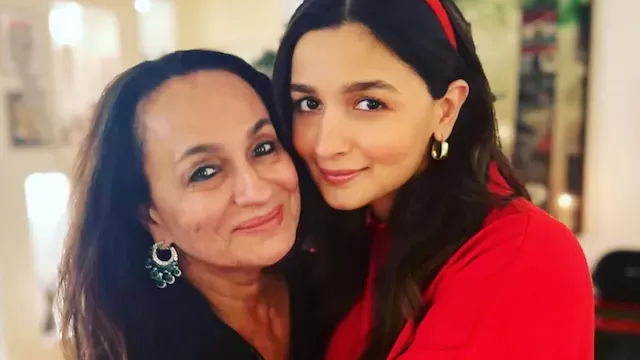
Bollywood actress Alia Bhatt and her mother, actress Soni Razdan, have sparked controversy after Razdan shared a petition calling for peace between India and Pakistan. The petition, urging an end to hostilities, was met with backlash, particularly due to Bhatt’s British citizenship. Critics questioned their loyalty to India, with some accusing them of not understanding the ground realities of the ongoing conflict. In response, Soni clarified that her message was directed at Pakistan, not India, and expressed her deep devastation at the horrors of war. This incident has reignited the debate on celebrity activism, citizenship, and national sentiment.
The Petition That Stirred Controversy
Soni Razdan, a veteran actress, recently shared a petition on her Instagram account urging both India and Pakistan to cease hostilities. The message, aimed at promoting peace, was met with immediate backlash from many netizens who felt the petition overlooked the complexities of the ongoing conflict. The petition’s call for peace, while well-intentioned, seemed detached from the reality of the situation, with critics arguing that it failed to account for the aggressive actions of Pakistan.
What made the situation even more contentious was the fact that Alia Bhatt, Soni’s daughter, holds British citizenship. This fact quickly became a focal point of criticism, with many questioning the sincerity of the mother-daughter duo’s appeal for peace. The charge was that someone benefiting from the privileges of India, while holding foreign citizenship, lacked the right to weigh in on such sensitive national issues.
Netizens React: Questions of Loyalty and Accountability
The response from netizens was swift and sharp. A number of users voiced concerns over the apparent disconnect between the Bhatt family’s call for peace and the reality on the ground. One user, in particular, questioned the sincerity of the petition, stating, “Our soldiers are conducting targeted operations with utmost care, while the other side is openly attacking residential areas and killing civilians. Urging peace without context feels disconnected from the ground reality.”
This comment highlighted a prevalent sentiment among many, who feel that a call for peace, particularly in the absence of context, fails to recognize the sacrifices of Indian soldiers who are on the frontlines. The question of foreign citizenship, especially in the context of someone like Alia Bhatt, who enjoys the privileges of India but holds citizenship elsewhere, was seen as undermining the credibility of their plea for peace.
Soni Razdan’s Response: Clarifying Intentions
Soni Razdan was quick to respond to the criticism. In her reply to the user, she clarified that her call for peace was specifically directed at Pakistan, whom she labeled as the aggressor in the current situation. She emphasized that India was merely retaliating, and her statement was intended as a general appeal for peace, not an indictment of India’s actions.
“I think people have jumped to conclusions. Also, it was more a generalized statement. Hope that clarifies,” Razdan wrote, reinforcing her position that peace should be the ultimate goal in any conflict. She also expressed her devastation at the ongoing war, stating, “War is a terrible thing. No one who has been through a war would wish it on anyone.”
However, despite her clarification, the damage was already done. Many felt that her words, regardless of intention, did not sufficiently acknowledge the complexities of the conflict or the deep emotional toll it has on those directly affected by it.
The Weight of Film Roles: Criticism From Fans
Adding to the complexity of the situation, some critics took issue with Razdan's past work, particularly her role in the critically acclaimed film Raazi. The film, which depicts an Indian spy in Pakistan during the 1971 Indo-Pakistani War, was praised for its nuanced portrayal of the tensions between the two countries. One critic questioned how Razdan could advocate for peace while being part of such a film, implying a contradiction between her artistic choices and her public stance on peace.
Razdan responded by pointing out that peace could only be achieved through dialogue between two nations. "Peace has to be between 2 nations unless you think this is a war Pakistan is fighting with itself?" she retorted. This statement sought to further clarify that her message was directed at both nations and was not intended to undermine the significance of India’s defensive stance.
The Broader Debate: Citizenship, Nationalism, and Celebrity Activism
This incident has reignited a broader debate about the role of celebrities in political and national discourse, particularly when they hold foreign citizenship. Alia Bhatt and Soni Razdan, like many public figures, have used their platforms to voice their opinions on various issues. However, their foreign citizenship has led some to question whether they have the same standing as Indian citizens when discussing national matters.
In India, the issue of dual citizenship is a complex and often polarizing subject. While many see holding a foreign passport as a personal decision, others view it as incompatible with certain public stances, particularly when the individual in question is advocating for national issues. The criticism that Alia and Soni faced highlights this dichotomy, where their privileged status as individuals with international connections comes under scrutiny when they engage in sensitive topics like war and peace.
The Future of Celebrity Influence in National Debates
This controversy serves as a reminder of the delicate balance public figures must navigate when using their platforms for activism. While celebrities like Alia Bhatt and Soni Razdan can bring attention to important causes, they must also be prepared for the backlash that often accompanies public statements, especially when the issues at hand are as divisive as those surrounding national security.
In this case, the appeal for peace, although grounded in a desire to end conflict, was perceived by many as overly simplistic and out of touch with the realities faced by those living on the frontlines of war. Moving forward, celebrities may need to consider the weight of their words and the implications of their personal affiliations when engaging in political discourse.
Comments