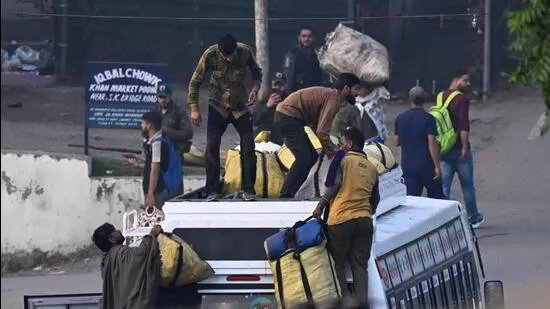
The Line of Control (LoC) between India and Pakistan witnessed a severe escalation on Wednesday, following India’s targeted military operations on nine identified terror camps in Pakistan and Pakistan-occupied Kashmir (PoK). In retaliatory shelling by the Pakistan Army, at least 12 civilians—including four children and a Muslim cleric—were killed in Poonch district, with 42 others injured. The incident has not only rattled residents along the volatile border but also sent tremors through Indian equity markets, particularly impacting defense, energy, and tourism-related stocks. Investor sentiment remains cautious amid rising geopolitical risk in South Asia’s most sensitive military flashpoint.
Civilian Toll Mounts as Artillery Fire Rattles Poonch
In the early hours of Wednesday, heavy artillery shelling by Pakistani forces pounded civilian areas in Poonch, barely hours after India executed precision air strikes on terror targets. A senior police official confirmed the deaths of 12 civilians, including four minors aged between seven and 14, and members of both Sikh and Muslim communities.
Communities in Balakote, Mendhar, Krishna Ghati, and several other sectors along the LoC bore the brunt of the shelling. Civilians scrambled for cover in underground bunkers and emergency shelters, while others fled to safer areas in Jammu. Notably, public infrastructure, including the Gurdwara Sri Guru Singh Sabha and Christ School in Poonch town, suffered direct hits.
Eyewitness reports described chaotic scenes of mass displacement, overwhelmed emergency services, and fuel queues stretching down local highways—a testament to the growing unease among border communities.
Strategic Context: Operation Sindoor and the April 22 Precursor
India’s airstrikes were carried out under "Operation Sindoor," a calculated response to the April 22 terror attack in Pahalgam, which claimed the lives of 26 Indian civilians. Defense analysts suggest the strikes were precisely targeted to neutralize entrenched terror infrastructure without provoking a full-scale escalation.
Despite these intentions, Pakistan's retaliatory action has significantly raised the temperature across the LoC, fueling fears of sustained military engagement. The crossfire underscores the persistent volatility of the Indo-Pak relationship, especially when non-state actors are involved in large-scale, civilian-targeted operations.
Stock Market Response: Volatility Amid Regional Uncertainty
The immediate fallout of the military escalation was evident in Indian capital markets. The BSE Sensex closed 276 points lower at 72,091, while the NSE Nifty50 shed 87 points to settle at 21,988—both indices reflecting investor anxiety over geopolitical instability.
Defense stocks, however, bucked the trend. Shares of Bharat Dynamics Ltd. and Hindustan Aeronautics Ltd. rose by 3.7% and 4.1% respectively on speculation of increased defense procurement and strategic investment. Meanwhile, energy companies with supply lines near the northern border reported declines, anticipating disruptions.
The tourism and hospitality sectors—particularly in Jammu & Kashmir—also saw sentiment weaken. Analysts from Kotak Securities noted a 1.8% dip in travel and lodging equities as bookings dropped following the advisory issued by the Ministry of Home Affairs.
Investor Outlook: Flight to Safety and Sectoral Shifts
Foreign institutional investors (FIIs) showed signs of a cautious retreat, pulling Rs. 912 crore from Indian equities on the day of the shelling. Gold prices surged to Rs. 73,540 per 10 grams in Delhi, as investors pivoted toward safe-haven assets. The rupee weakened marginally against the U.S. dollar, trading at 83.42, amid fears of prolonged tension along the LoC.
Despite this, some strategists are advising against panic. "Geopolitical volatility, while deeply tragic, often has a transient impact on the broader market unless it spirals into war," said Sameer Arora, a fund manager based in Singapore. “Sectoral rotation will dominate trading activity in the near term.”
Humanitarian and Economic Fallout: A Dual Crisis
Beyond market movements, the shelling has created a humanitarian crisis in the border zones. More than 3,000 residents in Poonch are estimated to have either migrated or been relocated to temporary shelters. The local administration has requested urgent aid and medical supplies from the state government.
Reconstruction costs in the affected areas are expected to cross Rs. 35 crore, according to early estimates from the Disaster Management Authority. That figure could rise as assessment teams gain access to severely hit zones in Mendhar and Krishna Ghati, where infrastructure damage is extensive.
Conclusion: Crisis Management and Strategic Patience
India’s calibrated strike strategy under Operation Sindoor appears designed to maintain a balance between deterrence and restraint. However, Pakistan’s indiscriminate retaliation has not only amplified humanitarian suffering but also injected fresh volatility into markets already contending with global uncertainty.
As the world watches the Indo-Pak dynamic unfold once again, the interplay between national security and economic stability will remain delicate. For policymakers, fund managers, and investors alike, this crisis demands not only strategic clarity but a deep understanding of the complex layers that define South Asia’s geopolitical and financial terrain.
Comments