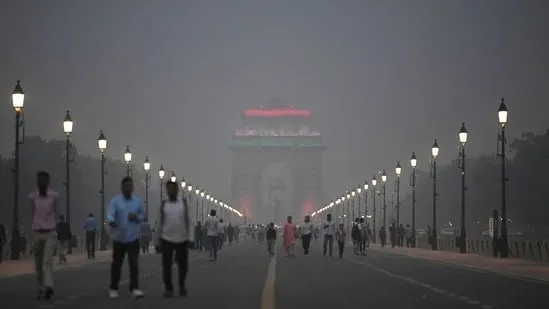
Delhi’s air quality continued to deteriorate on Tuesday, settling in the ‘very poor’ category with the overall Air Quality Index (AQI) hovering around 310 and forecasted to breach the ‘severe’ level by evening. Multiple monitoring stations, including Alipur and Burari, have already recorded AQI readings above 400, raising alarms among residents and health experts. Unfavourable meteorological conditions, stubble burning, vehicular emissions, and industrial pollutants have collectively worsened the capital’s air. As the city braces for denser smog and declining visibility, government agencies have initiated emergency anti-pollution measures while citizens struggle with burning eyes, cough, and respiratory distress.
---
1. Pollution Levels Hit Dangerous Thresholds
Delhi woke up to a thick blanket of haze on Tuesday morning as the city’s average AQI touched 311, marking the fourth consecutive day in the ‘very poor’ zone. Several localities, including Jahangirpuri, Ashok Vihar, and Alipur, registered AQI readings above 400—categorised as ‘severe’.
According to the Central Pollution Control Board (CPCB), the capital’s pollution levels have been climbing steadily since late October due to a combination of stagnant winds, rising humidity, and sharp declines in nighttime temperatures. Such conditions trap pollutants near the surface, causing toxic smog to build up across the National Capital Region (NCR).
---
2. Meteorological and Seasonal Factors Behind the Crisis
Experts attribute the sharp rise in air pollution to a mix of seasonal and meteorological triggers. Wind speeds have dropped below 8 km/h, drastically reducing the dispersion of suspended particulate matter. Meanwhile, temperature inversion—when warm air traps cooler air near the surface—has worsened pollutant accumulation.
Adding to this, satellite imagery has shown a spike in stubble burning incidents across Punjab and Haryana. The resultant smoke, combined with local emissions from vehicles, industrial activities, and construction dust, has pushed PM2.5 and PM10 concentrations far beyond safe limits. These fine particles can penetrate deep into the lungs and bloodstream, posing serious long-term health hazards.
---
3. Health and Economic Fallout
Doctors have reported a surge in cases of eye irritation, throat infection, breathlessness, and wheezing among Delhi residents. Children, the elderly, and individuals with pre-existing respiratory or cardiac ailments are particularly vulnerable. Health experts warn that prolonged exposure to such toxic air could lead to chronic bronchitis, asthma exacerbation, and even cardiovascular complications.
The economic cost of poor air quality is equally alarming. Reduced worker productivity, increased healthcare spending, and lower consumer mobility collectively burden the city’s economy. Construction, outdoor retail, and tourism sectors face significant losses as visibility drops and public movement becomes restricted. Delhi’s pollution crisis, thus, transcends an environmental issue—it is an economic and social emergency.
---
4. Government Response and Emergency Measures
In view of the worsening situation, authorities have intensified anti-pollution actions under Stage II of the Graded Response Action Plan (GRAP). Construction dust control has been strengthened, and agencies have been instructed to deploy an additional 107 anti-smog guns across high-traffic zones and construction corridors by November 29.
Special enforcement teams have been tasked with identifying polluting vehicles, ensuring compliance among industrial units, and curbing open burning of waste. The Delhi government has also issued health advisories urging citizens to wear N95 or N99 masks outdoors, limit physical activity during peak pollution hours, and keep windows closed during early mornings and evenings.
The Indian Meteorological Department (IMD) has indicated that the current stagnant conditions may persist for a few more days, potentially pushing AQI levels into the ‘severe’ category—above 400 on the CPCB scale.
---
5. The Bigger Picture: Policy and Structural Gaps
While short-term measures such as water sprinkling, anti-smog guns, and vehicle checks are essential, they merely address surface-level symptoms. The crisis underscores the need for deeper structural reforms—ranging from sustainable transport systems and cleaner energy transitions to agricultural innovation that eliminates the need for crop residue burning.
Delhi’s predicament mirrors a broader national challenge: balancing rapid urbanisation with environmental accountability. Experts argue that coordinated inter-state policy, stricter emission regulations, and investment in renewable energy infrastructure are vital to achieving lasting relief from the recurring winter smog.
Furthermore, corporations operating in the NCR are being urged to include air-quality risk in their Environmental, Social, and Governance (ESG) frameworks, ensuring the protection of workforce health and compliance with sustainability norms.
---
6. Outlook: The Urgency of Systemic Change
Delhi’s recurring smog crisis is not an isolated environmental concern—it is a manifestation of systemic neglect, fragmented policy enforcement, and inadequate long-term planning. Without decisive action that integrates economic, environmental, and social priorities, the capital risks normalising public-health emergencies as seasonal inevitabilities.
The road ahead demands more than reactive firefighting. It requires a transformative vision that redefines urban resilience—anchored in clean energy adoption, regional agricultural reform, and smarter urban design. Only then can Delhi hope to breathe freely again, not as a seasonal reprieve, but as a sustained right to clean air.
---
In summary, Delhi’s worsening air quality reflects a complex interplay of climatic, agricultural, and infrastructural issues. While emergency interventions provide temporary relief, the battle against smog can only be won through sustained governance, technological innovation, and civic participation. The question is no longer whether Delhi can survive another pollution season—but whether it can finally break free from this annual cycle of suffocation.
Comments