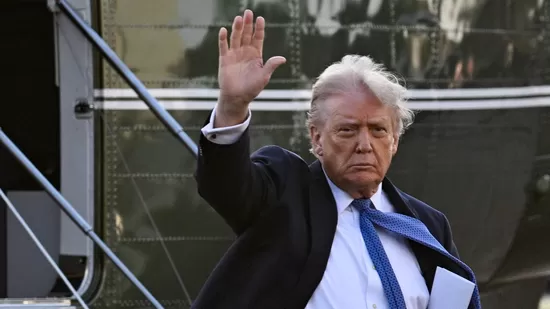
In a dramatic turn of events, a ceasefire between India and Pakistan has drawn international attention—not least because former U.S. President Donald Trump publicly claimed a behind-the-scenes role in facilitating the truce. While Islamabad openly lauded Washington’s influence, New Delhi has been swift to clarify that the accord was achieved through bilateral dialogue, without external mediation. Trump, never one to shy from the spotlight, also pledged to expand trade relations with both countries and offered to mediate the longstanding Kashmir conflict. The mixed diplomatic signals reveal much about regional sensitivities, international optics, and the delicate dance of geopolitical diplomacy.
A Claim of Credit: Trump's Take on the Ceasefire
Former President Donald Trump took to his social media platform, Truth Social, to congratulate both India and Pakistan on agreeing to an immediate halt in hostilities. Framing the development as a diplomatic milestone, Trump asserted that U.S. involvement had helped steer the two nuclear-armed neighbors toward a peaceful resolution.
“I am very proud of the strong and unwavering powerful leadership of India and Pakistan,” Trump wrote, praising their “wisdom and fortitude” in reaching the decision. He described the ceasefire as “historic and heroic,” implying that American efforts had been central to its realization.
However, the enthusiasm in Washington stood in sharp contrast to the guarded response from New Delhi.
Divergent Narratives: Praise Versus Pragmatism
While Pakistani leadership was quick to credit U.S. mediation, Indian officials sought to clarify the origins of the agreement. The Ministry of Information in New Delhi released a statement emphasizing that the ceasefire was a product of direct bilateral negotiations, with no third-party intervention.
This distinction holds significance in the context of India’s longstanding foreign policy stance, which firmly opposes external mediation—especially on issues concerning Pakistan or Kashmir. India's emphasis on bilateralism is rooted in both constitutional and strategic considerations, and deviations from this principle are seen as compromising sovereignty.
In contrast, Pakistani Prime Minister Shehbaz Sharif extended public gratitude to the United States, thanking Trump for his “leadership and proactive role for peace in the region.” Islamabad’s response likely reflects its historical openness to third-party mediation, particularly from Western powers.
Trade Diplomacy: Promises Amid Tensions
Trump’s message extended beyond mere diplomatic congratulations. Without prior indication or formal discussion, he promised to “increase trade, substantially, with both of these great Nations.” While vague, the statement hinted at potential re-engagement with two of South Asia’s largest economies.
For context, bilateral trade between the U.S. and India has shown consistent growth over the past decade, reaching over $120 billion in 2023. With Pakistan, however, trade remains modest—estimated at under $7 billion. An uptick in U.S. trade with both countries would require careful calibration of tariffs, trade agreements, and investment protocols, especially under shifting domestic political landscapes in all three nations.
The Kashmir Question: Familiar Ground, Fraught Terrain
Perhaps the most provocative element of Trump’s post was his renewed offer to mediate the Kashmir dispute. “I will work with you both to see if, after a ‘thousand years,’ a solution can be arrived at concerning Kashmir,” he wrote, invoking historical grievance and optimism in equal measure.
Trump’s earlier attempts to intercede in Kashmir during his presidency had been met with firm resistance from India. The region, a perennial flashpoint between New Delhi and Islamabad, remains a matter of intense national interest for both sides, and any foreign commentary tends to ignite swift rebuttals—particularly from India.
The timing of Trump’s statement—amid a fragile ceasefire—risks complicating an already sensitive issue. However, it also reaffirms his broader diplomatic strategy: engaging boldly and often uninvited, with an eye on legacy.
A Cautious Path Forward
While Trump's commentary underscores America's enduring influence in South Asian geopolitics, the contrasting reactions from India and Pakistan reflect deep-seated strategic postures. For India, self-reliance and bilateral diplomacy remain central tenets, while Pakistan often views third-party involvement as a viable avenue for conflict resolution.
As ceasefires go, the current truce is a welcome development—but whether it heralds lasting peace or merely a temporary pause remains to be seen. With Trump’s remarks adding a layer of complexity, the path forward will likely require careful navigation, grounded not in rhetoric, but in consistent, discreet, and pragmatic diplomacy.
Comments