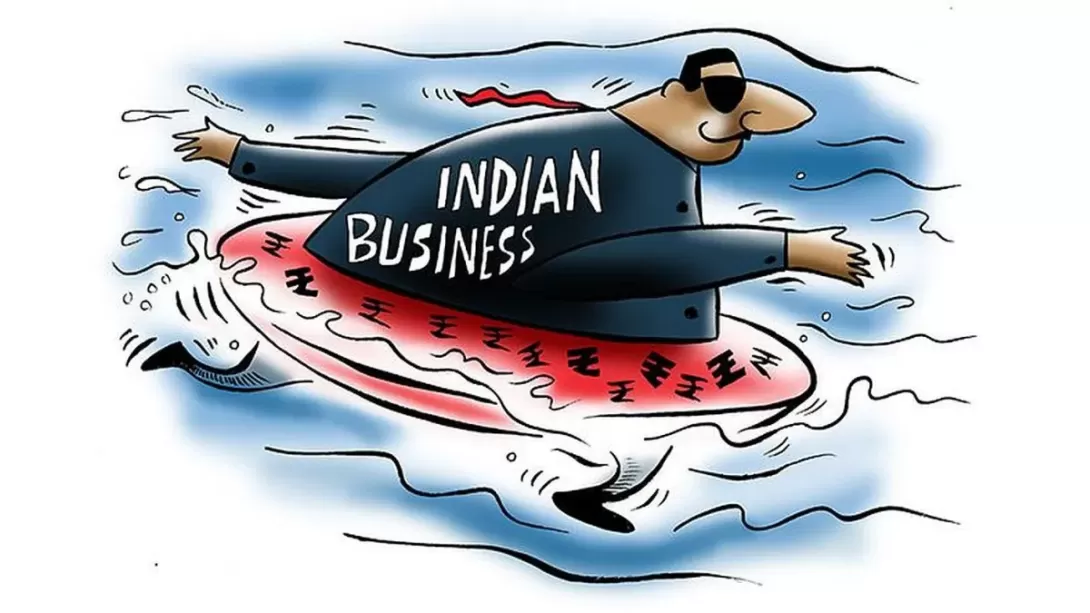
India’s corporate sector is poised for steady revenue expansion in the first quarter of FY26, driven largely by robust domestic demand and supportive macroeconomic conditions. Rating agency ICRA forecasts operating profit margins in the range of 18.2% to 18.5%, aided by easing borrowing costs and an uptick in consumption. However, lingering global uncertainties, including geopolitical tensions, continue to dampen export-driven sectors. While broad-based private capital expenditure may remain subdued, investments are expected to scale up in high-growth segments such as semiconductors, electric vehicles, and defence-linked enterprises. Overall, India Inc. enters the new fiscal with cautious optimism and sector-specific momentum.
Domestic Demand Fuels Modest but Resilient Growth
India Inc. is anticipated to maintain a stable growth trajectory in the first quarter of the current financial year (FY26), as per ICRA’s latest outlook. The ratings agency emphasized the role of sustained domestic demand in cushioning corporate performance amid persistent global turbulence. Rural consumption remains buoyant, while urban demand is projected to rebound, driven by recent income tax relief measures and cooling food inflation.
This dual-consumption engine is expected to support top-line performance across sectors, ensuring that the revenue base remains intact despite sluggish global trade dynamics.
Operating Margins Hold Firm as Financing Costs Ease
ICRA expects operating profit margins (OPM) for India Inc. to hover between 18.2% and 18.5% for the April–June quarter. This reflects a continuation of the margin recovery observed in previous quarters. The profitability outlook is further buoyed by the Reserve Bank of India’s recent repo rate reductions—amounting to a cumulative 100 basis points—which are now translating into lower interest obligations for corporates.
The resulting improvement in the interest coverage ratio signals enhanced financial resilience across industries, particularly for those with significant working capital or debt-intensive operations.
Global Uncertainties Weigh on Export-Led Segments
Despite the domestic tailwinds, the external environment remains fraught with uncertainty. Ongoing geopolitical tensions—ranging from conflicts in Eastern Europe to supply chain disruptions in the Red Sea—are exerting pressure on Indian exporters. ICRA has flagged muted demand sentiment across several export-reliant verticals including agro-chemicals, textiles, automobiles, auto components, cut and polished diamonds, and IT services.
These sectors, which are historically vulnerable to shifts in global trade patterns, may face subdued order flows and price volatility in the coming months, dampening their short-term earnings potential.
Select Sectors Buck the Trend with Targeted Investment Momentum
While broad-based private capital expenditure remains tepid, ICRA identifies a few high-potential sectors where investment activity continues to accelerate. According to Kinjal Shah, Senior Vice President at ICRA, sunrise industries such as semiconductors, electronics manufacturing, and electric mobility are expected to attract sustained investor interest and capital deployment.
Additionally, companies tied to the Indian Railways and defence procurement pipelines are positioned to benefit from robust order books, which are now beginning to materialize into tangible revenues and earnings growth. These pockets of strategic investment could play a crucial role in shaping India’s industrial landscape over the medium term.
Capex Cycle Cautiously Optimistic but Uneven
While the outlook for certain emerging sectors remains positive, ICRA maintains a measured stance on the broader private capital expenditure cycle. Macroeconomic caution, global rate uncertainties, and weak external demand continue to restrain corporate risk appetite, especially in heavy manufacturing and traditional infrastructure.
However, the push from the government on Make in India initiatives, PLI (Production-Linked Incentive) schemes, and strategic sectoral reforms could gradually incentivize long-term private investment—albeit in a more selective and phased manner.
Conclusion: Sector-Specific Gains in a Cautiously Positive Climate
India Inc. begins FY26 on a note of tempered optimism. Domestic demand strength and supportive monetary policy provide a solid foundation for operational performance, even as external pressures linger. While not uniformly distributed across sectors, the growth narrative is evolving—shaped by policy tailwinds, digital acceleration, and the gradual maturation of next-gen industries.
As corporates navigate this intricate landscape, the ability to adapt to geopolitical shifts, optimize cost structures, and innovate within emerging domains will be critical to sustaining momentum in an increasingly polarized global economy.
Comments