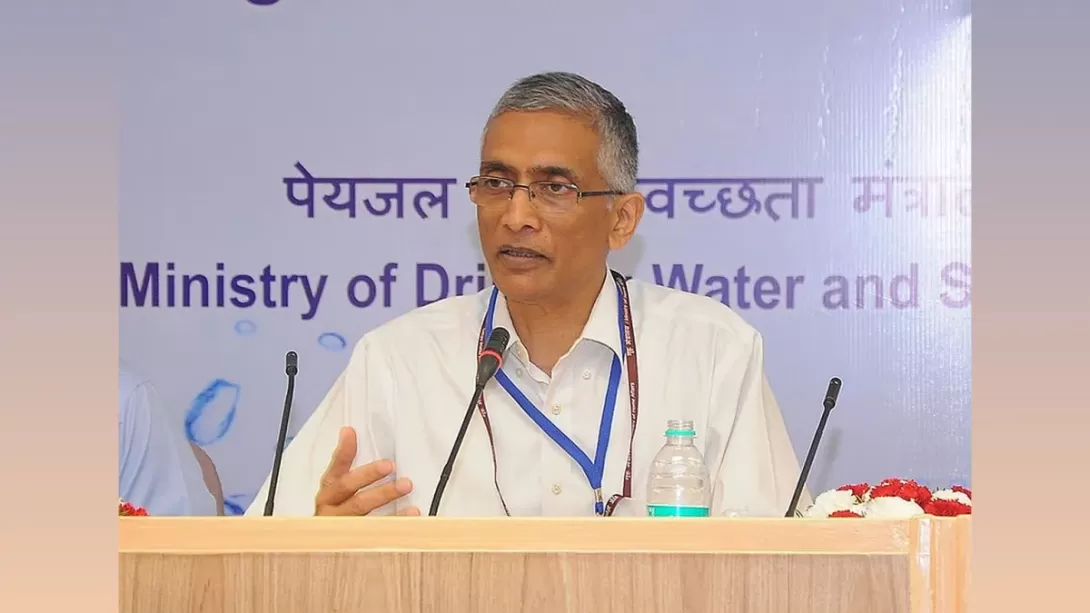
In a strategic move with significant geopolitical and financial implications, India has appointed Parameswaran Iyer, currently an Executive Director at the World Bank, as its nominee to the International Monetary Fund’s (IMF) Executive Board. This interim assignment follows the abrupt termination of K.V. Subramanian’s tenure—six months ahead of schedule—and comes just days before a pivotal IMF meeting on May 9. The board will vote on a new USD 1.3 billion climate resilience loan and review Pakistan’s USD 7 billion bailout. Iyer’s appointment ensures India retains its influence in critical decisions amid escalating regional tensions and global economic recalibrations.
India’s Strategic Realignment at the IMF
India’s decision to replace K.V. Subramanian ahead of the IMF’s May 9 board meeting marks a critical realignment of its diplomatic posture at international financial institutions. With Subramanian’s early exit—effective April 30, 2025—the government swiftly nominated Parameswaran Iyer to prevent a temporary handover of India’s seat to the Sri Lankan representative, Harischandra Pahath Kumbure Gedara, under the IMF’s internal protocol.
Iyer, a seasoned bureaucrat and policy expert, currently represents India at the World Bank. His interim nomination to the IMF board signals India’s determination to maintain its voice in major multilateral deliberations—especially those involving neighboring nations and sensitive geopolitical narratives.
Backdrop: Subramanian’s Premature Exit and the Fallout
While no official explanation was issued, Subramanian’s dismissal is believed to stem from a series of disputes within the IMF ecosystem. According to internal sources, he reportedly questioned certain IMF datasets—potentially sparking tensions in an institution known for cautious consensus-building. Additionally, unease grew around the promotion of his recent book India@100: Envisioning Tomorrow’s Economic Powerhouse, which may have been seen as leveraging his public office for personal gain.
His prior comments on India’s debt metrics had already drawn mild rebukes from IMF officials, further complicating his standing. The decision to end his term early underscores how fragile tenures can be within multilateral frameworks where both political diplomacy and institutional decorum are non-negotiable.
High-Stakes Meeting: IMF’s Agenda on May 9
The timing of Iyer’s appointment is crucial. The IMF’s Executive Board meeting on May 9 will address a dual agenda: the approval of a USD 1.3 billion climate resilience facility and the first review of Pakistan’s USD 7 billion Extended Fund Facility (EFF). India’s strategic interest in the proceedings is heightened by recent diplomatic strains following the Pahalgam terror attack, which resulted in the deaths of 26 tourists.
New Delhi is leveraging multilateral institutions to underscore its concerns over regional security. A well-positioned nominee at the IMF board not only amplifies India’s economic arguments but also lends weight to its broader geopolitical messaging.
India’s Constituency and Regional Balancing Act
India’s seat at the IMF board is part of a four-nation constituency including Bangladesh, Bhutan, and Sri Lanka. In absence of a designated nominee, the alternate executive director from Sri Lanka would have assumed board duties—a scenario India appeared eager to avoid amid mounting regional sensitivities.
By appointing Iyer, New Delhi ensured continuity in representation and policy alignment, especially in matters involving Pakistan. It also prevents potential diplomatic discomfort that could arise from ceding voting or representational rights during a critical policy decision window.
Implications for India's Financial Diplomacy
Iyer’s appointment reflects India’s evolving approach to financial diplomacy—prioritizing institutional engagement, data-driven advocacy, and timely interventions. With mounting global challenges ranging from climate resilience financing to sovereign debt vulnerabilities, India’s presence at the IMF board becomes increasingly pivotal.
Moreover, this move showcases the government’s intent to appoint technocrats with multilateral experience in key financial institutions. Iyer’s previous leadership of the Swachh Bharat Mission and his tenure at the World Bank provide him with both administrative depth and international credibility.
Conclusion: At the Crossroads of Policy and Power
India’s reshuffle at the IMF comes at a delicate intersection of financial oversight and regional geopolitics. As Pakistan’s economic future is reassessed by the IMF, and climate resilience funding becomes a new frontier for multilateral engagement, India’s choice to seat an experienced, internationally respected figure like Parameswaran Iyer is both timely and tactical.
The move preserves India’s agency in global financial governance while signaling its resolve to actively shape conversations at the highest levels of economic decision-making.
Comments