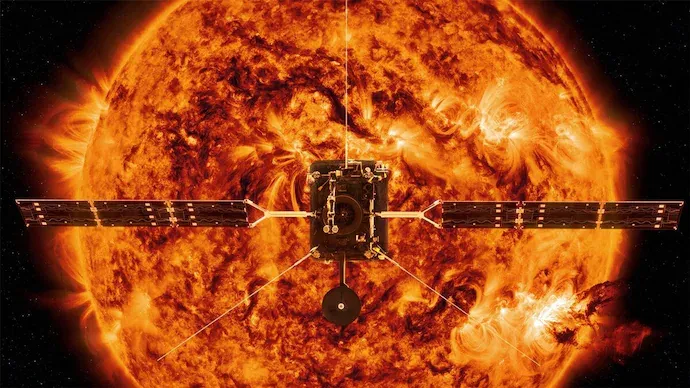
India’s pioneering solar observatory has delivered crucial scientific insights into the recent Gannon’s storm, a powerful solar event that captured global attention. By capturing high-resolution images and real-time particle data, the observatory enabled researchers to evaluate the storm’s intensity, trajectory, and potential effects on Earth’s atmosphere and communication systems. The observations support India’s expanding space research capabilities, highlighting the nation’s growing contribution to global heliophysics. As solar storms continue to influence satellite operations, navigation networks, and power infrastructure worldwide, India’s advancements in solar monitoring strengthen the country’s preparedness while offering valuable knowledge to the international scientific community.
India’s Solar Observatory Strengthens Space Research Capabilities
India’s first dedicated solar observatory has become a cornerstone of the country’s heliophysics research, offering unprecedented visibility into solar behaviour. Its latest achievement—monitoring and analyzing Gannon’s storm—demonstrates the observatory’s capacity to capture fine-grained data on solar flares, coronal mass ejections, and electromagnetic disruptions.
Equipped with advanced imaging instruments and radiation detectors, the observatory recorded the storm’s development from its initial eruption to its propagation across the solar system. These observations provided scientists with early indicators of the storm’s scale and potential impact on Earth-facing technologies.
Detailed Insights Into Gannon’s Storm Dynamics
Gannon’s storm, noted for its unusually strong magnetic fluctuations, has been one of the most studied solar events of the year. India’s observatory captured high-definition visuals of plasma ejections, enabling researchers to track particle acceleration and energy transfer with remarkable clarity.
The data helped scientists refine their models on how such storms travel through interplanetary space. This is particularly important for predicting disruptions to satellite services, radio communications, and high-altitude aviation operations—sectors increasingly vulnerable to space weather anomalies.
Boost to Global Solar Monitoring Efforts
The observatory’s contributions extend beyond national boundaries. Its real-time data streams were shared with international space agencies and research institutions, forming part of a broader scientific effort to understand solar volatility.
Experts say India’s participation enhances the global network of solar monitoring systems, adding strategic geographic coverage that improves the accuracy of space weather predictions. The country’s expanding analytical capabilities also complement global initiatives focused on safeguarding communication networks and power grids from solar disturbances.
Enhancing India’s Preparedness for Space Weather
India’s investment in solar research is viewed as a forward-looking strategy to mitigate economic and technological risks associated with intense solar activity. By identifying early warning signals of storms like Gannon’s, the observatory strengthens the nation’s resilience across sectors that rely on satellites, including telecommunications, transportation, defence, and finance.
Comments