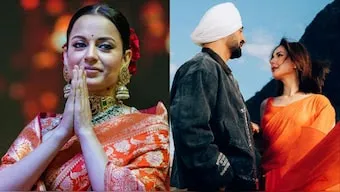
Bollywood actress Kangana Ranaut has sparked fresh debate by questioning singer-actor Diljit Dosanjh’s decision to work alongside Pakistani star Hania Aamir in the upcoming film Sardaar Ji 3. Ranaut, known for her unabashed views on nationalism and cross-border relations, implied that Dosanjh’s professional choices contradict the spirit of national sentiment, especially at a time of delicate Indo-Pak ties. Her remarks have reignited conversations on whether Indian artists should collaborate with Pakistani talent, blending the complexities of art, commerce, and geopolitics into a highly charged public discourse.
Kangana’s Strong Stand on National Priorities
Kangana Ranaut, rarely one to mince words, took to social platforms to question why Diljit Dosanjh would choose to work with a Pakistani actress. Her comments framed the collaboration as insensible, especially given India’s historically tense relations with its neighbor. Ranaut underscored her belief that Indian artists bear a moral responsibility to prioritize national interests over professional ambitions when it comes to cross-border projects.
In her view, such collaborations dilute the message of national solidarity and disregard the sacrifices of those safeguarding India’s security. This stance is consistent with Ranaut’s broader political and cultural positioning, which has long championed a robust, uncompromising vision of Indian sovereignty.
The Diljit-Hania Collaboration: Cinema Beyond Borders
Diljit Dosanjh’s decision to cast Hania Aamir in Sardaar Ji 3 was initially seen as an effort to blend cross-border talent and expand cinematic appeal. The move tapped into Punjabi audiences on both sides of the border, highlighting how cinema often attempts to transcend geopolitical boundaries. For many, artistic exchange serves as a soft diplomatic tool, fostering dialogue and cultural appreciation that politics struggles to achieve.
However, critics argue that the timing is delicate. With periodic escalations along the borders and a sensitive public mood, collaborations of this nature can appear tone-deaf to nationalist sentiments. It also reopens debates on whether creative industries should be immune to the broader political landscape.
The Broader Industry Backdrop
India’s entertainment fraternity has historically witnessed ebbs and flows in cross-border engagements. While artists from Pakistan have enjoyed significant popularity among Indian audiences — particularly in music and television — official and unofficial bans have frequently disrupted such ties following geopolitical tensions.
Industry insiders point out that commercial interests often drive casting choices. Pairing stars from different countries can help penetrate new markets and attract diverse audiences, boosting box office potential. Yet these decisions must navigate the undercurrents of public opinion, which can swiftly turn hostile if nationalistic fervor gains traction.
A Conversation That Goes Beyond Two Celebrities
At its heart, this controversy is less about Diljit Dosanjh and Kangana Ranaut as individuals and more about the continuing struggle to balance art with national consciousness. It raises critical questions: Should cinema operate in a silo, insulated from diplomatic tensions? Or must artists reflect collective national priorities, especially during strained periods?
For now, Ranaut’s comments have ensured the issue remains in the public eye, prompting introspection within the industry and beyond. As audiences and stakeholders debate where to draw the line, the unfolding narrative underscores how intertwined entertainment and national identity remain in today’s India.
Comments