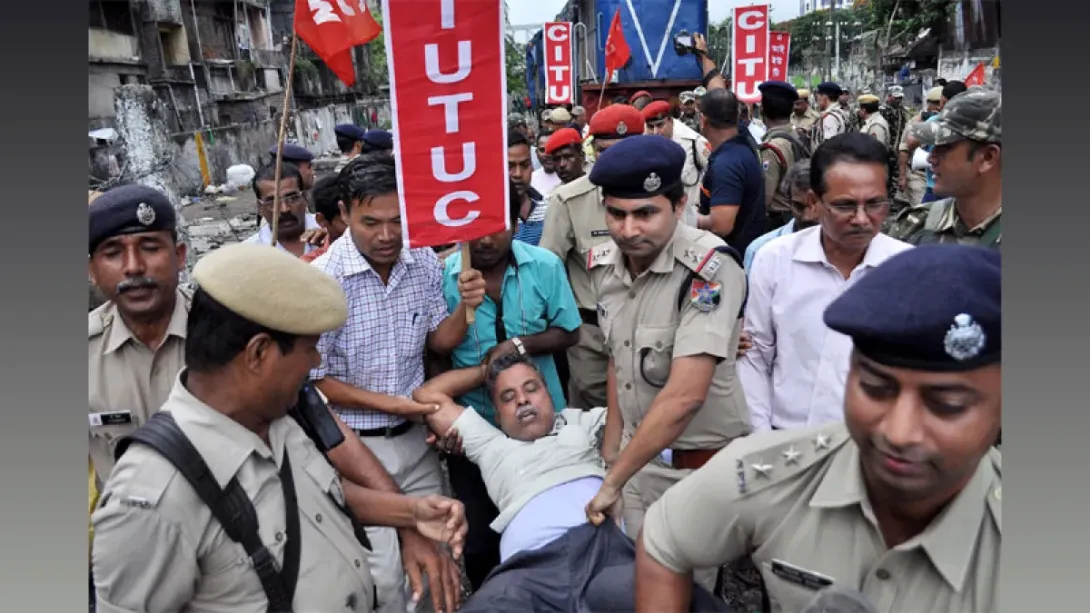
Maharashtra’s logistics sector witnessed widespread disruption as truck operators commenced an indefinite strike to protest the state’s handling of e-challan enforcement and a host of other regulatory issues. Led by the Vahatukdar Bachao Kruti Sanghatana, the protest aims to highlight aggressive fine collection practices, demand the waiver of outdated penalties, and push for policy reforms including entry timing flexibility and the abolition of the mandatory cleaner rule. With an estimated 1.5 to 2 lakh vehicles expected to remain off-road, the strike threatens to paralyze goods transport across the state. The government has responded by forming a committee to address grievances within a month.
E-Challan Enforcement Sparks Sector-Wide Uproar
The core of the truckers’ dissent lies in what they describe as draconian enforcement of e-challan fines. Transporters allege that the recovery mechanism adopted by traffic and motor vehicles departments has become overly aggressive, leading to operational disruption and economic strain on goods transport operators.
Many operators argue that e-challans issued over six months ago remain unresolved, accruing punitive penalties. The demand for cancellation of such outdated fines, they assert, is grounded in practicality and fairness, especially in the absence of timely adjudication mechanisms.
Demands Reflect Deep-Rooted Industry Challenges
Beyond the issue of e-challans, truckers are seeking the withdrawal of the mandatory "cleaner" requirement for heavy vehicles—a regulation they say adds logistical and compliance burdens, especially for small fleet operators.
Other demands include:
- Waiver of existing penalties linked to unresolved challans.
- A reassessment of citywide no-entry restrictions to improve cargo movement efficiency.
- Creation of an inclusive dialogue mechanism with policymakers to address sectoral concerns regularly.
Uday Barge, the convener of the strike, noted that while response on day one was mixed, participation was expected to intensify as the strike gained momentum. Areas such as Kalbadevi in Mumbai have reportedly witnessed full vehicle stoppage, while association members in other regions employed peaceful persuasion to encourage broader support.
Government Responds With Mediation Framework
In response to the growing tension, the Maharashtra government constituted a 10-member committee tasked with investigating and addressing the transporters’ concerns. This panel includes senior officials from the Mumbai Traffic Police, Highway Police, and Regional Transport Office (RTO), alongside representatives from transport associations.
As per the Government Resolution issued late Tuesday night, the committee is expected to present a comprehensive report within one month. Maharashtra Transport Minister Pratap Sarnaik and Industries Minister Uday Samant had previously committed to this approach during a meeting with stakeholders on June 25.
This move followed a week-long sit-in protest by transporters at Mumbai’s Azad Maidan, which was temporarily suspended after verbal assurances from state authorities.
Sectoral Solidarity with Strategic Restraint
While the truckers’ strike began in earnest on July 1, bus operators have deferred their participation following a direct request from Chief Minister Eknath Fadnavis. The CM appealed for operational continuity in the interest of pilgrims (warkaris) traveling during Ashadi Ekadashi, an important spiritual event in the state.
The Maharashtra Rajya Motor Malak Sangh, one of the most influential trucking bodies in the state, has backed the strike. Its president, Kailas Pingle, urged the Maharashtra government to follow Uttar Pradesh’s precedent, where old e-challan fines were reportedly waived to provide relief to commercial vehicle operators.
Outlook and Implications
The truckers’ agitation highlights long-standing friction between enforcement agencies and the transport sector, particularly around automated fine systems and compliance-heavy regulation. Should the government fail to provide meaningful concessions, the disruption could escalate, affecting supply chains, inflation-sensitive goods, and port operations.
On the flip side, a responsive and empathetic policy recalibration may offer a blueprint for harmonizing traffic enforcement with economic realities, especially in a post-pandemic economy where logistics and infrastructure are critical to sustaining recovery.
The next few weeks will prove crucial in determining whether Maharashtra’s transporters and policymakers can co-create a sustainable regulatory framework or descend further into conflict. Either way, the outcome will set important precedents for similar movements nationwide.
Comments