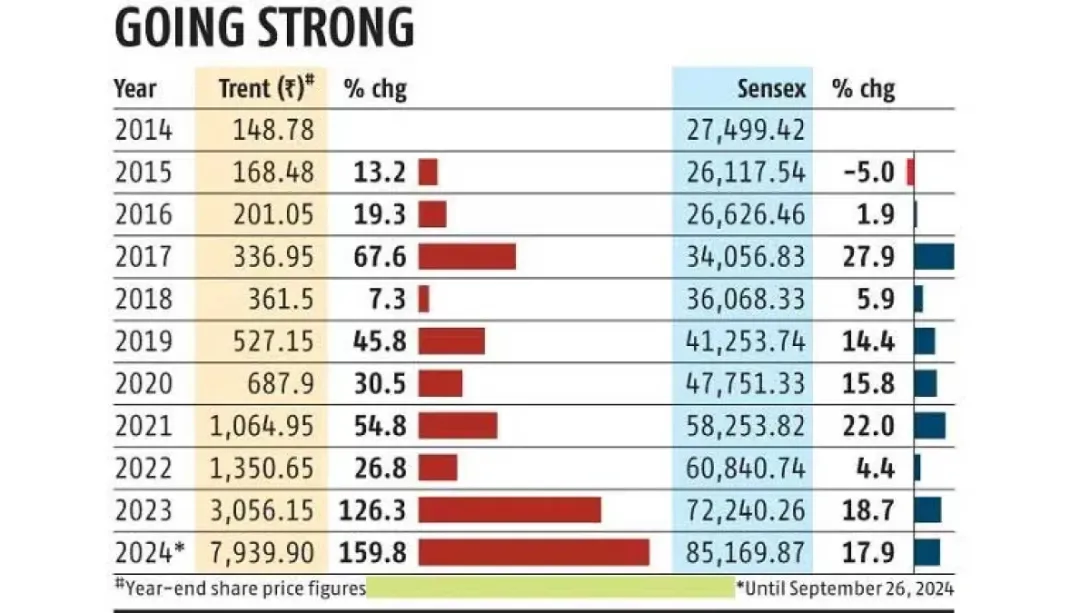
Shares of Trent Ltd. declined sharply, falling 8 percent in a single trading session after the company’s latest revenue update failed to meet market expectations. The sell-off reflected investor unease over growth momentum in the near term, despite the retailer’s strong long-term positioning in India’s organized retail space. Broader market weakness added to the pressure, amplifying losses in consumer-facing stocks. Analysts described the reaction as a reassessment of valuations rather than a fundamental shift, noting that investors are increasingly sensitive to earnings visibility and margin sustainability in a volatile macroeconomic environment.
Sharp Market Reaction to Revenue Update
Trent’s stock came under intense selling pressure after the company released its revenue figures, which investors viewed as below expectations. The update prompted a swift reassessment of the company’s near-term growth outlook, leading to an 8 percent decline in share price during intraday trade.
Market participants said the reaction underscored heightened sensitivity to earnings-related disclosures, particularly for stocks that have commanded premium valuations.
Valuation Pressures Weigh on Retail Stocks
The decline in Trent’s shares also reflected broader concerns surrounding consumer demand and cost pressures within the retail sector. Rising input costs and competitive intensity have placed margins under scrutiny, prompting investors to adopt a more cautious stance.
While the company continues to benefit from a strong brand portfolio and an expanding store network, short-term revenue trends remain a key focus for the market.
Broader Market Context Adds to Weakness
The sell-off occurred against the backdrop of a subdued equity market, where benchmark indices were already under pressure due to weakness in heavyweight stocks. This environment magnified the impact of stock-specific news, leading to sharper price movements.
Analysts noted that in volatile markets, even modest disappointments can trigger disproportionate reactions, especially in consumer and discretionary segments.
Outlook: Focus Shifts to Execution and Margins
Despite the sharp decline, market experts cautioned against reading the move as a long-term negative. “The correction reflects near-term concerns rather than a deterioration in fundamentals,” said a retail sector analyst.
Going forward, investors are expected to closely monitor execution, same-store sales growth, and margin trends as key indicators of Trent’s ability to sustain growth in a challenging operating landscape.
Comments