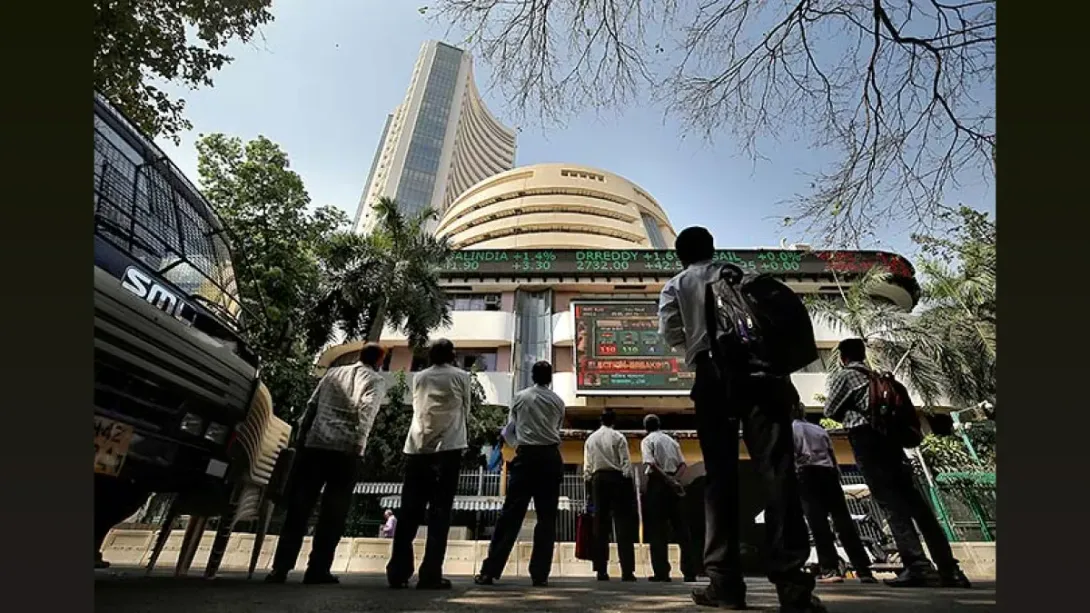
India’s equity markets closed lower as sustained selling by foreign institutional investors (FIIs) pressured benchmark indices and dampened risk appetite. The Sensex and the Nifty retreated from earlier levels as global uncertainties, a firm U.S. dollar, and cautious positioning ahead of key macro cues prompted overseas investors to pare exposure. Weakness in financials and information technology stocks dragged on the indices, offsetting selective buying in defensive sectors. While domestic institutional investors offered limited support, market sentiment remained guarded. Analysts expect near-term volatility to persist, with equity movements closely tracking foreign fund flows and global monetary signals.
Foreign Outflows Drag Benchmarks Lower
Indian equities ended the session in negative territory as FII selling dominated trading activity. The Sensex slipped amid profit-taking in heavyweight stocks, while the Nifty also declined, reflecting cautious sentiment across broader markets. Traders said persistent foreign outflows have become a near-term headwind, particularly at a time when valuations leave little room for disappointment.
Market participants noted that even moderate selling by overseas funds had a pronounced impact, given the indices’ recent highs and a lack of strong domestic triggers to counterbalance the pressure.
Global Factors Shape Investor Sentiment
Global developments played a central role in driving risk aversion. Expectations that interest rates in major economies may remain elevated for longer have pushed bond yields higher, prompting investors to reassess allocations to emerging markets. A strengthening U.S. dollar further reduced the relative appeal of risk assets, adding to selling pressure in Indian equities.
Mixed cues from other Asian markets offered little support, leaving domestic indices vulnerable to external shocks.
Sectoral Trends Reflect Cautious Positioning
Financial stocks were among the top laggards as concerns over near-term margins and valuation comfort led to profit booking. Information technology shares also declined, weighed down by uncertainty around global demand and client spending.
In contrast, select defensive sectors such as pharmaceuticals and fast-moving consumer goods attracted modest buying interest. However, gains in these pockets were insufficient to offset losses in index heavyweights.
Focus Turns to Earnings and Capital Flows
With global cues remaining uncertain, investors are increasingly focused on corporate earnings visibility and the direction of foreign capital flows. Domestic institutional investors have continued to provide some stability, but analysts caution that sustained FII selling could keep markets under pressure.
Market experts suggest that clarity on global monetary policy and signs of easing volatility could help restore confidence. Until then, investors are likely to remain selective, favoring fundamentally strong companies with resilient balance sheets.
Near-Term Outlook Remains Guarded
Analysts expect Indian equities to trade in a range in the near term, with volatility driven by global developments and foreign investor behavior. While the long-term growth story for Indian markets remains intact, short-term movements are likely to be influenced by external factors.
Strategists advise a disciplined approach, emphasizing diversification and a focus on quality stocks, as markets navigate a phase of heightened uncertainty and shifting global capital flows.
Comments