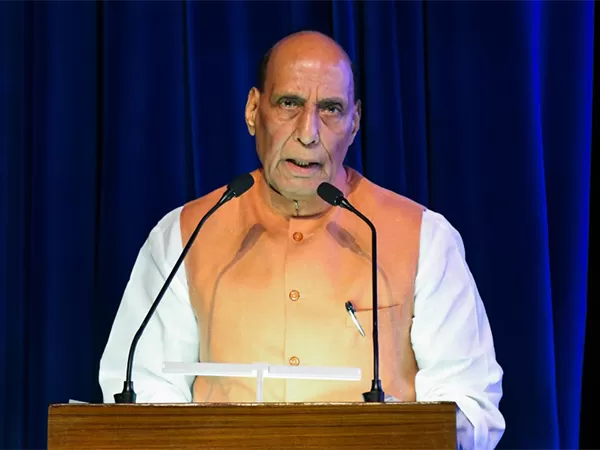
India’s recent military offensive, Operation Sindoor, launched in retaliation to a deadly terrorist attack in Pahalgam, has not only intensified regional tensions with Pakistan but also cast a shadow over investor sentiment. While the operation successfully dismantled terrorist infrastructure in Pakistan-occupied Kashmir, fears of escalation linger. Defence Minister Rajnath Singh confirmed over 100 militants were neutralized, with India signaling readiness for further action if provoked. As diplomatic and military stakes rise, the Indian equity markets have responded with measured volatility, reflecting geopolitical risk aversion. Investors are now recalibrating exposure, especially in sectors vulnerable to international disruption and defense-linked developments.
Geopolitical Flashpoint: Operation Sindoor and its Aftermath
India’s assertive military posture following the Pahalgam massacre—where 26 civilians were killed in a brutal cross-border assault—culminated in a swift and coordinated 25-minute strike codenamed “Operation Sindoor.” Precision-guided munitions, including SCALP missiles and HAMMER bombs, targeted nine terror camps believed to be hubs for Lashkar-e-Taiba and Jaish-e-Mohammed.
The targets, based on confirmed intelligence, were not Pakistani military installations but rather terror command centers and training hubs in Pakistan-occupied Kashmir. Indian officials emphasized the operation was calibrated to avoid civilian casualties, a strategic signal to the international community that the intent was counterterrorism—not provocation.
Colonel Sofiya Qureshi of the Indian Army and Wing Commander Vyomika Singh from the Air Force jointly reiterated that India remains on high alert, poised to retaliate decisively if Pakistan initiates a military response.
Political Unity in a Time of Crisis
In an all-party briefing held Thursday, Defence Minister Singh informed opposition leaders about the objectives and results of the operation, assuring them that the mission was ongoing. The opposition, led by Congress President Mallikarjun Kharge, pledged bipartisan support, reinforcing national solidarity in the face of external threats.
Parliamentary Affairs Minister Kiren Rijiju described the meeting as mature and cooperative, highlighting a rare moment of political cohesion during a time of national security concern. Such unity can have a stabilizing effect on markets, especially when investor confidence hinges on domestic political strength during geopolitical crises.
International Fallout and Diplomatic Pressures
India’s accusations that Pakistan’s “deep state” had facilitated the Pahalgam attack drew attention at the United Nations Security Council, where Islamabad was grilled over the persistent presence of extremist groups on its soil. In retaliation, Pakistan suspended the 1972 Simla Agreement after India froze aspects of the 1960 Indus Waters Treaty—an accord critical to Pakistan’s agricultural economy.
As cross-border firing by the Pakistani Army escalated along sectors like Uri, Kupwara, and Baramulla, India’s military responded in kind, with the situation along the Line of Control remaining tense.
Market Response: Defensive Posture and Volatility Management
While domestic equities initially dipped on heightened war-risk sentiment, the Indian stock market has shown relative resilience. The Nifty 50 and Sensex saw brief declines, especially in sectors such as tourism, aviation, and consumer discretionary, which are sensitive to geopolitical uncertainties. However, defense-related stocks such as Hindustan Aeronautics Ltd. (HAL), Bharat Electronics Ltd. (BEL), and Larsen & Toubro (L&T) posted moderate gains as investors speculated on increased government defense spending.
Banking and infrastructure indices remained largely range-bound, indicating that while institutional investors are cautious, there is no widespread panic or capital flight. The rupee, however, faced slight depreciation against the U.S. dollar, reflecting elevated global risk aversion and foreign portfolio rebalancing.
Outlook: Calm Amid Uncertainty
Analysts warn that any military retaliation from Pakistan or prolonged escalation could trigger broader market corrections. However, India's mature macroeconomic fundamentals, stable political leadership, and rising global investor confidence in its economy serve as buffers against prolonged volatility.
The Reserve Bank of India is expected to remain in a watchful stance, potentially intervening in currency markets if necessary. Foreign institutional investors (FIIs) are likely to adopt a “wait-and-watch” approach until further clarity emerges on the security situation.
Conclusion:
India’s Operation Sindoor may have achieved tactical military success, but the broader strategic theater now includes economic resilience, investor confidence, and geopolitical brinkmanship. As New Delhi balances assertiveness with restraint, the Indian stock market stands as a real-time barometer of national sentiment—one that reflects both apprehension and strength. While risk remains elevated, a measured, transparent government response combined with political unity could keep the economic fallout contained. Investors, meanwhile, would do well to remain diversified and alert, as diplomacy and deterrence play out in parallel.
Comments