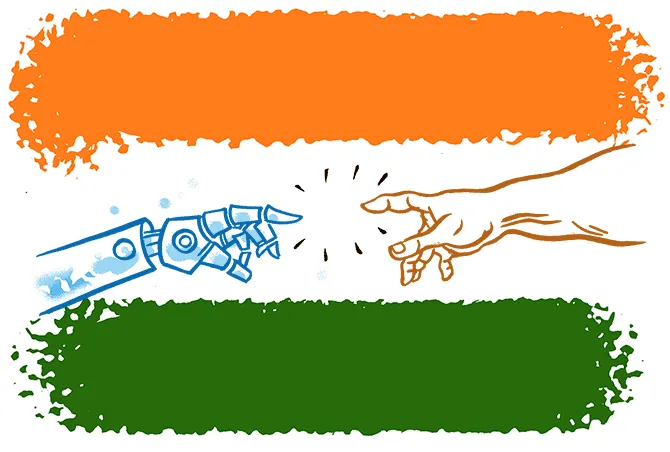
India stands at a pivotal moment where artificial intelligence could dramatically reshape its media and entertainment economy. According to industry veteran Uday Shankar, AI is not merely a technological upgrade but a structural catalyst capable of doubling India’s share in the global media landscape. From content creation and distribution to monetization and audience analytics, AI offers unprecedented scale and efficiency. As India’s digital consumption surges and production costs fall, the convergence of AI, talent, and market size could transform the country from a volume-driven market into a global value leader.
India’s Media Moment in the AI Era
India has long been one of the world’s largest consumers of media content, yet its global revenue share has remained disproportionately modest. That imbalance, according to Uday Shankar, is now primed for correction. Artificial intelligence is emerging as the inflection point that can convert scale into sustainable economic value, enabling Indian media companies to compete more effectively on the world stage.
The argument is straightforward: when technology lowers barriers to production and distribution, markets with deep creative talent and massive audiences gain a structural advantage.
AI as a Force Multiplier for Content Creation
Traditionally, content creation has been capital-intensive, time-consuming, and geographically constrained. AI-driven tools are rapidly changing that equation. Automated editing, language localization, visual effects, and data-informed storytelling are compressing production cycles and reducing costs.
For Indian media firms, this translates into the ability to produce high-quality content at scale without proportionally increasing budgets. Regional stories can now be adapted for global audiences with unprecedented speed, expanding both reach and revenue potential.
Distribution, Data, and the Economics of Attention
Beyond production, AI is redefining how content is distributed and monetized. Advanced algorithms allow platforms to understand viewer behavior with far greater precision, optimizing recommendations and advertising placement.
This data-centric approach improves audience engagement and increases average revenue per user—two metrics that have historically lagged in the Indian market. As AI-driven personalization matures, Indian media companies are better positioned to extract value from their vast user base rather than relying solely on volume-led growth.
Advertising and Revenue Upside
Advertising remains the financial backbone of much of India’s media industry. AI enhances this model by enabling sharper targeting, real-time campaign optimization, and improved measurement of return on investment.
For global advertisers, this reduces uncertainty and makes Indian platforms more attractive destinations for capital. The resulting inflow of ad spending could materially lift industry revenues, supporting Shankar’s thesis that India’s media share can realistically double over time.
Structural Challenges and Strategic Discipline
Despite the optimism, AI is not a silver bullet. Issues around intellectual property, data governance, and workforce reskilling remain critical. Without clear regulatory frameworks and responsible AI adoption, efficiency gains could be undermined by trust deficits or legal disputes.
Shankar’s perspective implicitly calls for strategic discipline: technology must be paired with strong institutions, ethical standards, and long-term investment in creative talent.
A Global Opportunity, Not a Local Story
The most compelling aspect of the AI-media convergence is that it repositions India from a domestic success story to a global contender. With the right execution, Indian media companies can export content, formats, and platforms at scale, capturing value far beyond national borders.
Comments