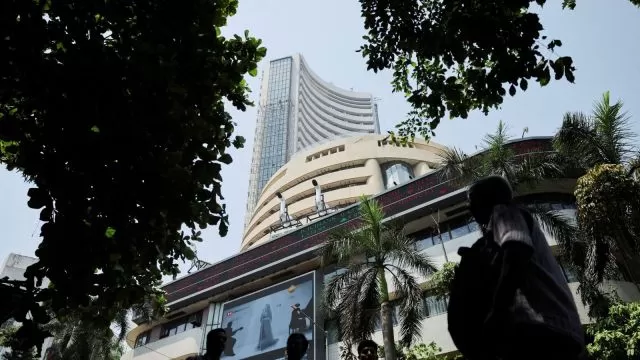
Despite escalating geopolitical tensions between India and Pakistan, the Indian stock market has shown remarkable resilience. As of Friday morning, the Sensex and Nifty indices experienced modest declines, yet the overall market impact has been limited. Analysts attribute this stability to India's superior position in the conflict and favorable macroeconomic factors. Foreign investors continue to pour funds into the market, buoyed by strong GDP growth expectations and a favorable global economic environment. The stock market remains relatively steady as investors are advised to stay calm and wait for the situation to stabilize.
Domestic Stock Market Faces Geopolitical Challenges, but Resilience Prevails
The Indian stock market opened lower on Friday, affected by rising geopolitical tensions between India and Pakistan. The benchmark Sensex was down by 0.68%, or 547 points, trading at 79,787.78, while the Nifty Index fell by 0.79%, or 192 points, at 24,081.50. Despite the negative opening, market analysts point out that the situation remains relatively stable, bolstered by positive global cues, a strong performance in Asian markets, and continued inflows from foreign investors.
Why Isn't the Market Experiencing a Greater Decline?
Under typical circumstances, a market like this, especially with an active geopolitical conflict, would likely experience significant downturns. However, there are a few critical factors that have prevented a more severe impact on the market. First, analysts note that India has demonstrated clear superiority in conventional warfare, which has led to a perception that the escalation will not extend further without significant damage to Pakistan. This belief helps assuage market fears of a broader military conflict.
Secondly, the Indian market remains resilient due to a strong macroeconomic backdrop. Despite the geopolitical uncertainty, the global economic environment is relatively favorable, with a weakening US dollar and concerns about slowing growth in both the US and China, which analysts argue could benefit India. Additionally, India's own economic indicators point to a robust future, with high GDP growth projections and an environment of declining interest rates.
Foreign Investor Confidence Continues to Boost Market
The influx of foreign portfolio investments (FPIs) has provided vital support to the Indian stock market. During the past sixteen trading sessions, FPIs have been net buyers, with more than Rs 2,007 crore in purchases on Thursday alone. So far this month, foreign investors have invested over Rs 11,500 crore in Indian equities. This consistent foreign inflow reflects strong confidence in India’s economic fundamentals, and analysts believe that this trend will continue as long as the country’s macroeconomic indicators remain positive.
Expert Advice: Stay Invested, but Stay Cautious
Despite the ongoing geopolitical developments, market experts are advising investors to remain calm and avoid hasty decisions. "It’s important not to panic or exit the market during these times of uncertainty," said a veteran market analyst. "Monitor the situation, but allow the dust to settle before making drastic moves." This sentiment is echoed by many in the investment community, who encourage long-term investors to stay the course, as the current volatility is seen as a temporary challenge in an otherwise healthy economic environment.
Preparing for Volatility: The Role of Risk Management
As tensions persist, the market is likely to experience increased short-term volatility. Devarsh Vakil, Head of Prime Research at HDFC Securities, has cautioned traders to keep their positions light and use derivative instruments to hedge against potential risks. "It is prudent to prepare rather than panic. We advise traders to be cautious and focus on managing their exposures," Vakil said. This level-headed approach is critical to navigating the market during periods of uncertainty.
Long-Term Outlook: Optimism Remains
Despite the short-term concerns sparked by the border conflict, analysts maintain an optimistic outlook for the long-term. A combination of strong Q4 earnings, the UK-India Free Trade Agreement, consistent foreign institutional investor inflows, and a positive global market trend all contribute to the positive sentiment surrounding India’s economy. While traders are advised to stay cautious in the near term, the underlying fundamentals support a positive outlook for the Indian stock market.
As India continues to manage the geopolitical situation with relative stability, the stock market is expected to maintain its resilience, driven by both external and internal economic factors. The ongoing tension with Pakistan may induce short-term volatility, but the broader market remains poised for growth, backed by favorable global conditions and a strong domestic economic outlook.
Comments