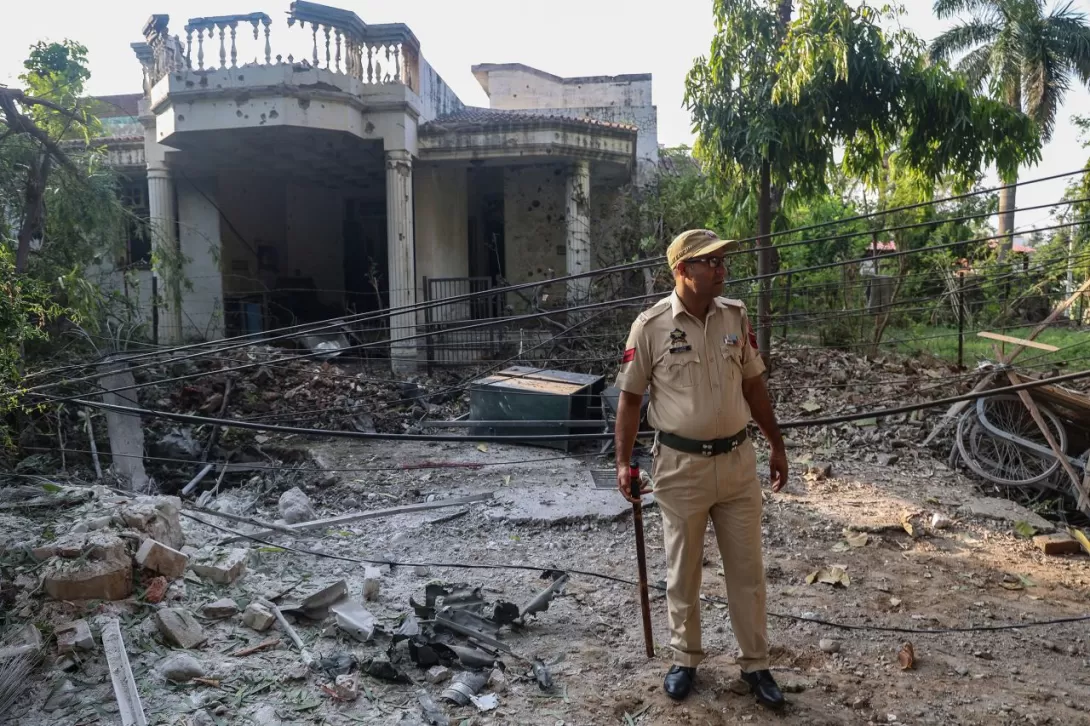
Tensions between India and Pakistan surged into a full-scale military standoff on Saturday, marking one of the most intense confrontations between the two nuclear-armed neighbors in decades. Pakistan launched a retaliatory military operation following Indian airstrikes on strategic military facilities, including locations near Islamabad. Both sides exchanged claims of targeting key military and civilian infrastructure. Amid rising fears of a broader conflict, global powers including the United States, China, and the G7 have issued urgent calls for de-escalation. As diplomatic pressure builds, South Asia teeters on the edge of a geopolitical crisis with far-reaching consequences.
Escalation at an Alarming Scale
The long-standing volatility between India and Pakistan erupted into its most expansive military exchange in recent history, with both nations launching cross-border operations targeting military infrastructure and, allegedly, civilian zones. According to Pakistan’s armed forces, its counteroffensive—dubbed “Operation Bunyan Marsus” or Iron Wall—was initiated in response to Indian missile strikes on military installations, including a base near Islamabad.
Pakistan’s military reported that it struck multiple targets within Indian territory and Indian-administered Kashmir. These included a brigade headquarters, an artillery site, a field supply depot, a missile battery location, and three separate airfields.
India Responds: Allegations of Civilian Targeting
India’s response to the Pakistani operation was swift and forceful. Wing Commander Vyomika Singh, speaking at a media briefing in New Delhi, emphasized that India had “effectively countered and responded” to Pakistan’s actions. She also condemned Pakistan’s targeting of civilian areas, claiming that infrastructure such as medical facilities and educational institutions were among the sites struck in India-administered Kashmir.
India’s military posture, according to Singh, remains defensive but resolute. “India does not seek escalation, but any hostile action will be met with precision and proportionality,” she said.
Explosions in Kashmir: The Civilian Toll
While official military targets were central to the operations on both sides, the situation on the ground in Kashmir grew increasingly precarious. Explosions were reported in both Srinagar and Jammu, prompting fear and uncertainty among residents. Though the origin of the blasts remains unconfirmed, the location and timing have led to heightened concern about the safety of civilian populations in a region long mired in military tension.
Witnesses described chaotic scenes, with families taking shelter indoors amid the fear of further attacks. Local authorities have yet to provide an official statement on the cause or extent of the damage.
Global Response: Calls for De-escalation and Diplomacy
The intensification of conflict has triggered alarm across the international community. U.S. Secretary of State Marco Rubio has extended Washington’s offer to mediate the crisis, holding separate conversations with foreign ministers from both India and Pakistan. The G7 foreign ministers, in a rare unified statement alongside the European Union, urged “maximum restraint” and called for “immediate de-escalation.”
China, a key regional player and strategic partner to both nations, voiced “deep concern” and pledged to adopt a “constructive role” in promoting dialogue and reducing tensions.
Pakistan’s Nuclear Posturing and Strategic Deliberations
In a move signaling the potential seriousness of the situation, Pakistani Prime Minister Shehbaz Sharif convened a session of the National Command Authority (NCA)—the country’s apex body responsible for overseeing nuclear policy and strategic assets. This unprecedented step underscores the risks of miscalculation at a time when both countries maintain nuclear arsenals with first-use capabilities.
Foreign Minister Ishaq Dar reiterated Islamabad’s conditional willingness to cease operations, stating, “If there is an iota of sanity, India will stop—and if they stop, so will we.”
A Tense Future: Diplomacy or Descent?
The latest round of hostilities between India and Pakistan serves as a stark reminder of the region’s enduring instability. With both nations possessing significant military capabilities—and a history of unresolved territorial disputes over Kashmir—the threat of escalation into a broader, more destructive conflict remains very real.
While global diplomatic efforts are underway, meaningful de-escalation will depend on political will, strategic restraint, and renewed engagement. The coming days will likely determine whether South Asia steps back from the brink—or inches closer to a point of no return.
Comments