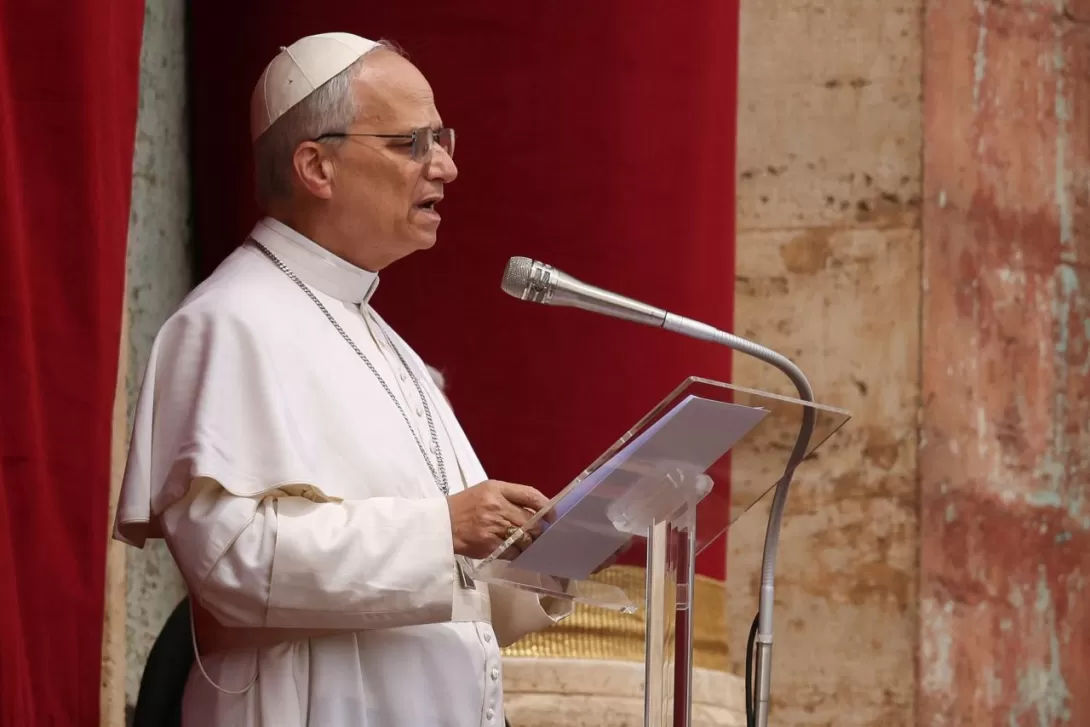
In his first Sunday address as pontiff, Pope Leo XIV called for global reconciliation, praising the ceasefire between India and Pakistan while urging further dialogue to secure long-term peace. Speaking before thousands gathered at St. Peter’s Square, the pope also turned attention to other flashpoints—appealing for an end to the conflicts in Ukraine and Gaza. Emphasizing diplomacy and humanitarian responsibility, the pontiff underscored the urgent need for coordinated relief in Gaza and the release of hostages. His message reflects the Vatican’s renewed commitment to global peace-building under his stewardship, as war and geopolitical tensions test the world’s moral compass.
Vatican Commends Indo-Pak Ceasefire, Calls for Sustained Dialogue
Pope Leo XIV expressed cautious optimism about the recently announced ceasefire between India and Pakistan, a region where armed tensions have long defined bilateral relations. In his public address at St. Peter’s Basilica, he welcomed the truce as a hopeful development and encouraged both nations to use the moment to pursue a durable resolution through diplomatic negotiations.
The pontiff’s remarks signal the Holy See’s intent to play a moral and humanitarian role in South Asia's conflict-ridden landscape. While the ceasefire offers immediate respite, the pope’s emphasis on dialogue suggests concern about the region’s historical volatility and the fragility of such agreements without sustained political engagement.
Broader Plea: A Global Call for Peace in Ukraine and Gaza
Pope Leo XIV’s message extended beyond South Asia. With equal urgency, he called for an end to hostilities in Ukraine and Gaza, conflicts that have not only caused massive loss of life but also triggered global economic and political ripple effects.
In addressing the war in Ukraine, the pope’s tone was somber, emphasizing the human cost and imploring global leaders to recommit to diplomacy. The appeal comes amid a protracted and bloody conflict that has reshaped European security dynamics and left millions displaced.
Turning to Gaza, the pontiff’s language grew more impassioned. He demanded an immediate ceasefire and the release of all hostages, underscoring the need for uninterrupted humanitarian assistance to reach what he described as an “exhausted population.” The plea aligns with the Vatican’s longstanding position on the protection of civilians and the prioritization of human dignity in conflict zones.
The Papal Vision: Moral Authority in a Fragmented World
The address marked a defining moment for Pope Leo XIV, establishing his vision as a global spiritual leader unafraid to confront geopolitical tensions. While popes traditionally avoid political entanglements, their moral interventions have historically swayed global opinion—most notably during the Cold War and in post-conflict reconciliation efforts.
This recent message, heavy with humanitarian undertones, positions the Vatican not merely as a religious institution but as an advocate for human rights, peace, and international stability. Pope Leo XIV’s speech resonated with a growing international community exhausted by war, disinformation, and escalating humanitarian crises.
Conclusion: Faith, Diplomacy, and Global Responsibility
Pope Leo XIV’s address was more than a ceremonial homily—it was a carefully measured diplomatic message wrapped in spiritual language. From South Asia’s long-simmering tensions to the devastation in Ukraine and Gaza, the pontiff’s appeal is a reminder of the ethical imperative that underlies all politics: the sanctity of human life.
In invoking peace, negotiation, and humanitarian aid, the pope calls on global actors to rise above national interests and act in the service of humanity. As conflicts grow increasingly complex, the world may yet find solace and guidance in voices that speak not from political podiums, but from moral conviction.
Comments