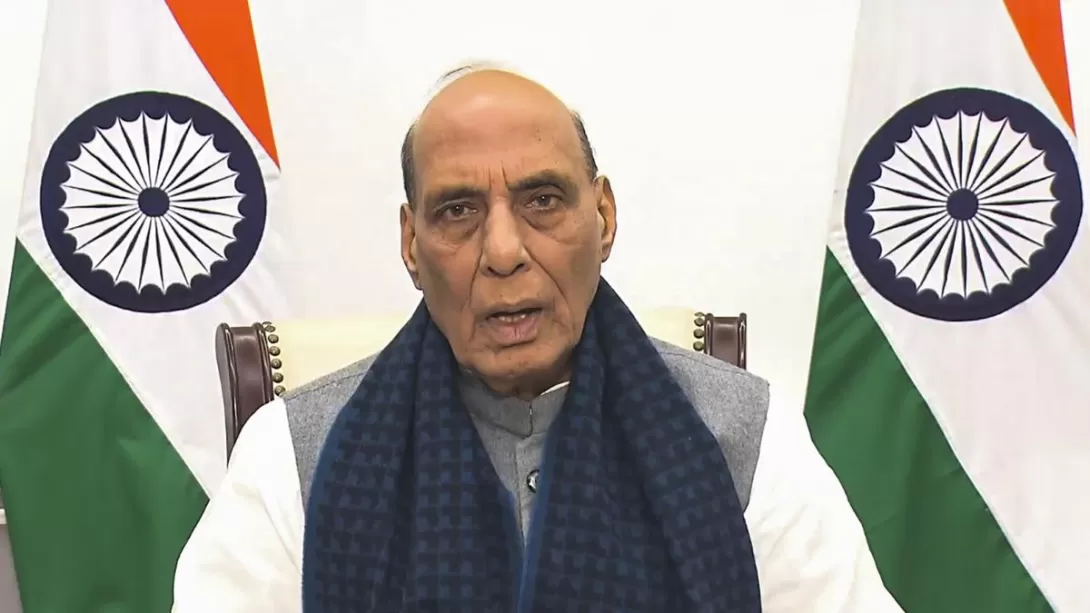
India’s recent military operation against Pakistan marks a significant escalation in its counterterrorism strategy, signaling a departure from traditional diplomatic restraint in favor of assertive action. Following a deadly terrorist attack in Indian-administered Kashmir that claimed 26 lives—mostly tourists—New Delhi initiated “Operation Sindoor,” targeting both terrorist networks and Pakistani military infrastructure. Defense Minister Rajnath Singh emphasized the symbolic and tactical importance of the strike, calling it a message of justice and deterrence. The operation underscores India’s evolving doctrine on cross-border terrorism and reflects growing public and political resolve to confront threats beyond its borders.
Operation Sindoor: A Symbolic and Tactical Response
India’s defense establishment has framed “Operation Sindoor” as both a punitive and preventive measure. The operation was launched in direct response to the April attack in Kashmir, in which 26 civilians were killed, including several women who were later widowed. The choice of the operation’s name—Sindoor, referencing the red powder traditionally worn by married Hindu women—was laden with emotional symbolism. It served to underscore the human toll of terrorism and the state’s obligation to uphold justice.
According to Defense Minister Rajnath Singh, the strikes were aimed at neutralizing the perpetrators and dismantling their support infrastructure. He noted that the action was not merely retaliatory, but a clear declaration that acts of terror will be met with “impactful” consequences, irrespective of borders.
Expanding the Rules of Engagement
A striking aspect of the current operation is its departure from India’s traditionally defensive military posture. By extending its targets to include Pakistani military assets, New Delhi sent a strong signal that it no longer views cross-border terrorism in isolation from state complicity.
This recalibration of rules of engagement suggests that India is now willing to blur the lines between counterterrorism and conventional military strategy. Such a move carries both strategic weight and geopolitical risk, especially considering the nuclear capabilities of both nations. However, Indian officials argue that inaction or a muted response only emboldens non-state actors who operate with impunity.
Political Will and Public Sentiment
The Modi government has consistently emphasized national security as a central pillar of its governance. In this context, Operation Sindoor aligns with its broader policy of strategic assertiveness, particularly in dealing with terrorism emanating from Pakistan. Prime Minister Narendra Modi’s statement that action will be taken “on this side of the border or across” echoes his administration’s previous retaliatory strikes, such as the 2016 surgical strikes and the 2019 Balakot air raids.
Public sentiment has also played a role. In the wake of the Kashmir attack, there was mounting pressure on the government to deliver a visible and effective response. Operation Sindoor appears calibrated to satisfy domestic demands for justice while simultaneously bolstering India’s global image as a nation that does not capitulate to terrorism.
Regional and Diplomatic Implications
The operation has reignited diplomatic tensions between India and Pakistan. While New Delhi insists that its targets were terrorist training camps and associated infrastructure, Islamabad has rejected these claims, denying any involvement in the Kashmir incident and accusing India of military aggression.
The escalation poses challenges for regional stability, particularly at a time when global powers are focused on multiple international crises. The situation may compel renewed diplomatic interventions from external actors, including the United States, the European Union, and the United Nations—all of whom have previously encouraged restraint and dialogue in South Asia.
Conclusion: A New Era in South Asian Security Dynamics?
India’s Operation Sindoor reflects more than a military maneuver—it represents a shift in national security doctrine, shaped by public pressure, political calculus, and the evolving nature of asymmetrical threats. The operation signals that India is increasingly willing to project power beyond its borders when faced with non-state violence that claims civilian lives.
While the long-term efficacy of such strikes remains to be seen, what is clear is that the Indian government has drawn a new line in the sand—one that may redefine the contours of Indo-Pak relations and reshape South Asia’s security architecture for years to come.
Comments