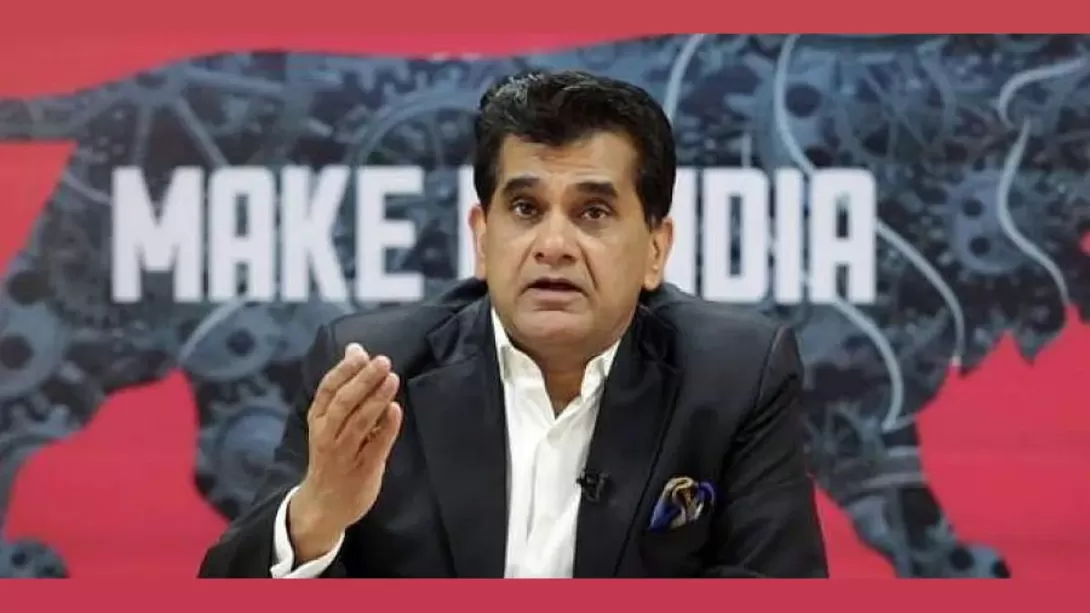
India’s G20 Sherpa, Amitabh Kant, has called for a more robust involvement from the private sector to eradicate hunger in the country, emphasizing that government efforts alone are insufficient. Speaking at the launch of Malabar Group’s expanded CSR initiatives, Kant endorsed the company’s “Hunger Free World” project, which aims to distribute 70,000 nutritious meals daily across India and Zambia in fiscal 2025–26. Backed by a substantial Rs. 150 crore CSR commitment, Malabar Group’s initiative not only surpasses statutory obligations but also underscores the vital role that corporations can play in addressing undernourishment, especially among women and children.
Hunger: A Persistent National Challenge
Despite economic strides, India continues to grapple with malnutrition on a staggering scale. Nearly 119 million citizens remain undernourished, with women and children most severely affected, according to G20 Sherpa Amitabh Kant. While the central government’s public distribution system supplies free rations to approximately 800 million individuals, the nutritional adequacy of this support remains a pressing concern.
Speaking candidly on the issue, Kant stated, “It is not just about food quantity—it is about food quality. The real challenge lies in ensuring access to nutritious meals.” His remarks underscore the need for a comprehensive and inclusive strategy, where private enterprises work alongside the public sector and civil society to address local food insecurity.
Malabar Group’s Commitment to Social Impact
One of the most prominent names in India’s jewellery sector, Malabar Group is setting new benchmarks in corporate social responsibility. The company has pledged Rs. 150 crore for CSR activities in the 2025–26 fiscal year—significantly exceeding the statutory requirement of contributing 2% of net profit. Chairman M.P. Ahammed revealed that the company consistently allocates 5% of its net profits toward CSR.
At the heart of its social initiatives is the “Hunger Free World” program, which currently delivers 70,000 meal packets daily, including over 60,000 nutrient-dense meals distributed through 167 centers in 20 Indian states. The program also extends to Zambia, reflecting a global vision to combat hunger.
“This is a humanitarian imperative,” said Ahammed. “With over 295 million people worldwide facing acute hunger, immediate and sustained action is non-negotiable.”
A Call for Collective Responsibility
Kant emphasized that transforming India into a hunger-free nation cannot be the sole responsibility of government institutions. “If there are more groups like Malabar, we can transform the world,” he noted, encouraging businesses to take on greater responsibility at the grassroots level.
This call for collective action aligns with broader global trends in ESG (Environmental, Social, and Governance) investing, where stakeholders increasingly expect corporations to contribute meaningfully to societal well-being. Kant, who previously led the government think tank NITI Aayog, has long advocated for public-private collaboration in achieving sustainable development goals.
Malabar’s Business Trajectory and Sector Leadership
Malabar Group’s philanthropic outreach is underpinned by its robust financial performance. With annual revenues estimated between Rs. 64,000 crore and Rs. 65,000 crore, the company leads the Indian jewellery market—outpacing rivals Tanishq, which posted Rs. 42,000 crore, and Kalyan Jewellers, with revenue in the range of Rs. 24,000–25,000 crore.
This financial strength enables Malabar to invest substantially in CSR without compromising business growth. The scale of its social initiatives, combined with its market leadership, positions the group as a role model for responsible capitalism in India.
Looking Ahead: A Blueprint for Corporate Citizenship
As India charts its course toward inclusive growth, Malabar Group’s Hunger Free World initiative exemplifies how corporate social responsibility can be both impactful and scalable. It also reinforces the notion that ethical business practices can coexist with—and even drive—market leadership.
Amitabh Kant’s appeal to the private sector is not merely rhetorical; it’s a blueprint for a collaborative future. As India strives to eliminate hunger, enterprises must go beyond compliance to become agents of transformation—demonstrating that purpose and profit need not be at odds, but can instead be powerful allies.
Comments