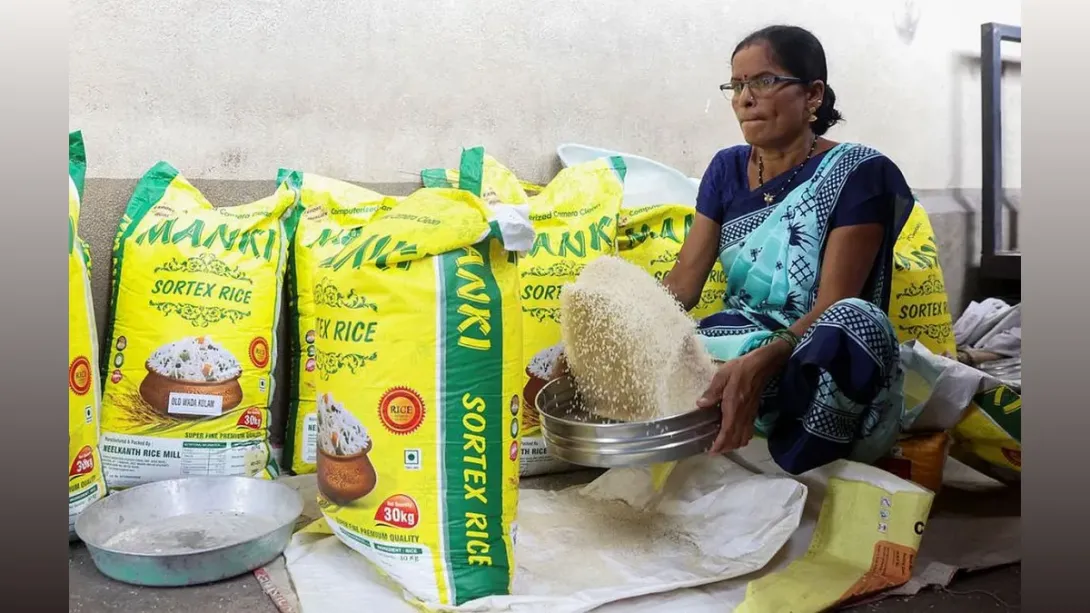
Despite India’s re-entry into the global rice market after lifting its two-year export ban, Pakistani rice exporters have managed to maintain stability in shipments by shifting focus toward quality-driven exports and niche market penetration. Leveraging a strategy centered on premium offerings rather than competing on price, Pakistan has preserved its presence in high-value markets such as the UK and EU, while maintaining competitive reach in Africa. However, a 3.7% decline in domestic output during the 2024 kharif season poses inventory challenges, with rice exports expected to contract in the final quarter of FY25.
Strategic Realignment Shields Pakistani Rice Exports
India’s September 2024 decision to lift a two-year ban on rice exports was expected to trigger upheaval in the global rice trade. Yet, contrary to market fears, Pakistan’s rice export sector has largely weathered the return of its biggest regional competitor. Exporters attribute their resilience to a strategic pivot emphasizing premium quality and agility over aggressive pricing tactics.
According to Waqar Ahmed, a prominent Basmati rice exporter based in Punjab, Pakistan’s new export approach intentionally circumvents direct price competition with India, focusing instead on higher-end product differentiation. "Our strategy is centered on quality and flexibility, not volume-based discounting," he explained.
Quality Over Quantity: Avoiding a Price War
The pivot has been echoed by the Pakistan Rice Exporters Association (PREA), with senior official Muhammad Ashraf noting that exporters are deliberately avoiding a race to the bottom. “We are prioritizing long-term relationships and quality assurance. This isn’t about chasing short-term market share at the cost of sustainability,” Ashraf said.
The pricing landscape underscores this challenge. As of June 2025, India’s Free on Board (FOB) price for 25% broken non-Basmati rice is just USD 349 per tonne, compared to USD 376 for Thailand, USD 362 for Vietnam, and USD 365 for Pakistan. These figures illustrate India’s price advantage, yet Pakistani exporters have managed to retain footing by targeting value-sensitive and niche segments.
Export Volumes Hold Firm Despite Headwinds
For the three months leading up to India’s re-entry (July to September 2024), Pakistan averaged a healthy 550,000 tonnes of rice exports per month, highlighting the resilience of demand. According to the Pakistan Bureau of Statistics, total rice exports for the first 11 months of FY25 reached 5.544 million tonnes, only marginally lower than 5.593 million tonnes during the same period the previous year—representing a modest 0.87% decline.
This stability is a testament to Pakistan’s dual-market strategy: maintaining a strong presence in high-margin regions such as the United Kingdom and European Union, while also supplying cost-sensitive markets in Africa through calibrated quality and pricing models.
Kharif Season Output Decline: A Looming Bottleneck
However, while market access and strategy have helped sustain momentum, domestic supply-side constraints are beginning to surface. A 3.7% drop in rice production during the 2024 kharif season has led to declining stock levels since April 2025. Exporters are now projecting a 15% reduction in shipments for the final quarter of FY25 (April–June) due to inventory shortages.
Ashraf acknowledged the tightening situation, noting that while demand remains strong, fulfillment capacity is under pressure. "We are confident in our long-term export trajectory, but the current season's shortfall is a real challenge that could dampen fourth-quarter figures,” he said.
Outlook: Sustaining Competitiveness Through Differentiation
With global rice markets becoming increasingly price-competitive, especially with India’s aggressive re-entry, Pakistan’s continued emphasis on quality, branding, and diversified market penetration could serve as a long-term differentiator. However, to maintain momentum, the country may need to invest in improved crop yields, resilient farming practices, and efficient supply chain infrastructure.
Exporters and policymakers alike are now faced with a dual imperative: managing immediate supply constraints while building a future-ready export ecosystem capable of withstanding both regional rivalry and climatic volatility.
Comments