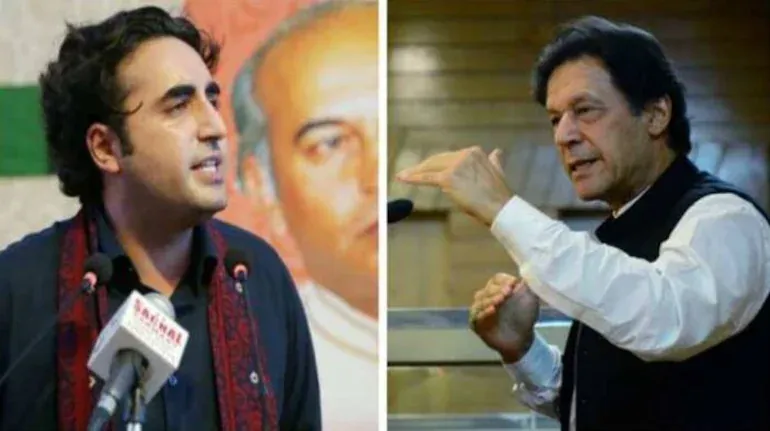
A political storm erupted in Pakistan following recent comments made by Pakistan People’s Party (PPP) chairman and former foreign minister Bilawal Bhutto-Zardari, who suggested Islamabad might consider extraditing individuals to India as part of a broader diplomatic framework. The remarks—seen as a rare overture to New Delhi—drew sharp criticism from the opposition Pakistan Tehreek-e-Insaf (PTI), which accused Bilawal of undermining national security and advancing a "pro-India" narrative. The controversy touches on sensitive geopolitical fault lines, including counterterrorism cooperation, state sovereignty, and Pakistan’s fraught domestic handling of globally designated terrorists.
Bilateral Diplomacy Meets Domestic Resistance
In an interview with Al Jazeera, Bilawal Bhutto-Zardari proposed that, under a comprehensive bilateral dialogue with India, Pakistan might not oppose the extradition of individuals considered a threat across borders—provided legal protocols were followed and India cooperated in judicial procedures. His comments referred implicitly to Lashkar-e-Taiba (LeT) chief Hafiz Saeed and Jaish-e-Mohammad (JeM) chief Masood Azhar—both internationally designated terrorists accused of orchestrating major attacks on Indian soil.
The former minister’s stance, though qualified and conditional, marks a stark departure from Pakistan’s traditionally guarded position on extradition, particularly in relation to India. He cited Pakistan’s ongoing legal proceedings against such individuals for terrorism financing but stressed the need for evidence sharing and legal cooperation from New Delhi to enable cross-border prosecutions.
PTI’s Fierce Rebuttal: A Question of National Sovereignty
The remarks triggered an immediate backlash from the PTI, the primary opposition party led by jailed former Prime Minister Imran Khan. PTI spokesperson Sheikh Waqas Akram derided Bilawal as politically immature and accused him of tarnishing Pakistan’s security narrative on international platforms.
“We fail to understand why Bilawal is so eager to appease India,” Akram stated, branding the comments as not just naïve but damaging to Pakistan’s sovereign integrity and diplomatic posture.
The PTI’s criticism appeared to be twofold: first, that Bilawal’s comments constituted a betrayal of the national consensus on India, and second, that such statements could be construed internationally as a policy shift without institutional backing.
A Sensitive Security Debate: Terrorism, Trials, and Testimonies
During the interview, Bilawal maintained that Pakistan had taken legal steps against Saeed and Azhar—albeit on charges related to terrorism financing rather than direct involvement in cross-border violence. He argued that prosecutions tied to Indian cases remained challenging due to India’s alleged lack of cooperation in furnishing admissible evidence or facilitating testimonies in Pakistani courts.
“It’s important for evidence to be presented in court and for Indian witnesses to participate,” Bhutto-Zardari explained. Without such procedural collaboration, he suggested, securing cross-border convictions would remain difficult, thus complicating potential extradition.
Pressed further, Bilawal disclosed that Hafiz Saeed is currently serving time in Lahore’s Kot Lakhpat Jail, while Pakistan believes Azhar is in Afghanistan—a claim frequently made by Islamabad in the past to deflect allegations of harboring terrorists.
Public and Political Condemnation Widens
The fallout extended beyond political parties. Hafiz Saeed’s son, Hafiz Talha Saeed, issued a public statement from Lahore condemning Bhutto’s remarks. He argued that no Pakistani leader should suggest extraditing a citizen to a hostile neighbor and labeled the statement as harmful to Pakistan’s sovereignty and national interest.
“Bilawal is either out of touch with reality or echoing the enemy’s agenda,” Talha declared. He also defended his father’s actions, insisting that Saeed had not acted against the state of Pakistan.
This reaction underscores the sensitivities around Pakistan’s treatment of individuals internationally accused of terrorism. Both Hafiz Saeed and Masood Azhar have been sanctioned under Pakistan’s National Counter Terrorism Authority (NACTA) framework and face restrictions under international anti-terror conventions.
Context: The Global and Domestic Pressure on Pakistan
Pakistan’s international reputation has long been marred by accusations of harboring terrorist groups operating in neighboring countries. Both Saeed and Azhar are not only designated global terrorists by the United Nations but are also subject to international sanctions. Hafiz Saeed’s LeT was responsible for the 2008 Mumbai attacks, which killed 166 people, while Azhar’s JeM has claimed responsibility for several attacks in India, including the deadly 2019 Pulwama bombing.
Although Pakistan has convicted Saeed in terror financing cases—resulting in a cumulative sentence of 33 years—critics argue that Islamabad has historically shielded these figures from accountability for their alleged involvement in transnational terrorism.
Bilawal’s remarks may have been an attempt to reset Pakistan’s image in global counterterrorism efforts. However, in the absence of institutional consensus and amid ongoing tensions with India, his suggestion has opened him up to intense political scrutiny.
Conclusion: Diplomatic Idealism or Political Miscalculation?
Bilawal Bhutto-Zardari’s proposal, while diplomatically progressive in tone, reveals the stark divide within Pakistan’s political establishment over how to handle sensitive national security and foreign policy issues. It also reflects the fine line that policymakers must walk between global engagement and domestic political survival.
While extradition of terror suspects could, in theory, be part of a larger peace-building framework, any such development would require unprecedented cooperation between India and Pakistan—two nuclear-armed rivals mired in decades of mistrust. Until then, even a suggestion of such cooperation risks stirring political instability, as seen in the swift backlash following Bhutto’s remarks.
His comments, whether viewed as visionary or naïve, have reignited the complex debate over Pakistan’s role in regional security—and the limits of political speech in navigating it.
Comments