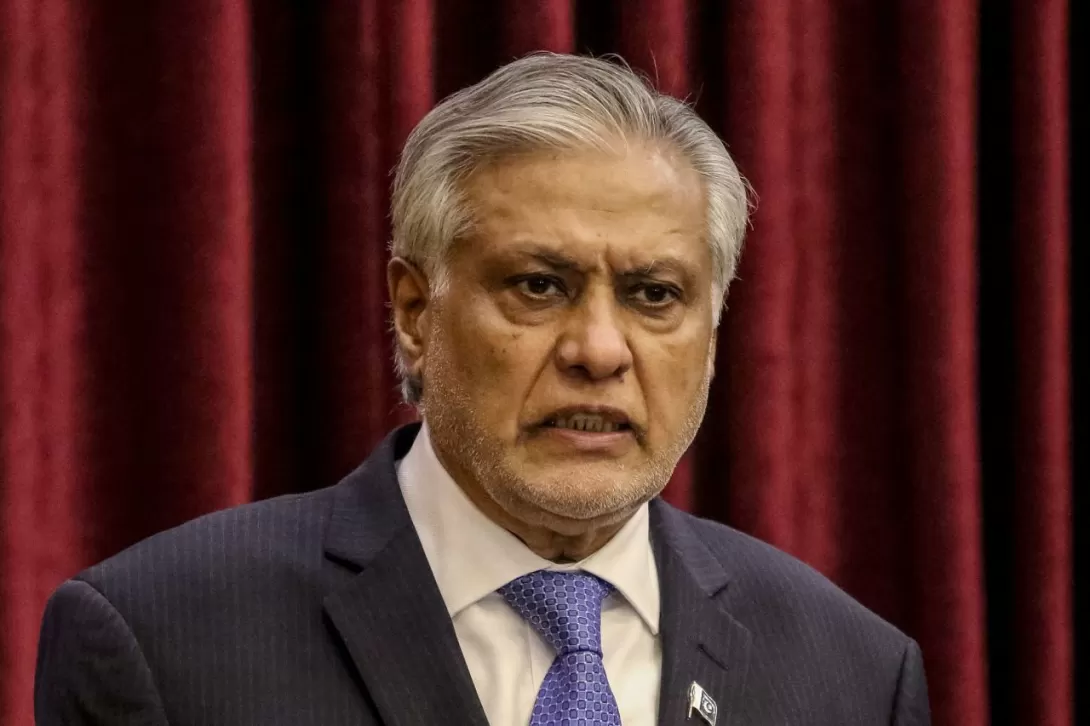
Amid one of the most volatile episodes in South Asia's recent history, Pakistan's Foreign Minister Ishaq Dar has signaled a conditional willingness to halt military operations—provided India reciprocates. As both countries engage in heightened military exchanges, the minister’s remarks hint at a possible diplomatic off-ramp, though mistrust and recent escalations cloud the prospects for peace. In a televised address, Dar underscored Pakistan’s desire for regional stability while denouncing hegemonic ambitions. With the situation rapidly evolving, his comments could either pave the way for de-escalation or mark a brief pause in an otherwise escalating confrontation.
A Delicate Balance: Pakistan's Conditional Ceasefire Offer
On Saturday, Pakistan’s top diplomat issued a pointed yet conciliatory message in the midst of intensifying hostilities with India. Foreign Minister Ishaq Dar, addressing a local news channel, stated that Pakistan is prepared to halt military operations—but only if India first withdraws from its escalatory posture.
“If there is an iota of sanity, India will stop—and if they stop, so will we,” Dar said on air, reinforcing Islamabad’s position as reactionary rather than aggressive in this latest bout of conflict.
His remarks came just hours after both sides exchanged retaliatory strikes in what has rapidly become the most serious military engagement between the two nuclear-armed neighbors in decades.
A Call for Peace Without Subjugation
Dar’s statement was notable not only for its tone of conditional restraint but also for its emphasis on regional equity. "We genuinely want peace without the hegemony of any one country," he said, alluding to long-standing accusations from Islamabad that New Delhi seeks to dominate South Asia both militarily and diplomatically.
This rhetoric—while familiar in tone—takes on renewed urgency against the backdrop of widespread international concern. The foreign minister’s comments appear aimed at positioning Pakistan as a willing partner for peace, provided that dialogue is rooted in mutual respect and strategic parity.
Diplomatic Ripples and the Road Ahead
Dar's comments have sparked cautious optimism among observers who see a narrow window for diplomacy. However, the current trajectory remains unstable. Both nations have issued starkly different narratives about recent military operations, each claiming self-defense and accusing the other of targeting civilians and critical infrastructure.
So far, no formal back-channel or third-party mediation has materialized despite overtures from Washington, Beijing, and the G7 bloc. Still, Dar's message introduces a potential inflection point—a moment where calculated restraint could replace retribution, if matched by action from India.
Regional Implications and the Risk of Miscalculation
The timing and gravity of Dar’s remarks also carry significant geopolitical implications. As both sides continue to posture militarily, the specter of a broader conflict looms—particularly given each nation’s nuclear capability and history of conflict over Kashmir.
Analysts warn that miscommunication or accidental escalation could trigger consequences far beyond the border. In this context, Dar’s emphasis on sanity and restraint appears as much a warning as an offer.
Conclusion: Diplomacy’s Fragile Window
In an environment rife with suspicion and trauma, words alone cannot de-escalate tensions—but they can open a door. Foreign Minister Dar’s statements represent a critical, albeit conditional, step toward that door. Whether India will respond in kind—or see this as a strategic move in a broader conflict—is yet to be seen.
Until then, the fate of peace in South Asia may rest on whether diplomacy can prevail over decades of distrust and firepower.
Comments