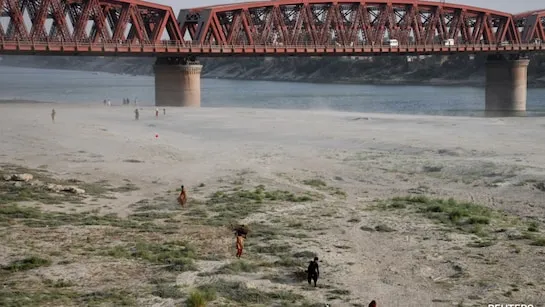
Following heightened rhetoric from Pakistan’s military leadership and political figures, including recent war threats issued by General Asim Munir and Bilawal Bhutto, Islamabad has now shifted focus to a more nuanced, yet equally contentious issue—its water demands from India. This development underscores the complex and multifaceted nature of India-Pakistan relations, where geopolitical hostilities coexist with critical resource negotiations. The latest request for water allocation highlights the strategic significance of transboundary river management amidst ongoing diplomatic and security challenges, revealing both the fragility and the necessity of dialogue between the neighboring countries.
---
Rising Hostilities: Military and Political Posturing
Pakistan’s recent surge in aggressive rhetoric, particularly from Chief of Army Staff General Asim Munir and Foreign Minister Bilawal Bhutto, has intensified already fraught bilateral relations. Their public statements invoking military threats reflect a strategic posture aimed at domestic audiences as well as signaling Pakistan’s defensive and offensive resolve. Such declarations exacerbate tensions along the borders, complicating prospects for peace and stability in the region.
Water Dispute: A Strategic yet Contentious Request
Amid these heightened tensions, Pakistan has advanced formal requests to India concerning water sharing, rooted in the provisions of the Indus Waters Treaty. The demand for increased water allocation comes at a critical time when both countries face growing water scarcity, making river management a vital issue of national security and economic sustainability. India’s response and handling of these demands carry significant implications for regional cooperation and conflict mitigation.
The Indus Waters Treaty: Framework and Challenges
The Indus Waters Treaty, brokered in 1960, remains a cornerstone of bilateral water sharing despite political upheavals. However, Pakistan’s recent appeals underscore challenges in treaty implementation, including concerns over water distribution fairness and infrastructural developments upstream. The treaty’s resilience is being tested as water stress intensifies due to climatic changes and population growth, demanding pragmatic and equitable solutions.
Diplomatic Outlook: Navigating Conflict and Cooperation
The juxtaposition of military threats with resource diplomacy illustrates the complex interplay between confrontation and negotiation in Indo-Pak relations. While security concerns dominate public discourse, water diplomacy offers a potential avenue for dialogue and confidence-building. Sustainable management of shared water resources could serve as a foundation for incremental trust, even amidst broader geopolitical discord.
---
Pakistan’s recent sequence of war warnings followed by urgent water requests encapsulates the volatility and complexity of its relationship with India. Balancing strategic posturing with essential cooperation will be crucial for both nations to navigate this challenging landscape, where water security and peace remain intrinsically linked.
Comments