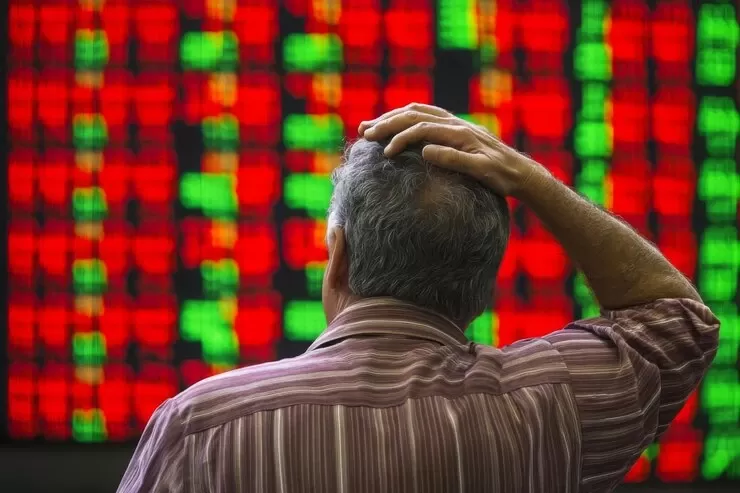
The Pakistan Stock Exchange (PSX) experienced one of its steepest single-day declines in recent history, with the benchmark KSE-100 index shedding over 6,500 points, or nearly 5.8%, amid rising geopolitical tensions with India. The sharp drop came on the heels of India’s military response to the Pahalgam terror attack, prompting widespread investor panic and a temporary suspension of trading. Although a brief recovery followed in mid-morning trade, it failed to restore market confidence. The downturn underscores the acute sensitivity of financial markets to geopolitical shocks, especially in regions with persistent cross-border volatility.
Geopolitical Shockwaves Hit Karachi’s Trading Floor
In a stark reflection of investor anxiety, the KSE-100 Index of the Pakistan Stock Exchange plummeted by 6,560.82 points, marking a 5.78% decline, as trading opened on Wednesday. The index fell from a previous close of 113,568.50 to 107,007.68, triggering automatic market-wide circuit breakers designed to stabilize trading under extreme volatility.
This dramatic nosedive follows escalating military confrontation between India and Pakistan, stemming from India’s retaliatory strikes in response to a terror attack in Pahalgam that left 26 civilians dead. Investors reacted swiftly and with alarm, abandoning positions across sectors as war clouds loomed over the subcontinent.
Temporary Recovery Fails to Hold Ground
According to Fatima Bucha, a senior analyst at AKD Securities, the market attempted a modest rebound mid-morning, climbing back to 112,457.37 points by 11 a.m. However, the upward momentum was short-lived. By 12 p.m., the index had again retraced to 111,171.92, reflecting the continued uncertainty and volatility gripping investor sentiment.
The scale of the decline places this event as the second-largest intraday point loss in the PSX’s history, surpassed only by the 8,700-point collapse in U.S. markets last month following a surprise trade tariff announcement from former U.S. President Donald Trump.
Investor Panic and the Flight to Safety
Institutional and retail investors alike rushed to liquidate positions, favoring cash and defensive asset classes. The sell-off was indiscriminate, with blue-chip and mid-cap equities both witnessing significant drawdowns. High-beta sectors such as financials, energy, and industrials bore the brunt, with most large-cap stocks hitting their lower circuits within the first hour of trade.
Global risk-off sentiment further amplified the damage, as foreign institutional investors continued to exit emerging markets amid geopolitical turbulence. The Pakistani rupee, already under pressure from macroeconomic headwinds, also faced renewed depreciation risk as capital outflows gathered pace.
Structural Fragility and Policy Inertia Add to Woes
The steep drop in the PSX also reveals deeper structural fragilities within Pakistan’s capital markets. Inconsistent fiscal policy, a narrow tax base, and an over-reliance on external borrowing have left the economy vulnerable to external shocks. Despite intermittent policy reforms, investor confidence remains fragile due to chronic political instability and security-related concerns.
Moreover, the State Bank of Pakistan’s (SBP) recent monetary tightening has done little to curb inflation or attract long-term foreign investment. Analysts warn that unless credible macroeconomic reforms are accelerated, capital markets will remain exposed to episodes of heightened volatility.
Looking Ahead: Calm or Further Contagion?
While market stabilizers—such as circuit breakers and liquidity injections—can temporarily stem the bleeding, only de-escalation in geopolitical tensions can deliver lasting relief. Investors will closely monitor diplomatic channels in the coming days for signs of thawing rhetoric between New Delhi and Islamabad.
For now, risk management remains paramount, and investors are advised to brace for a period of continued uncertainty. Volatility indices are likely to spike, and trading volumes may remain elevated as global markets adjust to a new layer of regional instability.
Conclusion: A Crisis of Confidence in an Already Fragile Market
The Pakistan Stock Exchange’s sharp decline underscores the financial fragility of emerging markets caught in the crossfire of military escalation. For the PSX, the current crisis is not just about one day’s losses—it is a reflection of deeper vulnerabilities in the system. As history shows, markets do recover, but only when the conditions for peace, stability, and policy clarity are firmly in place.
Comments