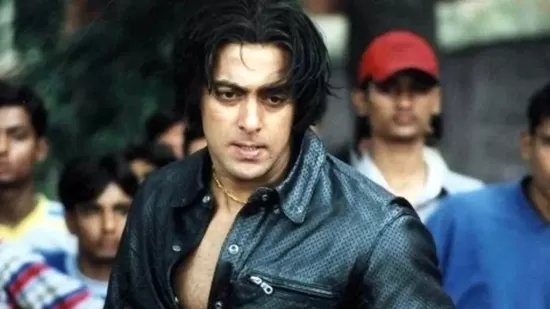
In a surprising revelation on The Great Indian Kapil Show, Bollywood actor Salman Khan disclosed that his iconic hairstyle from the 2003 romantic drama Tere Naam was inspired by none other than the late former President of India, Dr. APJ Abdul Kalam. The actor, known for his evolving style over decades, said the look—a middle-parted, shoulder-length hairstyle—was also influenced by trends of the time, including actor Rahul Roy. This candid moment has reignited public interest in Tere Naam, a film both celebrated and critiqued for its emotional intensity and controversial storyline.
The Legacy of a Look: From Kalam to Radhe
Salman Khan’s appearance in Tere Naam left an indelible mark on Indian pop culture. The character Radhe Mohan, a passionate, troubled lover from a small town, sported long, unkempt hair parted down the middle—a style that quickly became emblematic of youthful rebellion in early 2000s Bollywood.
What no one expected, however, was the revelation that this look was modeled after Dr. APJ Abdul Kalam, India’s beloved scientist and former President. Speaking on the Netflix show hosted by Kapil Sharma, Khan said, “The look in Tere Naam was actually inspired by Abdul Kalam saab. Around that time, Rahul Roy also had a similar hairstyle. I felt that small-town heroes often have long hair, and the older generation of film heroes did too.”
His comment highlighted the actor's instinct for blending realism with cinematic appeal, drawing stylistic choices from unexpected sources to build an authentic on-screen persona.
Tere Naam’s Cultural Impact and Critical Reception
Directed by the late Satish Kaushik, Tere Naam was a remake of the Tamil film Sethu, originally starring Vikram. The Hindi version introduced Bhumika Chawla to Bollywood and was known as much for its emotional weight as for its problematic representation of romance and mental health.
Although Tere Naam was only a moderate commercial success, it achieved cult status primarily due to Salman Khan’s emotionally charged performance. His portrayal of Radhe—whose obsessive love borders on violence—was both praised for its intensity and criticized for romanticizing toxic behavior.
Despite its polarizing content, the film is often cited as one of the finest performances in Khan’s career, a role that showcased his ability to step beyond the typical action-hero mold into emotionally vulnerable territory.
From Past Roles to Future Frontiers
Salman Khan remains one of India’s most bankable stars. Following his 2023 release Tiger 3 and brief appearances in Singham Again and Baby John in 2024, Khan returned to the big screen with Sikandar, directed by AR Murugadoss.
Looking ahead, the actor is set to appear in 7 Dogs, an international collaboration with Saudi and Egyptian studios, co-starring Sanjay Dutt. While details about upcoming projects are yet to be disclosed, Khan’s choices in recent years suggest a shift toward more globally resonant narratives, possibly signaling a new chapter in his cinematic journey.
Conclusion: When Cinema Meets the Unexpected
Salman Khan’s acknowledgment of Dr. Kalam as the aesthetic muse behind one of his most memorable roles is a poignant reminder of the interconnectedness between public figures and popular culture. It challenges viewers to consider how seemingly unrelated spheres—politics and cinema—can influence each other in subtle yet profound ways.
As Bollywood continues to evolve, moments like these serve as a reflection of the layered thought processes behind cinematic storytelling. They show that inspiration can come from anywhere—even the hairstyle of a scientist-President admired for intellect and integrity.
Comments