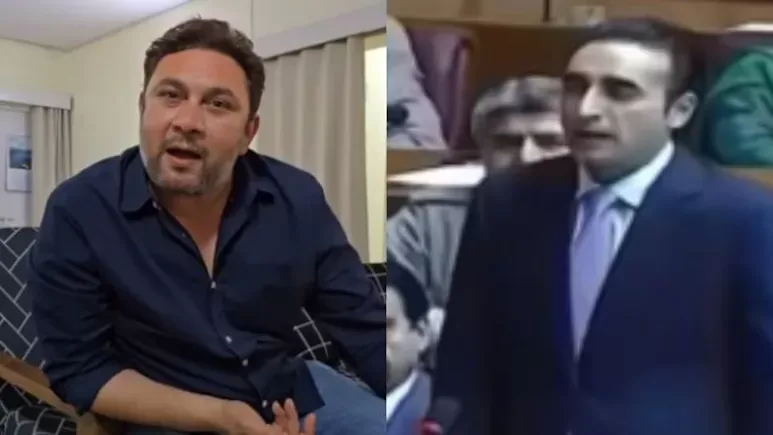
Renowned Indian television actor Rajesh Kumar, best remembered for his comedic portrayal of Rosesh Sarabhai in the cult classic Sarabhai vs Sarabhai, recently turned social media upside down with a satirical video impersonating former Pakistani Foreign Minister Bilawal Bhutto Zardari. The video, posted "on public demand," humorously mirrored Mr. Zardari’s impassioned parliamentary speech criticizing India’s recent Operation Sindoor — a retaliatory military strike following a deadly terror attack in Pahalgam. While Kumar’s performance drew laughter and viral acclaim, it also inadvertently drew attention to the serious geopolitical friction escalating between India and Pakistan earlier this month.
The Mimicry That Went Viral
In an age where memes and mimicry shape online discourse, Rajesh Kumar struck a chord by blending satire with political commentary. His Instagram reel, which echoed Zardari’s lament over India’s nighttime strike, immediately garnered thousands of reactions. Kumar, employing his classic Rosesh Sarabhai style — a blend of theatricality, nasal tone, and childlike innocence — mocked Zardari’s delivery with an improvised monologue.
“Who attacks at night? Robbers attack at night. Cowards attack at night… If they had courage, they’d come in the day,” Kumar quipped in sync with Zardari’s original line. “They should have rung the bell and asked to come in,” he added with comic flair, prompting a wave of delighted responses from fans who labeled it “the greatest reel of all time.”
His act was more than nostalgia or performance; it tapped into a collective cultural moment where satire served as both entertainment and critique.
Operation Sindoor: Military Precision and Strategic Messaging
Beneath the laughter lies a far graver backdrop: Operation Sindoor, India’s precise overnight military campaign launched in retaliation for the April 22 terror attack in Pahalgam that claimed 26 lives, predominantly tourists. The Indian armed forces targeted terror infrastructure within Pakistan and Pakistan-Occupied Kashmir, employing airstrikes and drone warfare to destroy command hubs, ammunition depots, and radar installations.
Key Pakistani military sites struck reportedly included locations in Rafiqui, Chaklala, Rahim Yar Khan, Sukkur, Bholari, and Sialkot — areas that house critical defense infrastructure. The operation was designed to send a clear message: targeted terror activity originating from across the border would be met with swift and resolute action.
Pakistan, in response, escalated the conflict by launching drone attacks on Indian civilian areas, briefly pushing the two nuclear neighbors to the edge of open confrontation.
Ceasefire Agreement and Diplomatic Aftermath
Following four days of exchanges across the Line of Control, both nations agreed to a ceasefire on May 10. The temporary cessation of hostilities has stabilized the border for now, but the intensity and precision of India’s offensive reflect a doctrinal shift toward proactive deterrence.
Strategic analysts suggest that India’s calibrated strikes are part of a broader military doctrine aimed at disrupting terror logistics without triggering full-scale war. Pakistan’s domestic political instability and diplomatic isolation post-attack have only further complicated its response narrative.
Political Speeches and Pop Culture Parallels
Bilawal Bhutto Zardari’s speech in Pakistan’s National Assembly — while intended to rally domestic support and denounce India's actions — inadvertently became fodder for online mockery. The dramatic inflections, poetic flourishes, and theatrical delivery drew instant comparison to the fictional persona of Rosesh Sarabhai, known for his eccentric poetry and childlike demeanor.
By juxtaposing the real speech with Rosesh’s poetic theatrics, Rajesh Kumar’s video became a cultural touchstone, underlining how closely political rhetoric can mirror performance art — intentionally or otherwise.
Digital Culture: Where Politics Meets Parody
This incident is a telling example of how public figures, policy debates, and geopolitics are now inextricably linked to digital pop culture. With influencers and entertainers driving much of the online narrative, humor often becomes a means of processing complex international issues — from border skirmishes to diplomatic grandstanding.
Kumar’s parody worked not just because of nostalgia but because it embodied the growing fatigue and cynicism surrounding international posturing. While India's military response was rooted in strategy, public discourse often finds release in laughter — a form of resilience as well as reflection.
Conclusion: Humor in the Shadow of Hostilities
Rajesh Kumar’s viral moment may be anchored in satire, but it coincides with a period of profound geopolitical significance. As India asserts its right to defend its territory with military precision, public sentiment is also being shaped by cultural icons who articulate national mood through humor and mimicry.
In an increasingly volatile South Asian landscape, where borders are fraught and rhetoric runs high, perhaps it is fitting that a character like Rosesh — with all his absurdity and innocence — momentarily became the unlikely voice of the public. Amidst airstrikes and ceasefires, a single viral video reminds us that even in times of conflict, laughter remains a powerful form of commentary.
Comments