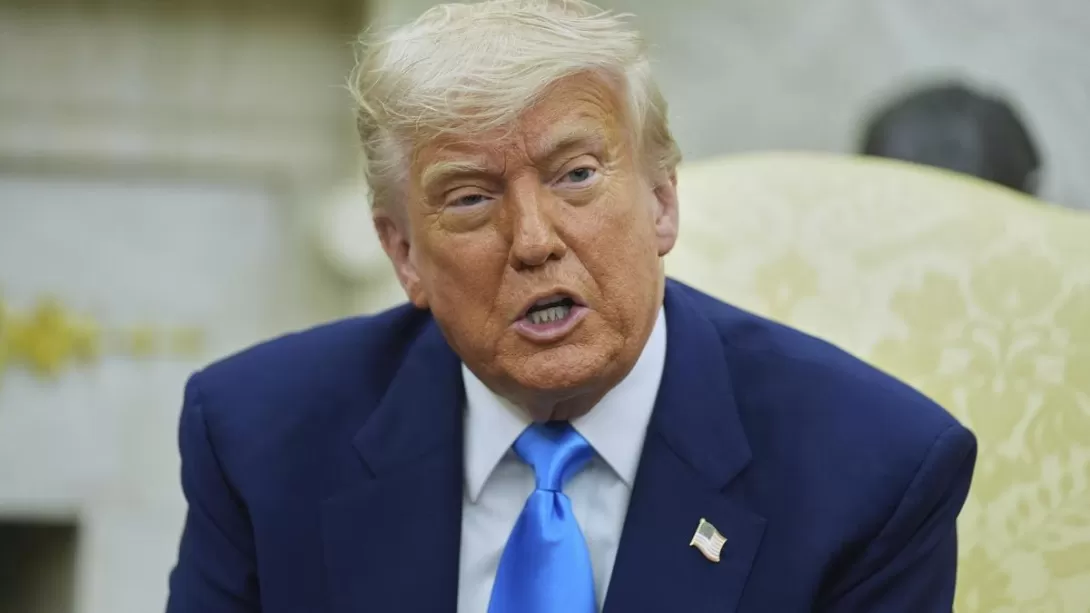
In a surprising statement from the White House, former U.S. President Donald Trump claimed credit for defusing recent hostilities between India and Pakistan, suggesting that trade negotiations played a central role in his alleged diplomatic success. The remarks, delivered during an Oval Office meeting with South African President Cyril Ramaphosa, prompted a swift rebuttal from Indian officials, who denied any foreign involvement in the ceasefire. Trump's assertions—part boast, part ambiguity—have reignited debate over the U.S.’s real influence in South Asian affairs and the fragile intersection of diplomacy, conflict, and commerce.
Trump’s Unexpected Declaration
On May 21, 2025, Donald Trump made headlines by claiming he had successfully mediated an end to the recent India-Pakistan border tensions that escalated after a deadly attack in Pahalgam on April 22. Without offering specifics, Trump implied that his role in fostering a bilateral trade agreement with India was instrumental in bringing both nuclear-armed neighbors to a ceasefire.
“If you take a look at what we did with Pakistan and India…we settled that whole… and I think I settled it through trade,” Trump remarked casually, during what was otherwise a combative exchange with President Ramaphosa of South Africa.
Although his comment lacked context and concrete details, it nevertheless sparked diplomatic curiosity—and confusion.
Diplomatic Denials and Indian Clarifications
Trump's assertion sharply contrasts with the Indian government's stance. Foreign Secretary Vikram Misri, while addressing a Parliamentary panel earlier this week, unequivocally dismissed suggestions of any third-party mediation.
“The United States was neither involved nor informed of the steps leading to the cessation of hostilities,” Misri stated, adding that communications with Washington during the crisis were limited to routine exchanges.
India’s position emphasizes its long-standing policy of handling bilateral issues with Pakistan directly, without external intervention. The remarks were likely aimed at reaffirming strategic autonomy and preventing any perception of external leverage over regional conflict dynamics.
Commerce and the Ceasefire: A Tangled Narrative
Part of the confusion surrounding Trump’s claim stems from coinciding events on the economic front. Indian Commerce Minister Piyush Goyal met with U.S. Commerce Secretary Howard Lutnick to accelerate progress on a phased bilateral trade agreement. While both nations confirmed the talks were productive, there is no evidence linking trade discussions to security negotiations.
Nonetheless, Trump’s conflation of the two issues—military de-escalation and commercial partnership—has raised eyebrows among analysts. His claim that “we settled it through trade” appears to be more rhetorical flourish than a reflection of behind-the-scenes diplomacy.
Contradiction, Praise, and Political Theater
Trump’s comments reflect a pattern familiar from his previous presidency—bold declarations, swiftly followed by ambiguous caveats. “I hate to say we got it settled, and then two days later, something happens, and they say it’s Trump’s fault,” he said, seemingly hedging his earlier claim.
During the same exchange, Trump praised both Indian Prime Minister Narendra Modi and the “leader of Pakistan,” calling them “great guys,” while highlighting his personal rapport with Modi as a shared connection with Ramaphosa. Such remarks, however informal, often serve to project personal diplomacy as a cornerstone of Trump’s foreign policy approach.
Historical Context: U.S. Mediation in South Asia
Though the United States has previously expressed willingness to mediate between India and Pakistan, such offers have historically been met with firm rejection from New Delhi. India has consistently maintained that all matters with Pakistan, including territorial disputes and border skirmishes, are strictly bilateral.
Trump’s earlier tenure was marked by similar assertions of mediation—most notably his 2019 claim that Prime Minister Modi had asked him to arbitrate on Kashmir, a statement India promptly denied. The recent episode appears to be a continuation of that diplomatic improvisation.
Geopolitical Implications
While Trump’s latest statement may not carry immediate diplomatic consequences, it underscores the delicate nature of South Asian geopolitics and the potential risks of misinformation. Even offhand remarks by global leaders can unsettle bilateral dynamics, particularly in regions prone to volatility.
Moreover, it highlights the complex entanglement of trade and diplomacy. While economic cooperation between India and the U.S. is indeed deepening, conflating it with conflict resolution efforts may distort the purpose and boundaries of bilateral engagement.
Conclusion: Words That Echo in Fragile Times
Donald Trump’s casual proclamation of having “settled” a volatile border conflict through trade exemplifies a broader pattern of transactional diplomacy—one where political theater often supersedes policy clarity. While India firmly rejects any suggestion of external mediation, the episode reveals the global stakes attached to regional conflicts and the ease with which they can be politicized.
In an era when international statements reverberate across borders in real time, clarity, accountability, and diplomacy grounded in facts remain more essential than ever. Whether intended as a boast or a bluff, Trump’s remark serves as a timely reminder of the fine line between diplomacy and distortion.
Comments