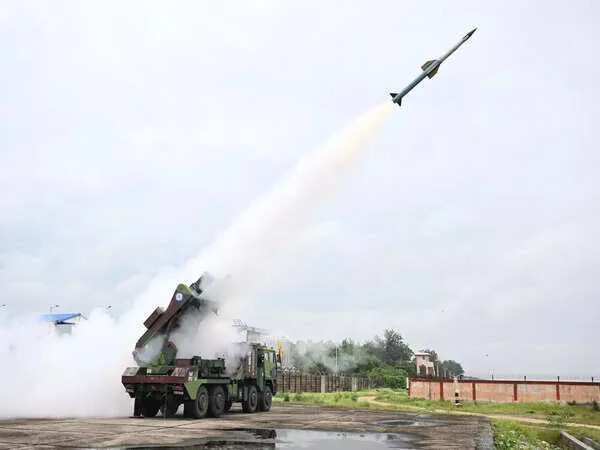
India’s indigenous Integrated Air Defence Weapon System (IADWS) has successfully cleared its maiden flight test, marking a significant milestone in the nation’s defence modernization efforts. Designed to enhance aerial threat detection and neutralization capabilities, the system integrates radar, missile, and command-and-control technologies. Defence analysts view this achievement as a step toward greater self-reliance in strategic defence assets, reducing dependency on foreign suppliers. The successful test also underscores India’s growing capability in developing complex, multi-layered defence systems that can protect critical infrastructure and support the armed forces’ operational readiness in an increasingly contested airspace.
---
Maiden Flight Test and Performance Highlights
The maiden flight test of the IADWS was conducted under controlled conditions, simulating realistic aerial threat scenarios. Preliminary reports indicate that the system successfully detected and engaged test targets with high precision, validating the integration of radar, command-and-control modules, and interceptor missiles. Engineers noted that the system’s real-time data processing capabilities allowed seamless coordination between detection and interception units, reflecting significant technological sophistication.
---
Indigenous Development and Strategic Significance
Developed by Indian defence research organizations in collaboration with private and public sector partners, the IADWS represents a major stride in the country’s indigenization of defence technology. By combining multiple subsystems into a cohesive operational platform, India enhances its defensive autonomy, mitigates procurement risks, and strengthens national security. Analysts believe this achievement could also pave the way for future exports of indigenous defence solutions, bolstering India’s position in the global defence market.
---
Enhancing India’s Air Defence Architecture
The IADWS is designed to protect critical infrastructure, military installations, and urban centers from a spectrum of aerial threats, including missiles, drones, and aircraft. Its layered architecture allows for early detection, rapid target tracking, and coordinated interception, providing a robust defensive shield. Integration with existing air defence networks ensures interoperability, a crucial factor in maintaining readiness across multiple domains of engagement.
---
Implications for Defence Policy and Self-Reliance
The successful test aligns with India’s “Atmanirbhar Bharat” vision in defence manufacturing. By investing in indigenous research and development, India reduces reliance on imported systems, fosters domestic technological capabilities, and strengthens the local defence industrial ecosystem. Defence policymakers see the IADWS as a cornerstone in future multi-domain operations, reinforcing India’s deterrence posture and strategic credibility in the region.
---
Looking Ahead
With the maiden flight test complete, the next phase involves extended trials, operational validation, and eventual induction into service. Once fully deployed, the IADWS is expected to bolster India’s air defence network, providing commanders with enhanced situational awareness and engagement capabilities. For India’s defence industry, the milestone demonstrates that complex, integrated systems can be designed, tested, and delivered domestically, signaling a new era in indigenous military technology.
Comments