India’s precision airstrikes on terror camps in Pakistan’s Punjab province and Pakistan-occupied Kashmir under Operation Sindoor have stirred a potent mix of geopolitical tension and market unease. On May 7, 2025, the Indian government confirmed targeted, non-escalatory actions backed by credible intelligence, while simultaneously briefing strategic allies including the U.S., U.K., Saudi Arabia, UAE, and Russia. Despite India’s efforts to contain the crisis diplomatically, regional volatility has reverberated through equity markets, particularly defense, energy, and banking sectors. As global powers urge restraint, investors are recalibrating positions to hedge against geopolitical shocks and possible retaliatory escalations.
India’s Strategic Strikes: Precision Without Provocation
In the early hours of Wednesday, the Indian Armed Forces launched coordinated strikes on identified terror infrastructure across Pakistan-administered territories. Branded Operation Sindoor, the mission targeted camps allegedly affiliated with Pakistan-based militant outfits. Government sources emphasized the attacks were focused, avoiding civilian, economic, or traditional military installations, to signal a deterrent rather than an escalation.
The Ministry of External Affairs (MEA), in a statement released via the Indian Embassy in Washington, described the operation as “measured, responsible, and non-escalatory.” Intelligence inputs and eyewitness accounts reportedly linked these camps to the recent spike in cross-border insurgency, prompting India’s action.
International Diplomacy in Overdrive
To prevent a diplomatic fallout, India swiftly briefed a coalition of key global stakeholders—namely the United States, United Kingdom, Russia, Saudi Arabia, and the United Arab Emirates. Prime Minister Narendra Modi, in recent weeks, has maintained continuous dialogue with these powers, preempting misinterpretation of India’s intent.
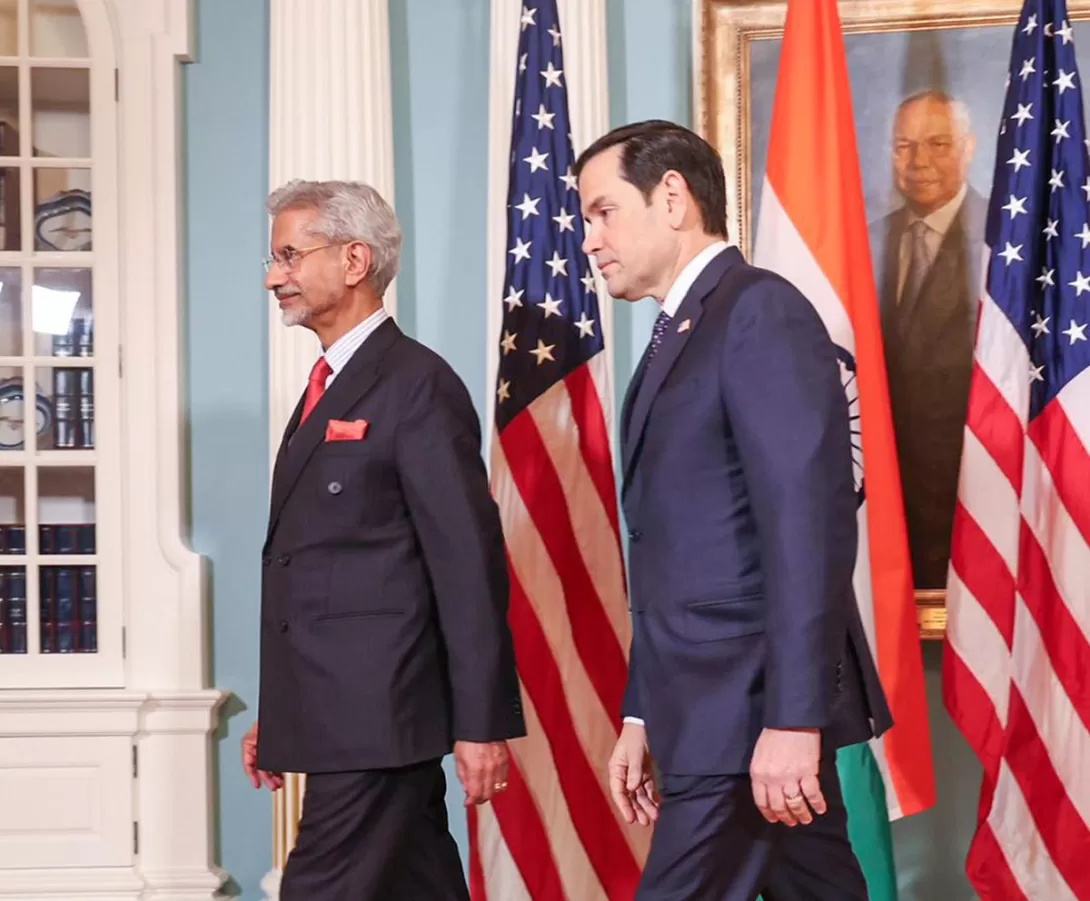
National Security Advisor Ajit Doval spoke with counterparts across Washington, London, Riyadh, and Tokyo. Notably, acting U.S. NSA and Secretary of State Marco Rubio acknowledged India's operational precision and expressed hope for de-escalation, mirroring President Donald Trump’s earlier remarks calling for “a swift return to stability.”
In contrast, China—conspicuously absent from India’s list of briefed nations—termed the strikes “regrettable.” Beijing urged both parties to exercise restraint, reiterating its opposition to terrorism while subtly cautioning against unilateral military action.
Market Reactions: Surge in Volatility, Spike in Defense Stocks
The initial market response was swift and reactive. Indian benchmark indices—the Nifty 50 and the BSE Sensex—opened lower on May 7 as investors weighed the implications of an armed operation along a volatile border. By midday, the Sensex had dipped 428 points while the Nifty hovered precariously near the 21,850 mark, reflecting caution amid geopolitical unpredictability.
However, select stocks bucked the broader trend. Defense manufacturers and cybersecurity firms rallied on speculation of increased government procurement and strategic contracts. Hindustan Aeronautics Ltd. (HAL) rose 3.8% to close at Rs. 3,282, while Bharat Dynamics Ltd. saw a Rs. 42 uptick per share amid heightened investor interest.
Other beneficiaries included Tata Advanced Systems and Data Patterns, both of which reported higher-than-average trading volumes. Analysts noted that defense-related plays are often considered “event hedges” in times of national security crises.
Energy and Banking Under Pressure
The energy sector witnessed moderate losses, with ONGC and Indian Oil Corporation (IOC) sliding over 2% each. Markets remain wary of any escalation that could disrupt regional fuel logistics or trigger retaliatory cyberattacks on critical infrastructure.
Banking and financial services, particularly those with cross-border exposure or heavy urban lending portfolios, also saw a dip. HDFC Bank and ICICI Bank slipped by over 1%, partly due to concerns over increased insurance liabilities and rising risk premiums if tensions intensify.
On the currency front, the rupee depreciated by 23 paise to trade at Rs. 83.12 against the U.S. dollar, reflecting capital flight to safer assets. Bond markets held relatively steady, though a marginal spike in short-term yields suggested growing caution among institutional investors.
Investor Strategy: Hedging, Rotation, and Sectoral Realignment
With geopolitical tremors testing market nerves, analysts are advising defensive allocations in portfolios. Fast-moving consumer goods (FMCG), pharmaceuticals, and utilities—typically less sensitive to global shocks—are receiving inflows. Meanwhile, institutional money is seen hedging with gold ETFs and low-volatility mutual funds.
Derivatives markets echoed this caution. Open interest in Nifty put options surged at strike prices of 21,500 and 21,000, indicating investor demand for downside protection. The India Volatility Index (VIX) climbed 11.2%, signaling heightened risk perception over the next 30-day horizon.
Foreign Institutional Investors (FIIs) turned net sellers to the tune of Rs. 1,376 crore on the day, driven by macro risk aversion and global recalibration of emerging market exposure.
What Comes Next: Calculated Calm or Ticking Risk?
The central question now is whether Operation Sindoor marks the end of a retaliatory cycle—or the beginning of an extended standoff. India’s emphasis on diplomacy and its strategic precision suggest a desire to control escalation. However, statements from Pakistan’s Prime Minister—characterizing the strikes as “an act of war”—raise concerns over potential retaliation.
China’s restrained response and the absence of wider UN condemnation provide diplomatic breathing room. Yet, the geopolitical chessboard remains dynamic, with regional actors closely watching India’s posture and Pakistan’s next steps.
Conclusion: Between Strategy and Stability
India’s carefully calibrated military action reflects a larger doctrine: counterterrorism with global legitimacy, backed by data and diplomacy. For markets, however, the lines between deterrence and escalation are not always clear. Investors would do well to remain nimble, diversify across uncorrelated asset classes, and monitor global developments for shifts in geopolitical risk.
In times like these, the calculus is as much about perception as reality—both in policy and in the markets.
Comments