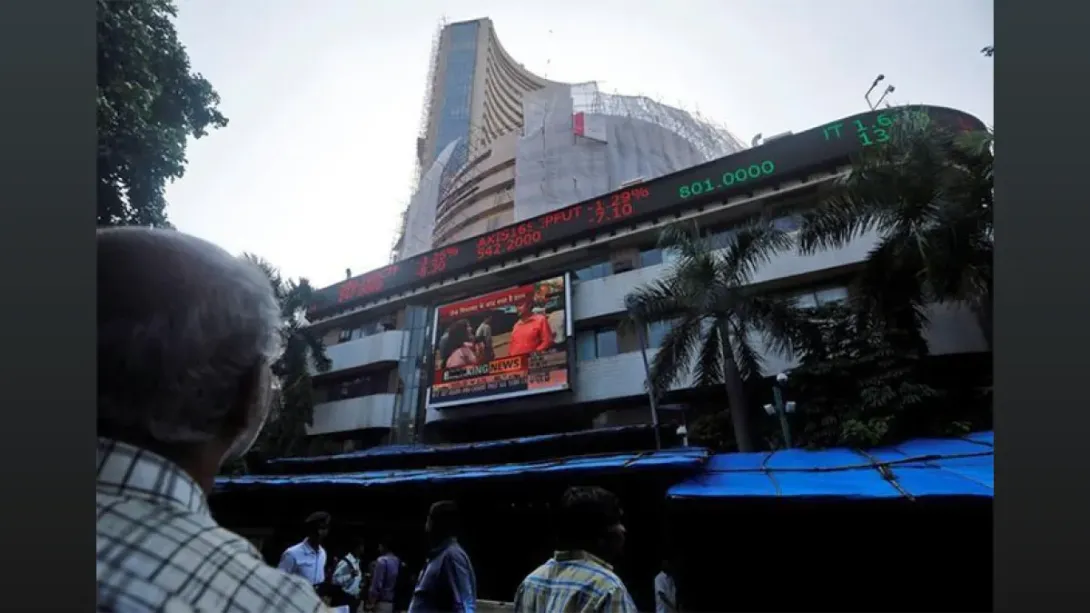
Indian equity benchmarks declined sharply, with the Sensex and Nifty registering significant losses amid widespread selling pressure across sectors. Weak global cues, persistent foreign institutional outflows and profit-booking in heavyweight stocks weighed on investor sentiment. Banking, information technology and metal shares led the downturn, dragging benchmark indices lower and erasing recent gains. Analysts attributed the decline to a combination of global risk aversion, elevated bond yields and cautious positioning ahead of key macroeconomic data. Despite the sell-off, market strategists maintain that India’s long-term growth fundamentals remain intact, even as near-term volatility continues to unsettle traders.
Benchmark Indices End Lower
Indian stock markets closed in negative territory, with the BSE Sensex and the Nifty 50 recording sharp intraday declines. The sell-off reflected broad-based weakness, as declines outnumbered advances across the major exchanges.
Market participants cited a mix of domestic and international triggers, including weak cues from global peers and continued caution among foreign investors. Heavyweight stocks in financial services and technology exerted downward pressure on the benchmarks, amplifying index-level losses.
The correction comes after a period of relative stability, suggesting that traders opted to lock in profits amid rising uncertainty.
Global Headwinds and FII Outflows
Persistent foreign institutional investor (FII) outflows remain a central concern for market stability. As global bond yields firm up and the U.S. dollar strengthens, capital has gravitated toward developed markets, reducing flows into emerging economies such as India.
Elevated interest rates in advanced economies have narrowed the risk premium that previously favored emerging market equities. Currency volatility has further influenced portfolio allocations, prompting investors to rebalance exposure.
Analysts warn that sustained FII selling can exacerbate short-term volatility, particularly in large-cap stocks that typically anchor benchmark indices.
Sectoral Pressure: Banks and IT Lead Losses
Banking stocks, often considered proxies for economic momentum, faced notable declines. Concerns about liquidity conditions, credit growth moderation and margin compression weighed on investor sentiment within the sector.
Information technology shares also retreated, tracking global technology weakness and cautious outlooks for enterprise spending. Given the sector’s export orientation, currency fluctuations and overseas demand trends remain critical variables.
Metal and energy counters joined the slide, reflecting softer global commodity cues and tempered demand forecasts.
Domestic Factors and Market Sentiment
In addition to external pressures, domestic investors are closely monitoring upcoming economic data releases and corporate earnings announcements. Any deviation from growth expectations could intensify market sensitivity.
Valuation metrics in select sectors had expanded in recent months, leaving limited margin for error. The current pullback, analysts suggest, may partly represent a healthy correction after sustained rallies.
Domestic institutional investors provided partial support by absorbing some selling, but their participation was insufficient to offset broader risk aversion.
Outlook: Volatility Likely to Persist
Market strategists emphasize that while the immediate trend appears cautious, India’s macroeconomic fundamentals—steady consumption demand, infrastructure investment and a resilient services sector—continue to underpin long-term prospects.
Short-term movements, however, are expected to remain influenced by global monetary policy signals, geopolitical developments and capital flow dynamics. Traders may adopt a defensive posture until clearer directional cues emerge.
For long-term investors, the current correction underscores the cyclical nature of equity markets. Prudent asset allocation, disciplined risk management and focus on earnings visibility remain essential as Dalal Street navigates another bout of volatility.
Comments