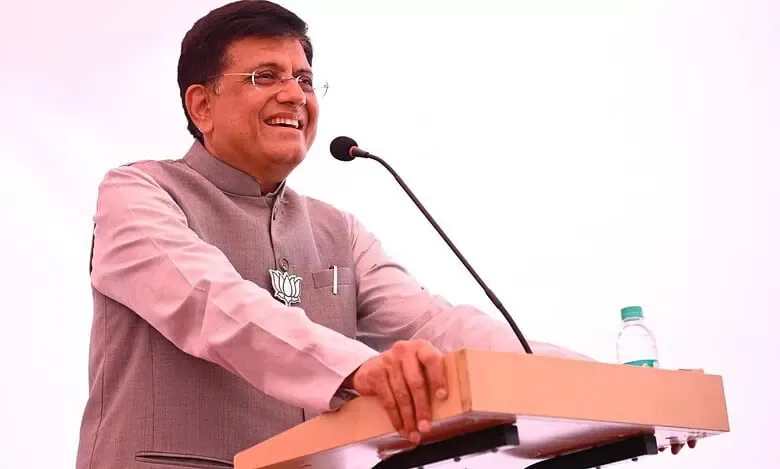
Commerce and Industry Minister Piyush Goyal has urged the Indian construction industry to reduce its reliance on imports and prioritize clean, green, and earthquake-resistant construction practices. Speaking at the inauguration of Vibrant Buildcon 2025, Goyal emphasized the critical role of various sectors—such as housing, infrastructure, and commercial real estate—in driving India's economic growth. With government initiatives aimed at expanding industrial and tourism infrastructure, Goyal forecasted India's transformation into a USD 30-35 trillion economy by 2047, urging industry players to align their practices with sustainable and forward-looking strategies.
Minister’s Vision for a Sustainable Construction Industry
In a key address at the inaugural session of Vibrant Buildcon 2025, Commerce and Industry Minister Piyush Goyal called on the construction industry to evolve by reducing its dependency on imported materials and focusing more on clean and green construction techniques. He advocated for the use of advanced technologies, such as earthquake-resistant designs and modular infrastructure, which not only cater to environmental needs but also ensure the long-term sustainability of buildings and infrastructure.
Goyal’s remarks underscore the shifting priorities of the Indian government, which is placing increasing emphasis on sustainable urbanization and infrastructure development. In a rapidly growing economy, the construction sector must adjust to environmental challenges while boosting its capacity to meet the demands of a growing population.
Government Initiatives to Fuel Infrastructure Growth
Goyal also highlighted various government-driven initiatives designed to elevate India’s infrastructure capabilities. Among these initiatives is the development of 20 new smart industrial cities, which will play a pivotal role in streamlining industrial growth and providing enhanced infrastructure for future developments. In addition, the government’s focus on expanding tourism infrastructure across 50 key destinations and the creation of 100 industrial plug-and-play hubs will further fortify India’s position as an economic powerhouse.
These infrastructural advancements are seen as essential to achieving the government’s ambitious goal of propelling India from a USD 4 trillion economy today to a USD 30-35 trillion economy by 2047. The move towards smarter, more sustainable cities and improved infrastructure hubs signals a future where India can provide cutting-edge facilities that will not only drive economic growth but also cater to the demands of a modern, urbanizing society.
Strategic Importance of Sectors in Economic Growth
According to Goyal, sectors like housing, infrastructure, commercial real estate, railways, airports, highways, and energy play a crucial role in driving India’s overall economic development. Each of these sectors contributes significantly to GDP growth and job creation. The government has been keen to optimize these industries to create a resilient economic environment where industries thrive, creating additional value across the economy.
As the backbone of urban development, these sectors are integral to India’s expansion as a global economic leader. Goyal’s emphasis on holistic sectoral growth showcases a comprehensive approach that seeks not just to improve physical infrastructure but also to ensure that the quality of life and environmental sustainability are given priority in India’s industrial renaissance.
The Road to a Trillion-Dollar Economy
Goyal's vision for India's future economy is one marked by rapid technological adoption and the creation of world-class infrastructure, supporting a higher standard of living for all citizens. The projected growth—from USD 4 trillion to USD 30-35 trillion by 2047—speaks to an ambitious, long-term vision that integrates economic, technological, and environmental progress.
The push towards reducing import dependency is a step toward ensuring India’s construction and manufacturing sectors are self-sufficient and resilient, offering high-quality, locally-produced alternatives. This aligns with India’s broader “Make in India” initiative, which encourages domestic production and reduces reliance on foreign goods, ultimately strengthening the country’s economic sovereignty.
Impact on the Stock Market and Investment Landscape
From an investor’s perspective, Goyal’s strategic push for sustainable construction and infrastructure expansion offers lucrative opportunities in the Indian market. Companies involved in green building materials, modular construction, and earthquake-resistant technologies are likely to experience increased demand, as both the government and private sector accelerate their focus on sustainable development.
Moreover, industries linked to infrastructure development, such as cement, steel, and electrical systems, will be directly impacted by these initiatives. Public-private partnerships and increased foreign direct investment (FDI) in infrastructure are also expected to boost the stock market, particularly in companies that align with government priorities for green and resilient development.
The stock market outlook for firms in these sectors looks promising, as the government’s policy focus on infrastructure expansion will provide a steady pipeline of opportunities. Investors who are keen on capitalizing on India's infrastructural growth will likely find opportunities in firms that not only lead the charge in innovation but also embrace sustainability and eco-friendly practices.
Conclusion: A Transformative Vision for India’s Future
Piyush Goyal’s call to action for the construction sector is a forward-looking vision that aligns with India’s ambitions to become a global economic leader. By advocating for cleaner, greener, and more resilient construction practices, Goyal is positioning India’s infrastructure to be both sustainable and capable of supporting rapid economic expansion. The emphasis on reducing import dependency and focusing on advanced technologies reflects a broader shift toward self-sufficiency and long-term growth.
The government’s infrastructure initiatives, paired with a renewed focus on sustainable and modular construction, pave the way for India to realize its potential as a USD 30-35 trillion economy by 2047. For investors, this presents a wealth of opportunities, especially in sectors poised for growth due to government-driven initiatives. The vision for India's economic future is clear: innovation, sustainability, and resilience will be at the heart of its development, and the construction industry will play a critical role in achieving these lofty goals.
Comments