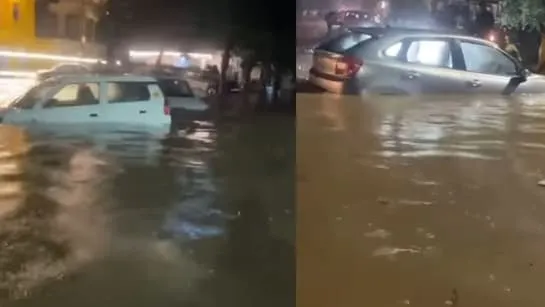
An intense spell of rain lashed Delhi on Thursday, plunging large swathes of the capital into chaos. Waterlogged roads led to severe traffic snarls, forcing commuters to spend hours in gridlock, while operations at Indira Gandhi International Airport were hampered by delays and diversions. The downpour exposed long-standing deficiencies in urban drainage infrastructure and underscored the urgent economic implications of inadequate flood preparedness in one of Asia’s fastest-growing metropolitan hubs. As businesses grappled with lost productivity and citizens voiced frustration, the deluge served as a stark reminder of how climate extremes continue to outpace India’s urban planning.
City Underwater: Commuters Struggle, Commerce Slows
By early afternoon, key arteries of Delhi — including arterial routes like Ring Road and stretches near Connaught Place — were submerged under knee-deep water, virtually immobilizing vehicular movement. Videos circulating among residents showed stranded buses and two-wheelers half-submerged, while motorists abandoned vehicles to wade through murky currents.
Ride-hailing fares surged as demand skyrocketed and supply dwindled, inflicting additional costs on officegoers already grappling with hours-long delays. Small retailers and daily wage earners bore the brunt, with footfall plummeting across commercial hubs. Economists pointed out that such weather-induced disruptions translate directly into lost man-hours and cascading business costs, especially for micro, small, and medium enterprises.
Aviation Takes a Hit: Flights Delayed and Diverted
The impact of the rain was not confined to the streets. Delhi’s airport, one of the busiest in the region, witnessed a series of delays and at least a dozen diversions to Jaipur and Lucknow as visibility dropped and apron areas became waterlogged.
Passengers were left stranded inside terminals for extended periods, while airlines scrambled to rearrange schedules. Hospitality businesses, already grappling with a lean season, faced fresh logistical complications as travelers missed connecting flights and hotel reservations had to be hastily altered.
Infrastructure Exposed: A Costly Gap
Urban planners have long warned that Delhi’s stormwater drainage systems, many laid decades ago, are woefully inadequate for the volume of rainfall increasingly witnessed under erratic monsoon patterns. Thursday’s flooding illustrated this vulnerability yet again, raising pressing questions about capital allocations for civic infrastructure.
While the municipal corporations have sanctioned multiple projects aimed at desilting drains and enhancing water outflow capacity, execution remains patchy. Experts caution that without systemic upgrades — including integrated water catchment and rapid runoff systems — Delhi’s economy will continue to suffer disproportionately from what should be manageable climatic events.
The Broader Economic Ripple
Beyond immediate inconveniences, frequent flooding imposes a stealth tax on growth. Insurance claims spike, repair costs escalate, and supply chains are thrown off balance, affecting sectors from logistics to retail. For a city that contributes nearly 4% of India’s GDP, such periodic shutdowns are more than just civic annoyances; they represent tangible drags on productivity and investor sentiment.
Moreover, these events underscore the climate risk premium now attached to urban centers worldwide. Businesses evaluating expansion often scrutinize resilience against natural disruptions, and Delhi’s persistent struggles with water management do little to instill confidence.
Looking Ahead: The Need for Resilient Planning
Thursday’s ordeal could serve as a crucial inflection point if leveraged wisely. Urban economists argue for embedding climate adaptation into Delhi’s broader development strategy, from green corridors that facilitate drainage to smart road surfaces that absorb water. Investments in resilient infrastructure, though substantial upfront, promise high long-term returns by safeguarding economic continuity.
Until such priorities move from policy documents to ground realities, however, Delhi’s residents and businesses may have little choice but to brace for repeated, costly encounters with nature’s increasingly unpredictable fury.
Comments