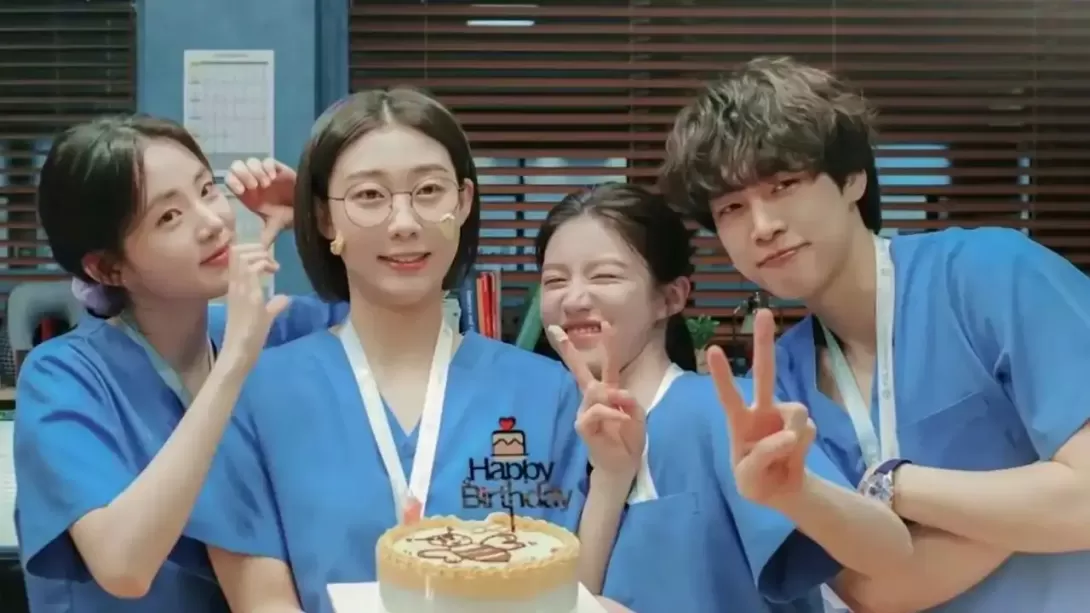
Netflix’s Resident Playbook, a medical drama spun off from the widely acclaimed Hospital Playlist, has quietly become one of the platform’s most resonant series, garnering critical praise and audience devotion despite its initial delay in release. With emotionally charged storytelling, character-driven arcs, and a poignant finale, the show carved its identity beyond its origins. As viewers rally for a second season, the fate of this “limited series” hangs in balance. This article explores how Resident Playbook evolved into a cultural sleeper hit, what made its final episodes stand out, and the business implications for Netflix in extending its life.
A Spin-Off That Stood on Its Own
When Resident Playbook debuted nearly a year after its anticipated release window, expectations were high, albeit cautious. As a spin-off of the beloved Hospital Playlist, comparisons were inevitable. But the series swiftly proved its merit, earning its place among the most-watched Netflix Korea offerings with minimal fanfare. Instead of riding the coattails of its predecessor, it constructed its own emotional and thematic landscape—interweaving clinical realism with character intimacy.
What elevated the series was its commitment to nuance. Rather than relying on melodrama or sensationalized emergencies, it found power in the quiet heroics of daily medical life. The show’s central residents faced personal trials that mirrored the very patients they served—bridging clinical detachment with the vulnerable humanity at the heart of medicine.
A Finale That Delivered More Than Closure
In its final week, the show offered a two-episode arc that deviated—gently but decisively—from its earlier rhythm. While the emergency rooms and operating theatres remained the backbone, the tone turned more contemplative. The character of Pyo Nam-Kyun, played with sincerity by Shin Si-Ah, experienced a formative shift. She simultaneously encountered life and loss: witnessing the death of her first patient at Jongno branch, followed immediately by assisting in a birth amid a crisis. This stark juxtaposition captured the duality intrinsic to hospital life, deepening the show's emotional gravity.
Romance and personal growth also came to the forefront. Um Jae-Il (Kang You-Seok) finally voiced his feelings for Kim Sa-Bi (Han Ye-Ji), offering a long-awaited payoff to a subtle narrative thread. Meanwhile, Sa-Bi, guided by Professor Ryu Jae-Hw’s counsel, began to understand how even a simple smile can be therapeutic—a profound lesson in bedside empathy.
And in an unexpected academic turn, Jae-Il impressed the notoriously discerning Professor Jo Jun-Mo, earning the rare opportunity to co-author a paper on ovarian cancer—an unprecedented accomplishment for a first-year resident. These elements underscored the finale's emphasis on professional validation, emotional intelligence, and emerging ambition.
Audience Demand and the Business of Renewal
Though Resident Playbook was marketed as a limited series, the groundswell of fan support following its conclusion suggests Netflix may need to revisit that classification. Social media has become a rallying ground for viewers demanding a continuation, citing unresolved emotional arcs and the show's capacity for future storylines.
For Netflix, the decision carries both artistic and financial weight. Limited series are often one-off prestige projects, but in the case of Resident Playbook, extending its life could align with the platform’s broader strategy to deepen engagement in key international markets—especially South Korea, where medical dramas have enduring appeal and commercial viability. Moreover, a potential Season 2 could be repositioned not merely as a sequel, but as a thematic anthology exploring new hospital units or resident groups, akin to other serialized medical franchises.
Renewing the show would also contribute to Netflix’s content diversification amid rising competition from regional streaming platforms. By capitalizing on the momentum of organically grown hits, the platform can bolster subscriber retention while cultivating a loyal fanbase eager for emotionally intelligent storytelling.
Conclusion: The Scalpel Meets Sentiment
Resident Playbook may have begun as a footnote to Hospital Playlist, but it has emerged as a standalone success. Its blend of realistic medical scenarios, character evolution, and emotionally resonant themes has struck a chord with audiences in ways few series manage. The finale didn’t just tie up loose ends—it opened doors, both narratively and strategically.
Whether Netflix listens to the growing chorus for renewal remains to be seen. But one thing is certain: Resident Playbook has proven that even in a saturated streaming landscape, carefully written and authentically portrayed human stories will always find their audience.
Comments