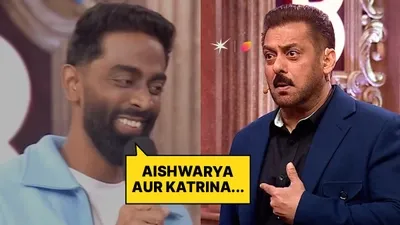
Bigg Boss 19 has once again found itself at the center of heated debate, this time over contestant Pranit More’s attempt to inject humor into the show by referencing host Salman Khan’s past controversies. The comic jabs reportedly drew on some of the most discussed chapters in Khan’s life, including his former relationship with Aishwarya Rai, the blackbuck hunting case, the hit-and-run trial, and his much-publicized feud with actor Vivek Oberoi. While intended as satire, the move sparked conversations about the boundaries of humor in reality television, the ethical lines contestants should observe, and the role of public perception in shaping celebrity legacies.
---
Humor or Provocation?
Pranit’s remarks attempted to frame Khan’s controversies within a comedic narrative, seemingly as part of his strategy to stand out in a competitive environment where entertainment is paramount. However, referencing sensitive incidents—especially those tied to legal battles and personal relationships—raised concerns about whether humor crossed into provocation. For audiences and fellow contestants, the performance blurred the line between playful banter and disrespect, placing Pranit at the center of public scrutiny.
---
Revisiting Salman Khan’s Controversies
Salman Khan’s life and career have been punctuated by several high-profile controversies. His relationship with Aishwarya Rai in the early 2000s, followed by a public fallout, was widely covered in entertainment circles. The blackbuck hunting case, in which he faced charges for allegedly poaching a protected species, and the Mumbai hit-and-run case, in which he was accused of reckless driving, have been defining legal battles in his career. His strained relationship with actor Vivek Oberoi further added to the media spotlight. For decades, these episodes have formed part of Khan’s public image, simultaneously challenging and reinforcing his celebrity status.
---
The Business of Celebrity Image
In the world of entertainment, controversies often coexist with stardom, shaping an actor’s brand equity. For Salman Khan, despite enduring serious legal and personal controversies, his popularity has remained resilient, sustained by blockbuster films, endorsements, and hosting Bigg Boss. By invoking these incidents in a comedic setting, Pranit tapped into a well-known aspect of Khan’s life—but at the risk of alienating viewers who consider such humor disrespectful. This incident raises questions about how far reality television can push boundaries for ratings without undermining respect for its own anchor figure.
---
Public Perception and Audience Sensitivities
Audiences play a crucial role in defining what is acceptable in mass entertainment. While some may interpret Pranit’s satire as bold humor, others may see it as a personal attack on the host. Given Khan’s centrality to Bigg Boss as both a moderator and cultural icon, contestants walk a fine line when invoking his personal history. The balancing act between free expression and audience sensitivities becomes especially important in a format where public votes decide contestants’ fates.
---
Reality Television and Its Limits
Reality shows thrive on drama, unpredictability, and bold personalities. Yet, Pranit’s comedic strategy highlights an enduring challenge—how much personal history of celebrities should be used as fodder for entertainment. While his remarks have secured him attention, they also risk overshadowing his gameplay and shifting focus from competition to controversy. The incident underlines the dual-edged nature of reality television: the same actions that generate visibility can also spark backlash, affecting both contestants and the overall perception of the show.
---
Conclusion
Pranit More’s attempt to use Salman Khan’s controversies as comedy in Bigg Boss 19 reflects the fine line between satire and sensitivity in reality entertainment. While such humor may momentarily grab attention, it also underscores the risks of invoking unresolved or deeply personal issues tied to public figures. For contestants, the episode serves as a cautionary tale: in an environment where visibility is vital, the choice of content matters just as much as the performance. For the audience, it reopens conversations about celebrity image, public memory, and the evolving role of humor in India’s entertainment landscape.
Comments