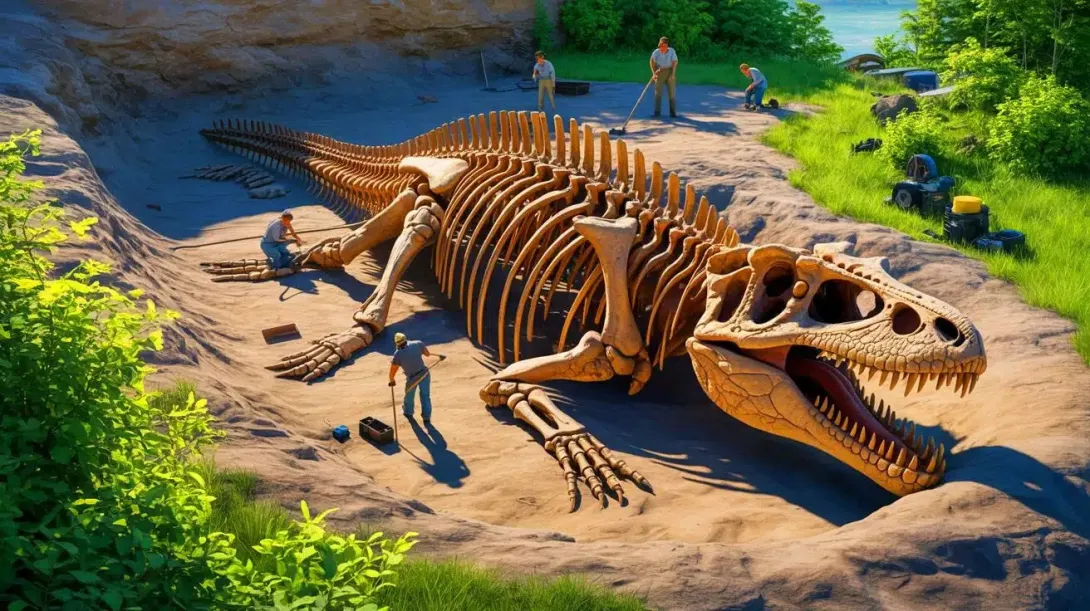
Paleontologists in New Jersey have discovered remarkably well-preserved lizard fossils, shedding new light on reptilian evolution in the region during the Mesozoic era. These fossils, dating back over 100 million years, provide crucial insights into the diversity, anatomy, and ecological roles of early lizards in prehistoric ecosystems. The findings not only enhance understanding of reptilian adaptations over time but also contribute to broader studies of vertebrate evolution in North America. Researchers emphasize that such discoveries help reconstruct ancient habitats, offering a glimpse into the complex interplay between species and their environments during a dynamic period in Earth’s history.
Discovery and Geological Context
The fossils were excavated from sedimentary rock formations in northern New Jersey, known for their rich Mesozoic deposits. These layers, formed during the Late Cretaceous period, have previously yielded dinosaur remains and other vertebrate fossils, indicating a diverse ecosystem of both terrestrial and aquatic life. The newly discovered lizards appear to belong to multiple species, each exhibiting unique skeletal features that hint at varied ecological niches.
Insights into Reptilian Evolution
Analysis of the fossils reveals critical anatomical adaptations, including limb structures and dentition patterns, suggesting dietary diversity and locomotion strategies. Some specimens display features indicative of insectivorous diets, while others may have been omnivorous. By comparing these fossils with both modern lizards and other Mesozoic reptiles, scientists are gaining a clearer picture of evolutionary trajectories and survival strategies that allowed these species to thrive in prehistoric environments.
Broader Implications for Paleontology
Beyond their immediate significance, these fossils provide essential data for reconstructing the climate, flora, and fauna of the region during the Cretaceous. They also offer insights into species interactions and ecological dynamics, which can inform models of evolutionary biology and extinction patterns. Such discoveries highlight New Jersey’s role as a key site for understanding vertebrate paleontology in North America.
Future Research Directions
Ongoing studies aim to extract further details using advanced imaging technologies and isotopic analysis. Researchers hope to identify additional specimens, clarify phylogenetic relationships, and explore the potential for uncovering more comprehensive fossil assemblages. These efforts are expected to deepen scientific understanding of how lizard species adapted to environmental changes over millions of years.
Comments