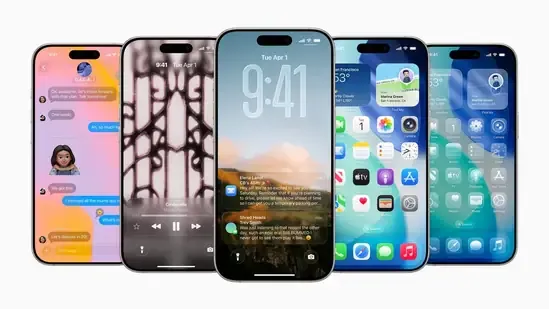
Apple’s latest iOS 26 Beta 4 update marks a quiet but notable refinement of its experimental 'Liquid Glass' interface—an aesthetic and functional layer that blends transparency, fluid animation, and tactile response into a more immersive user experience. Though not fully deployed across the iOS environment, the recent update subtly reintroduces key elements of this design philosophy, hinting at its possible integration in future devices. The move reflects Apple’s long-standing focus on intuitive, visually striking software design, while continuing to test the limits of user-interface innovation ahead of next-gen hardware releases.
---
The Return of Liquid Glass: Subtle but Strategic
The iOS 26 Beta 4 update appears to revive components of the ‘Liquid Glass’ interface—Apple’s internal term for a dynamic UI model emphasizing translucency, light diffusion, and fluid transitions. First teased in early design patents and limited developer previews, the concept was temporarily shelved due to performance constraints on older devices.
With Beta 4, developers and testers have reported enhancements that align with Liquid Glass principles: refined blur effects, responsive layering, and animation smoothing that reacts contextually to touch and movement. These incremental changes suggest Apple is laying the groundwork for broader implementation in a future iPhone generation.
---
Aesthetics Meet Performance: Engineered Visuals
The evolution of Liquid Glass reflects Apple’s pursuit of aesthetic sophistication without sacrificing performance. Rather than flashy gimmicks, the effects are engineered to support user engagement and efficiency. Transition animations have become more adaptive, shadows more realistic, and foreground-background separation more intuitive.
Importantly, the improved fluidity does not appear to compromise battery life or responsiveness—an outcome likely driven by advances in Apple Silicon’s GPU architecture and the operating system’s more efficient rendering engine. These enhancements represent the kind of iterative polish that often foreshadows larger design shifts in flagship releases.
---
Integration Points Across iOS
Although not yet a system-wide transformation, Liquid Glass elements have found a home in specific UI layers. Notification banners, Control Center tiles, widgets, and select dynamic wallpapers now exhibit a more sophisticated use of opacity, parallax motion, and ambient color blending. These enhancements aim to make information feel more embedded in the hardware, contributing to a seamless “glass through interface” illusion.
Apple’s strategy of gradual UI deployment allows it to fine-tune experiences for newer devices while maintaining backward compatibility—a hallmark of its design discipline. It also gives developers time to adapt their apps to evolving visual standards without disruption.
---
What It Signals for Future iPhones
The subtle reintroduction of Liquid Glass is not merely cosmetic—it signals Apple’s increasing confidence in deploying advanced visuals that require hardware-level optimization. This could be a precursor to more radical UI transformations expected in upcoming iPhones, potentially paired with new display technologies or spatial computing features.
Moreover, the emphasis on haptic feedback synchronization and optical layering could lay the groundwork for a more immersive interface design—where the line between software and hardware continues to blur. It’s not far-fetched to anticipate that Liquid Glass, when fully realized, may become the signature UI identity for the next era of iOS.
---
Conclusion: A Quiet Evolution with Bold Implications
While iOS 26 Beta 4 doesn’t overhaul the iPhone experience, it refines it with an unmistakable shift toward a more organic, liquid-like interface model. These subtle yet meaningful updates showcase Apple’s methodical approach to UI evolution—an approach that privileges harmony between form and function.
As the Cupertino giant continues to define the future of mobile interaction, the Liquid Glass enhancements serve as a visual and tactile promise: that the future of iOS will be as much about how it feels and flows as what it does.
Comments