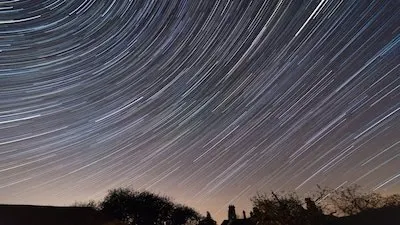
August’s night skies are poised to dazzle skywatchers with a remarkable series of astronomical events. Highlights include an exceptionally rare conjunction between Venus and Jupiter, a parade of planetary pairings, and the much-anticipated peak of the Perseid meteor shower. From dazzling meteor trails to twilight planet sightings, the month offers a unique opportunity for both amateur and seasoned observers to witness rare cosmic alignments without the need for sophisticated equipment. With optimal visibility conditions in various regions, August promises a celestial spectacle that fuses scientific curiosity with natural wonder.
---
Planetary Pairings to Grace the Evening Sky
August kicks off with a sequence of planetary convergences, creating picturesque vistas just after sunset. Mars, Saturn, and Mercury will make prominent appearances in the early evening hours, with Saturn visible from the first week and Mars growing brighter as the days progress.
One of the month's most photogenic moments arrives mid-August, when Mercury and Mars briefly meet low on the western horizon during twilight. The close approach, visible to the naked eye under clear skies, offers a chance to observe two rocky planets in close angular proximity—a rare configuration that adds depth to the month’s planetary ballet.
---
Venus-Jupiter Conjunction: A Once-in-a-Decade Sight
Perhaps the most anticipated highlight of the month is the rare conjunction between Venus and Jupiter. Set to occur in the final days of August, this pairing brings together the two brightest planets in the night sky in a spectacle not expected again for nearly a decade.
Although planetary conjunctions are common in astronomical terms, the proximity and brilliance of Venus and Jupiter during this event make it exceptional. At their closest, the planets will appear less than half a degree apart, resembling a brilliant double star to the unaided eye. The alignment will be visible shortly before sunrise, making early morning observation ideal.
---
Perseid Meteor Shower to Peak Under Favorable Conditions
The annual Perseid meteor shower, considered one of the most prolific and visually captivating of the year, is forecast to reach its peak between August 11 and 13. With the moon in a waning crescent phase during the peak nights, minimal lunar interference is expected, providing optimal dark-sky conditions for meteor spotting.
Observers can expect to see as many as 60 to 100 meteors per hour under clear, rural skies. Known for its fast, bright meteors and occasional fireballs, the Perseids originate from debris left behind by Comet Swift-Tuttle, which orbits the sun every 133 years.
For the best experience, viewers are encouraged to find a dark, unobstructed location, preferably away from urban light pollution. Peak viewing typically occurs after midnight and continues until dawn.
---
Opportunities for Observation and Community Engagement
Astronomy clubs and educational institutions across the country are preparing public skywatching events to coincide with these celestial phenomena. These gatherings often include telescope viewings, guided tours of the night sky, and educational talks designed to make astronomy more accessible to the public.
Even without formal equipment, the naked eye and a basic understanding of timing and direction can offer rewarding experiences. Smartphone apps and printed sky maps can assist casual observers in locating planets and tracking meteor activity throughout the month.
Comments