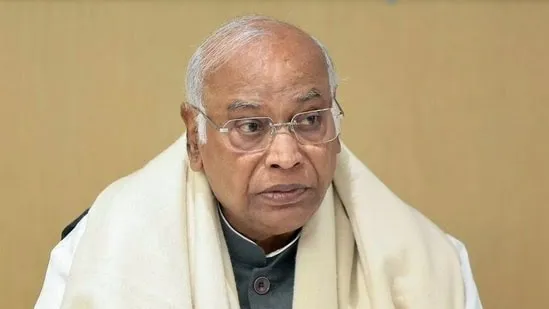
The political landscape in Karnataka has intensified as BJP leaders strongly condemned Congress leader Mallikarjun Kharge’s remark referring to the party’s central leadership as the “watchman of the Gandhi family.” The comment comes amid a tense power tussle within the state, highlighting internal factionalism and leadership disputes. BJP has accused Congress of being overly centralized and controlled by the Nehru-Gandhi family, framing Kharge’s statement as evidence of internal dysfunction. Political analysts suggest that this exchange could influence public perception ahead of upcoming elections, intensifying scrutiny on Congress’s governance approach in Karnataka and reinforcing BJP’s narrative of decentralization and regional empowerment.
Context Behind the Controversy
The comment by Mallikarjun Kharge, a senior Congress leader, emerged during discussions over leadership selection and policy decisions in Karnataka. Referring to the central leadership as the “watchman of the Gandhi family,” Kharge implied a strong influence of the family in state-level decision-making. BJP leaders quickly seized on this remark, framing it as an admission of Congress’s centralized control and a lack of internal democratic processes.
BJP’s Response and Political Implications
The BJP criticized Kharge’s statement as a confirmation of Congress’s internal hierarchy being dominated by the Nehru-Gandhi family. Party spokespersons argued that such centralization undermines the voices of regional leaders and hampers effective governance. Analysts note that this exchange is likely to resonate with voters who prefer a more decentralized and locally accountable political structure, potentially benefiting the BJP in upcoming state elections.
Factional Dynamics Within Congress
Kharge’s statement also highlights the ongoing factional tensions within Congress in Karnataka. Reports of disagreement over leadership roles, candidate selection, and policy priorities have underscored the challenges the party faces in projecting a unified front. Observers suggest that internal conflicts, when made public, can weaken voter confidence and provide political ammunition to rival parties.
Strategic Takeaways for BJP
By emphasizing Congress’s reliance on family-centric leadership, BJP seeks to position itself as a party advocating merit-based decision-making and regional representation. This narrative aligns with the party’s broader strategy of highlighting governance efficiency and decentralization, while simultaneously portraying Congress as disconnected from grassroots concerns.
Conclusion
The controversy sparked by Kharge’s remark illustrates the delicate balance of power within Congress and the opportunities it creates for opposition parties. As Karnataka approaches critical electoral cycles, such statements, combined with BJP’s strategic framing, may influence voter perceptions and shape the state’s political discourse. The episode underscores how internal party dynamics can have significant ramifications in a competitive electoral environment.
Comments