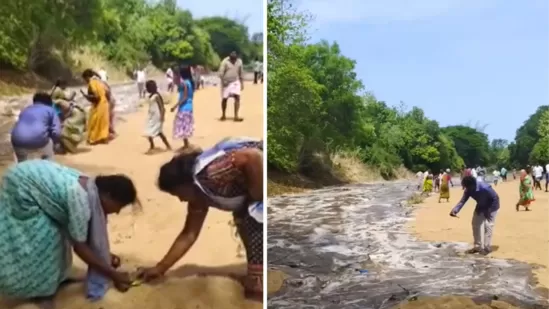
In a poignant display of reverence and tradition, the people of Tamil Nadu welcomed the return of the Cauvery River’s waters with prayers, floral offerings, and heartfelt rituals as irrigation began across the delta region. The release of water from the historic Kallanai dam, presided over by Chief Minister M.K. Stalin, marks the onset of a crucial agricultural season, expected to benefit nearly 13 lakh acres of farmland. As water flowed into long-parched soil, locals honored it as more than a natural resource—embracing it as a symbol of renewal, emotion, and communal identity passed through generations.
A River Revered: Cultural and Spiritual Reconnection
The arrival of Cauvery water in Tamil Nadu is more than a utilitarian milestone—it is a spiritual and cultural homecoming. As water was released from the Kallanai dam, one of the oldest functioning irrigation structures in the world, villagers from the Thanjavur and Tiruchi districts gathered along the canal banks to perform traditional rituals. With folded hands, flower showers, and offerings placed on the ground, the locals greeted the flowing water not simply as an irrigation source, but as a living deity and lifeline to their land and lives.
A video widely circulated on social media captured the moment: residents sprinting beside the flowing river, joyfully celebrating the arrival of the long-anticipated stream. The imagery evoked parallels with the jubilation that follows the first monsoon rains, a deeply emotional event for India’s agrarian communities.
Government Initiative and Symbolic Leadership
The symbolic importance of the water release was further underscored by Chief Minister M.K. Stalin, who participated in the ceremonial commencement of the irrigation season. At the Kallanai site, he showered flower petals and scattered paddy seeds into the stream—a gesture that echoed the age-old belief that farming begins not just with toil, but with gratitude.
This ceremonial act was a public reaffirmation of the government's support for agriculture, aligning modern governance with ancestral respect for the river. It also signaled the official start of irrigation efforts for the coming agricultural cycle, demonstrating the administration’s commitment to timely and sustained water distribution.
Irrigation and Economic Impact
The release of Cauvery water is expected to irrigate around 13 lakh acres across the delta region, a vital agricultural belt that produces a significant share of Tamil Nadu’s food crops. For thousands of farmers, this marks the beginning of a new cycle of cultivation—bringing hope after months of waiting amid erratic weather patterns.
Ensuring water availability at the start of the sowing season is critical not just for crop yield but also for stabilizing rural income, controlling food inflation, and maintaining agricultural employment. A successful irrigation rollout reduces dependence on unpredictable monsoons and helps protect farmers from weather-linked economic shocks.
Tradition Meets Technology: A Modern Lens on Nature
Interestingly, the event also bridged tradition with modern observation. Naveen Reddy, a technologist who tracks floods and weather data online, shared a personal reflection on social media. “As Kaveri arrives, everyone’s heart lifts... it’s not just water, it’s emotion, tradition, and togetherness flowing in,” he wrote—capturing the emotional depth of the occasion through the lens of a digital-era observer.
This convergence of ancient reverence and contemporary awareness underscores a deeper truth: rivers in India are not only geological features but also bearers of history, emotion, and identity. Their arrival is tracked not only by irrigation departments but by poets, data analysts, and villagers alike.
Conclusion: Cauvery as Continuity and Catalyst
The release of Cauvery water in Tamil Nadu’s delta is a reminder of the interconnectedness between nature, governance, agriculture, and community. In an era where natural resources are often reduced to numbers and policies, the visuals from the Kallanai dam site restore a sense of reverence and belonging.
More than an irrigation event, this was a communal celebration of resilience, a symbolic restoration of hope, and a reminder that for many, water remains more than a commodity—it is kin, sustenance, and sacred heritage.
Comments