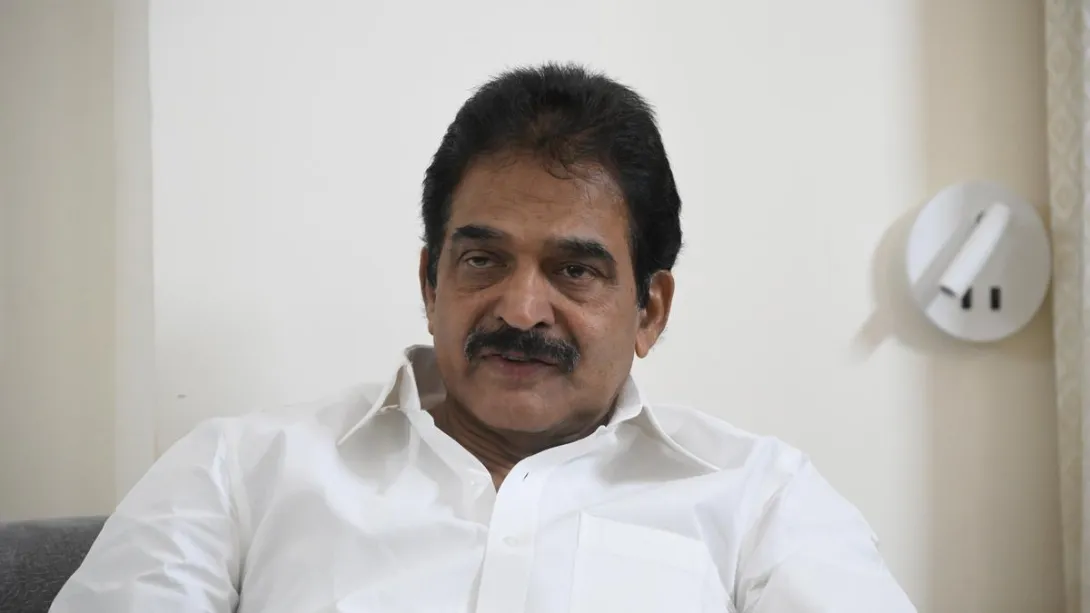
A controversy has erupted over the denial of certification to the Malayalam film JSK – Janaki vs. State of Kerala by the Central Board of Film Certification (CBFC), allegedly due to the film's use of the name ‘Janaki’, a reference to goddess Sita. The film, starring Union Minister and actor Suresh Gopi, has sparked political backlash, with Congress leader K.C. Venugopal accusing the government of stifling artistic freedom. As the matter reaches the Kerala High Court, larger questions loom over state control of expression, the politicization of cinema, and the chilling effect on India’s creative industries.
A Film Blocked, A Nation Debates
JSK – Janaki vs. State of Kerala finds itself at the center of a heated national debate—not over its artistic merit, but over whether it should be allowed to be seen at all. The Central Board of Film Certification (CBFC) has denied clearance to the film, citing the use of the name ‘Janaki’ for its central character, a woman pursuing legal recourse after facing a violent assault. The name, also associated with the Hindu goddess Sita, has reportedly prompted objections from within the regulatory body.
This decision has drawn sharp criticism from political leaders and civil society alike, as it raises fundamental concerns about artistic liberty, constitutional values, and the growing encroachment of ideological filters into India's cultural landscape.
Political Backlash and a Call for Accountability
Leading the political response, All India Congress Committee (AICC) general secretary K.C. Venugopal issued a scathing public critique of the CBFC’s stance. In a strongly worded social media statement, Venugopal condemned what he termed a “systemic attack” on freedom of expression, questioning both the silence of lead actor and Union Minister Suresh Gopi and the broader direction of the Union government.
“This is not just about a film,” Venugopal wrote. “It is about the right of every creator to tell stories without fear or interference. The government’s silence in the face of such blatant suppression is both deafening and deliberate.”
He also reminded the public that names drawn from Hindu mythology—such as Ram, Krishna, Sita, and Radha—have long been used in literature and cinema, often without controversy. To object to Janaki now, he argued, signals a political shift rather than a moral or cultural concern.
The Constitutional Argument: Art vs. Authority
At the heart of the debate lies the question: who gets to decide what art can say? According to Venugopal and several legal experts, the censor board’s decision not only undermines the autonomy of filmmakers but also contradicts the spirit of India’s Constitution, particularly Article 19(1)(a), which guarantees freedom of speech and expression.
Venugopal went further to accuse the board of acting under ideological pressure, implying that its actions reflected a pattern of state interference designed to mold cultural narratives to suit a political agenda.
“When censorship begins with names, it inevitably extends to thoughts and ideas,” he warned. “This is a slippery slope no democracy should ever tread.”
Legal Intervention and Judicial Oversight
In response to the escalating controversy, the Kerala High Court has agreed to view the film firsthand on July 5 before issuing a final verdict on the CBFC’s directive. Legal observers say this unusual move reflects the court’s willingness to engage directly with the content rather than rely solely on bureaucratic reasoning.
This judicial review may well serve as a precedent-setting moment in defining the limits of censorship in India’s contemporary media landscape, particularly at a time when filmmakers increasingly find themselves navigating ideological minefields.
A Broader Pattern of Control?
Venugopal also drew attention to what he described as a broader, more concerning pattern: the quiet erosion of civil liberties under the guise of cultural preservation. Referring to recent instances, including reported cuts to the Mohanlal-led film Empuraan post-release, he suggested that filmmakers are being forced to self-censor, pre-emptively shaping their narratives to avoid state backlash.
“This is not about public sentiment. It’s about state power,” he said. “The government is attempting to control not just what we eat, wear, and say—but now even what we imagine.”
He characterized this as a “declared agenda” by the current administration, calling on the Union Ministry of Information and Broadcasting to clarify its stance and uphold the constitutional guarantees afforded to India’s artistic community.
Conclusion: A Nation at a Crossroads
The JSK – Janaki vs. State of Kerala controversy is more than a dispute over a name in a film—it is a reflection of India’s ongoing struggle between creative independence and bureaucratic control. At stake is not only the future of one film, but the larger principle of whether art can continue to exist without fear in the world’s largest democracy.
As the High Court prepares to screen the film and issue its ruling, the industry—and the nation—watches closely. The outcome will either reaffirm the sanctity of creative freedom or mark another step toward an increasingly restricted cultural climate.
Comments