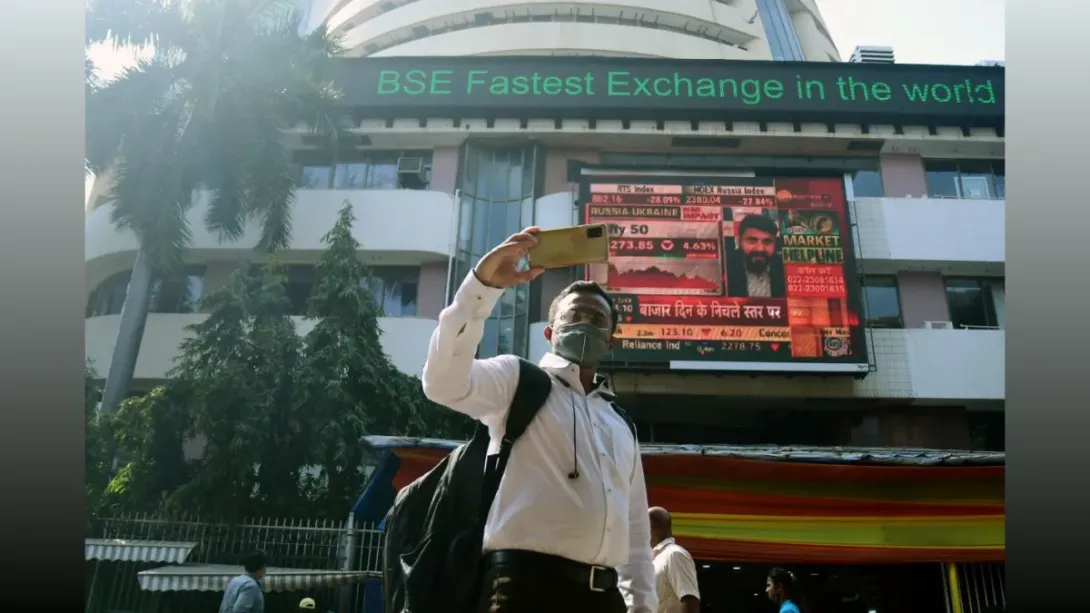
Indian equity benchmarks closed sharply lower as the Sensex and Nifty declined under the combined weight of sustained foreign institutional investor (FII) outflows and mounting global trade concerns. Investor sentiment weakened amid uncertainty over global economic growth, volatile currency movements, and shifting trade policies in major economies. Heavy selling in banking, information technology, and export-oriented stocks amplified the downturn, while defensive sectors offered limited support. Market participants adopted a cautious stance, tracking global cues and capital flow trends closely. Analysts caution that volatility may persist in the near term until clarity emerges on foreign investment flows and international trade dynamics.
Markets End Lower Amid Risk-Off Sentiment
Domestic equity markets witnessed broad-based selling, with the Sensex and Nifty closing decisively in the red. The decline reflected a clear risk-off mood, as investors pared exposure to equities in response to global uncertainties. Weakness in heavyweight stocks dragged the benchmarks lower, eroding gains made earlier in the month.
Trading activity suggested defensive positioning, with investors refraining from aggressive buying amid the absence of supportive global triggers.
Foreign Institutional Investors Drive Selling Pressure
Sustained selling by foreign institutional investors remained the primary drag on market performance. Higher interest rates in developed economies and a stronger US dollar have prompted global investors to rebalance portfolios away from emerging markets, including India.
Large-cap stocks with significant foreign ownership faced the brunt of the selling. Analysts note that persistent FII outflows can tighten liquidity conditions and limit near-term upside for equity indices.
Trade Concerns Add to Market Anxiety
Adding to investor caution were renewed worries over global trade. Uncertainty surrounding tariff regimes, geopolitical tensions, and slowing demand in key export markets weighed heavily on sentiment. Sectors linked to global growth, such as IT and metals, underperformed as earnings visibility weakened.
Market strategists warned that prolonged trade disruptions could impact corporate margins and export volumes, further pressuring equity valuations.
Sectoral Performance Reflects Broad Weakness
Banking and financial stocks led the decline, affected by profit booking and concerns over funding costs. Information technology shares also slipped, tracking weakness in global tech indices and a cautious outlook for discretionary spending overseas.
In contrast, select FMCG and healthcare stocks showed relative resilience, benefiting from their defensive characteristics amid heightened volatility.
Outlook: Volatility Likely to Continue
Experts believe that market volatility is likely to persist in the short term, driven by external factors such as foreign capital flows, global interest rate trajectories, and trade developments. While India’s macroeconomic fundamentals remain comparatively strong, global headwinds are expected to influence market direction.
Comments