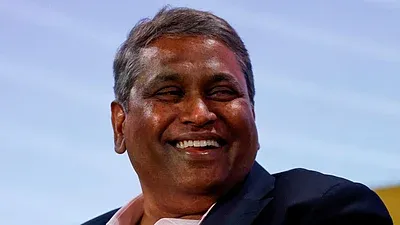
HCLTech’s Managing Director and CEO, C Vijayakumar, earned a total compensation of $10.85 million (approximately Rs. 90.2 crore) in the financial year 2024–25, positioning him as the highest-paid CEO among India’s top IT services firms. His remuneration surpasses that of the heads of Infosys and TCS, the two largest players in the sector by revenue. This shift reflects evolving leadership valuation in the global technology space, where compensation is increasingly aligned with shareholder value, international expansion, and digital transformation success. The development underscores how Indian IT giants are recalibrating their executive pay structures to compete globally for top-tier leadership.
---
Breaking Down the Compensation Package
C Vijayakumar’s total package includes a mix of base salary, variable pay, and long-term incentives, including stock awards. The lion’s share of his earnings stemmed from performance-linked components, reflecting HCLTech’s commitment to aligning executive pay with business results.
According to regulatory disclosures, a portion of the $10.85 million payout was contingent on meeting pre-defined performance benchmarks across global markets. This structure not only incentivizes aggressive growth but also ties leadership performance directly to company success, a practice increasingly common among multinational tech firms.
By comparison, the chief executives of Infosys and TCS drew smaller annual packages for the same period, highlighting the divergence in compensation philosophy among India's IT majors.
---
Industry Context: Compensation as a Strategic Tool
The Indian IT industry has matured into a globally competitive ecosystem, and executive compensation is now viewed not just as a reward, but as a strategic lever to retain and motivate transformational leadership. With rapid shifts in client expectations, AI adoption, and global tech demand, leadership roles have grown more complex, requiring nuanced vision, resilience, and innovation at scale.
C Vijayakumar’s compensation package can be seen as a reflection of HCLTech’s intent to recognize sustained performance while fortifying its leadership pipeline in an increasingly volatile global environment.
Additionally, global mandates, especially from North American clients, demand leaders who are able to drive localization, cloud transformation, and digital partnerships across geographies—a challenge that directly influences compensation strategies.
---
Peer Comparison: Diverging Executive Pay Models
While HCLTech has adopted an aggressive pay-for-performance approach, TCS and Infosys continue to follow relatively conservative compensation models, reflective of their more measured governance frameworks. This difference reflects not just corporate philosophy, but also variations in risk appetite, organizational structure, and shareholder expectations.
For example, the TCS CEO’s compensation, though substantial, remains more balanced between fixed and variable components, while Infosys maintains a strong focus on prudent pay governance in line with its legacy culture of modesty in leadership reward.
These divergences point to a broader realignment in how Indian tech majors are evolving their governance models in a globalized context.
---
Shareholder View and Market Perception
Investor sentiment around executive pay has remained broadly supportive, especially when accompanied by performance indicators such as revenue growth, margin expansion, and digital services penetration. Under Vijayakumar’s leadership, HCLTech has maintained a steady upward trajectory, expanding its digital and engineering services portfolios and gaining new enterprise clients.
Shareholders are increasingly judging pay packages not merely by their size, but by their correlation with long-term value creation. So far, HCLTech’s leadership strategy seems to resonate with this outlook, positioning it favorably among both institutional investors and analysts.
---
Conclusion: Redefining Leadership Value in Tech
C Vijayakumar’s position as the highest-paid CEO in India’s IT services landscape reflects more than just financial reward—it underscores a larger shift in how companies value strategic leadership in an era dominated by digital disruption and global competition.
As Indian tech giants reposition themselves for the next phase of growth, executive compensation is likely to continue evolving. The move from traditional, conservative pay structures to more aggressive, performance-linked models may become the new norm, signaling a cultural transformation in India’s boardrooms that is as significant as the technology shifts they are navigating.
Comments