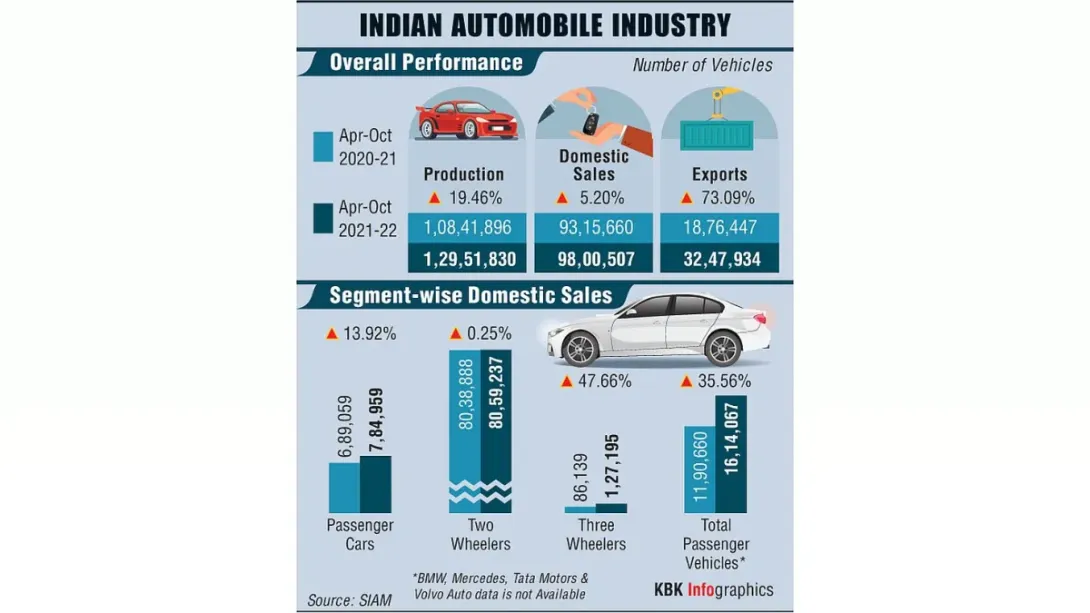
India’s automotive export sector demonstrated remarkable resilience in the second quarter of 2025, with exports rising 26% year-on-year, according to the Society of Indian Automobile Manufacturers (SIAM). This growth reflects sustained global demand for Indian vehicles, driven by competitive pricing, robust manufacturing quality, and diversified product offerings across passenger, commercial, and two-wheeler segments. The surge also underscores the effectiveness of export-focused policies, strategic partnerships, and incremental adoption of electric and hybrid vehicles. Industry analysts view the Q2 performance as a positive signal for manufacturers, port authorities, and ancillary suppliers, emphasizing India’s growing prominence as a reliable player in global automotive markets.
Q2 Export Performance
Data from SIAM reveals that India’s automobile exports reached over Rs. 1.15 lakh crore in Q2 2025, representing a 26% increase from the corresponding period in 2024. Passenger vehicles, two-wheelers, and commercial vehicles all contributed to this surge, with two-wheelers remaining the largest export segment. Notably, electric and hybrid vehicle shipments accounted for a growing share, reflecting India’s strategic pivot toward sustainable mobility.
Segment-Wise Insights
- Passenger Vehicles: Rising international demand, especially from Europe and the Middle East, drove exports up by 22% year-on-year.
- Two-Wheelers: Strong demand in Southeast Asia and African markets contributed to a 28% increase in shipments.
- Commercial Vehicles: Export volumes grew 19%, aided by infrastructure investments and construction projects overseas.
- Electric and Hybrid Vehicles: EV exports doubled compared to Q2 2024, showcasing India’s emerging role in the global clean mobility supply chain.
Key Drivers of Growth
Several factors underpinned India’s auto export momentum:
- Global Competitiveness: Indian manufacturers leverage cost efficiency, quality assurance, and design adaptability to capture international markets.
- Policy Support: Incentives such as the Automotive Industry Development Scheme and Production-Linked Incentives have strengthened manufacturing capabilities.
- Diversified Market Reach: Expanding into new geographies has reduced reliance on traditional markets and mitigated regional risks.
- Technology Integration: Adoption of electric powertrains, advanced telematics, and enhanced safety features has increased global appeal.
Implications for the Industry
The sustained growth in auto exports supports revenue generation, employment, and foreign exchange inflows. It also enhances India’s positioning as a global manufacturing hub, strengthening investor confidence. Ancillary suppliers, logistics providers, and port operations benefit from the increased volume, creating a multiplier effect across the economy. Analysts anticipate that continued government support, combined with technological innovation, will accelerate export growth in the coming quarters.
Conclusion
India’s 26% growth in automobile exports in Q2 2025 reflects both the resilience and competitiveness of the sector in a challenging global environment. With strong demand across passenger, two-wheeler, and commercial segments, and a growing emphasis on electric mobility, India is cementing its role as a key player in international automotive markets. Sustained policy support, technological upgrades, and strategic diversification are likely to further enhance the country’s export trajectory in the near future.
Comments