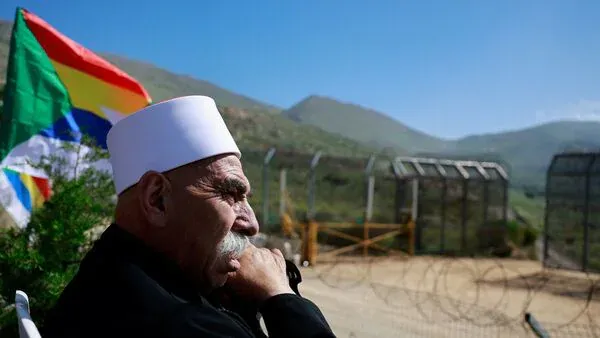
In a move signaling temporary de-escalation, Israel and Syria have reportedly agreed to a ceasefire following days of intensifying hostilities rooted in local sectarian violence between Druze and Bedouin communities. The development comes shortly after Israeli airstrikes hit key sites in Damascus, raising questions about Tel Aviv’s strategic calculus. While the United States has confirmed the ceasefire, the broader regional implications remain uncertain. The recent military exchange reflects the volatile interplay between internal ethnic tensions and larger geopolitical fault lines that continue to destabilize the Levant.
---
The Sectarian Trigger: Druze-Bedouin Clashes
Recent days have seen a surge in ethnic violence within southern Syria, particularly in the province of Suwayda, home to a large Druze population. Long marginalized and often caught between the Syrian regime and opposition forces, the Druze community has historically maintained a neutral or locally defensive stance. However, rising tensions with Bedouin groups—some of whom are alleged to have links with external militias—escalated into open violence, prompting Syrian government forces to intervene.
The local conflict has destabilized areas near the Israeli-controlled Golan Heights, increasing security concerns in Israel. Jerusalem has long viewed instability near its northern borders as a strategic red flag, especially when it involves actors linked to Iran or Hezbollah.
---
Israeli Airstrikes: Strategic Messaging or Preemptive Defense?
Against this backdrop, Israel launched a series of airstrikes on Damascus, targeting what it described as weapons depots and command centers tied to Iranian-backed forces. The Israeli military maintains a long-standing policy of denying Iran any permanent military foothold in Syria, viewing such encroachments as direct threats to national security.
The strikes are interpreted by analysts not merely as a reactive measure to border tensions, but as a preemptive warning against deeper Iranian entrenchment amid Syria’s internal chaos. While Damascus condemned the attack as a breach of sovereignty, Israel’s actions underscore a broader doctrine of strategic deterrence, which has shaped its military posture since the Syrian civil war began in 2011.
---
U.S. Confirmation and the Ceasefire Agreement
According to diplomatic sources, the United States played a quiet but pivotal role in brokering a limited ceasefire between Israel and Syria. The agreement is aimed at halting the immediate cycle of escalation without addressing the root causes—namely, Syria’s fragmented power dynamics and the presence of foreign militias.
Although the truce is a step toward calm, its fragility cannot be understated. With numerous actors—state and non-state—operating within Syria’s porous borders, any miscalculation could reignite tensions. For Washington, maintaining relative quiet along Israel’s northern frontier remains a strategic imperative, especially with broader Middle East flashpoints simmering, including in Lebanon, Iraq, and the Red Sea.
---
Geopolitical Implications and the Road Ahead
This latest episode reflects the precarious balance in the region, where local disputes can quickly draw in external powers with conflicting interests. The Druze-Bedouin clashes, while rooted in local grievances, risk becoming proxy battlegrounds for larger regional rivalries.
Israel’s targeted operations, though tactically successful in degrading hostile infrastructure, also risk collateral diplomatic fallout. Syria, on the other hand, continues to grapple with sovereignty challenges in its own territory, facing internal dissent, economic collapse, and competing foreign influences.
As the ceasefire takes hold, the central question remains: can localized truces hold in a region where political fragmentation and foreign entanglements fuel perpetual instability? While diplomacy may offer temporary relief, without a long-term roadmap addressing both sectarian grievances and foreign interference, the risk of renewed conflict lingers just beneath the surface.
---
Conclusion:
The Israel-Syria ceasefire may have stopped the bleeding—at least for now—but the deeper wounds of mistrust, militia politics, and strategic rivalry remain. With each airstrike and retaliation, the stakes of regional instability grow sharper. And unless there’s a shift from tactical containment to durable political resolution, the quiet might only be the calm before another regional storm.
Comments