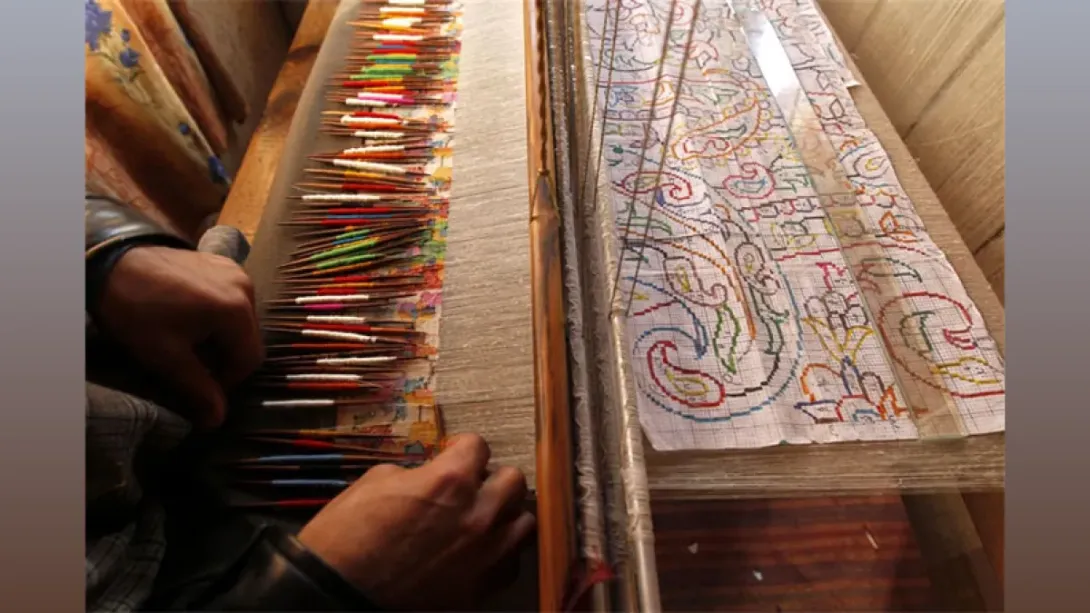
Kashmir’s celebrated handicraft sector has crossed the Rs. 300 crore mark in exports, marking a significant resurgence in global demand for traditional, handmade goods from the region. This export milestone reflects the growing appreciation for sustainable and ethically crafted products across international markets, especially in Europe, the Middle East, and North America. Anchored by artisanal excellence in carpets, pashmina shawls, papier-mâché, and walnut woodwork, the sector's revival is powered by increased digital outreach, targeted trade facilitation policies, and the unrelenting skill of Kashmir’s craftspeople. The achievement signals new commercial horizons for a culturally rich yet economically fragile region.
---
Heritage Meets Global Demand
Kashmir’s handicrafts are not merely commodities—they are living artifacts of a cultural legacy spanning centuries. From the intricate knots of handwoven carpets to the delicate threads of pure pashmina, each product is an emblem of time-honored artistry. The recent surge in exports, exceeding Rs. 300 crore, showcases the enduring appeal of craftsmanship amid a global wave of mass-produced goods.
Key markets include the United States, United Arab Emirates, Germany, and Japan, where discerning consumers have shown increased interest in eco-conscious and culturally rooted luxury items. As global buyers shift toward sustainability and provenance, Kashmir’s handcrafted exports are finding their niche.
---
Policy Push and Institutional Support
The jump in export figures is not an isolated phenomenon. It is backed by a series of policy interventions, infrastructure upgrades, and trade facilitation efforts. Government-backed exhibitions, international trade fairs, and the simplification of customs documentation have played a pivotal role in connecting artisans with foreign buyers.
Moreover, targeted skill development initiatives and subsidies under schemes such as the Export Promotion Capital Goods (EPCG) and Interest Equalization Scheme (IES) have empowered small-scale artisans and exporters to expand their international footprint. The Union Territory’s administration has also strengthened its logistical corridors to reduce export lead times, thus improving competitiveness.
---
Digital Commerce: A Game-Changer for Artisans
The digital transformation has emerged as a key enabler of Kashmir’s export growth. Online platforms—both government-facilitated and independent marketplaces—have allowed artisans and cooperatives to showcase their products globally without the traditional reliance on intermediaries.
Social media, e-commerce integrations, and virtual showrooms have helped bridge the urban-rural divide, giving even remote artisans access to global visibility. The shift toward digital branding has not only increased revenue potential but also elevated the perceived value of handmade Kashmiri products in the global luxury and heritage markets.
---
Socioeconomic Impact on the Region
Beyond trade figures, the export boom carries meaningful implications for Kashmir’s social fabric. The revival of handicrafts is helping stabilize livelihoods, particularly in rural and conflict-sensitive districts where few alternative income streams exist. An estimated 3.5 lakh artisans—many of them women—stand to benefit directly or indirectly from the expanding market.
By preserving traditional skills and encouraging younger generations to enter the artisanal workforce, the sector is playing a quiet but profound role in economic rehabilitation and cultural continuity. Craftsmanship is not only becoming economically viable again, but it is also serving as a tool for regional identity and pride.
---
Challenges Ahead and the Road Forward
While the figures are encouraging, sustaining this momentum requires a focused and holistic strategy. Quality control, product standardization, and supply chain resilience remain areas needing attention. Artisans must also be protected from imitation goods flooding both domestic and international markets.
Industry observers suggest that long-term growth will hinge on integrating modern design sensibilities, securing geographical indication (GI) protections, and expanding capacity-building initiatives. Furthermore, creating institutional linkages between artisans and design institutes could lead to innovative product lines that align with global lifestyle trends without compromising authenticity.
---
Conclusion
The Rs. 300 crore milestone is more than just an export statistic—it is a testament to the power of tradition, resilience, and adaptive innovation. As Kashmir’s artisans step onto the global stage with their exquisite creations, the world is not just buying products; it is investing in a story of survival, creativity, and cultural inheritance. With the right support systems and sustained focus, Kashmir’s handmade legacy can evolve into a global brand synonymous with integrity, craftsmanship, and timeless beauty.
Comments