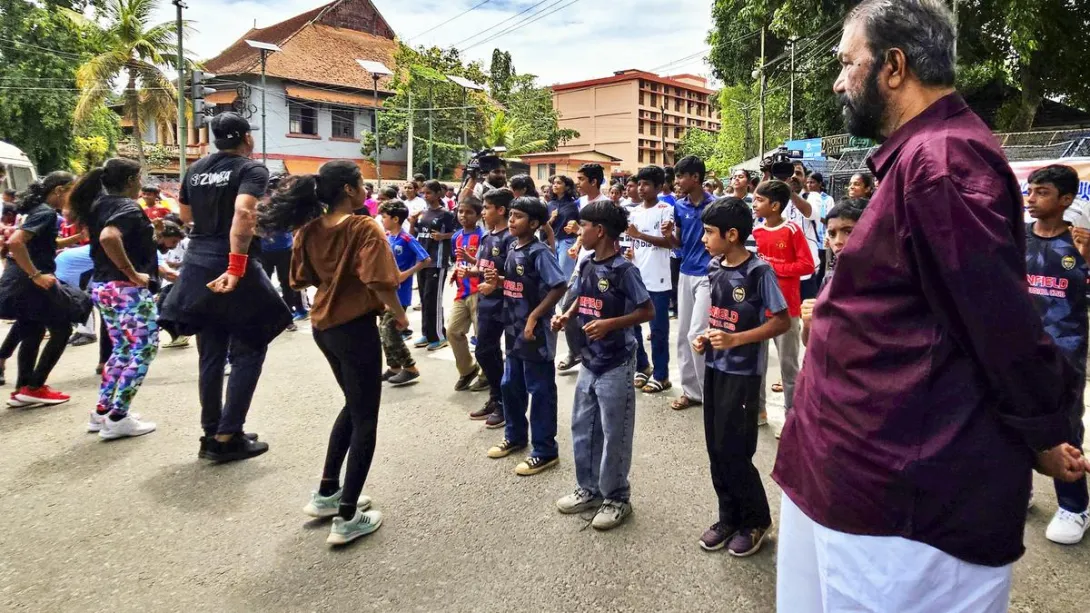
The Kerala government has reaffirmed its decision to introduce Zumba sessions in state-run schools, despite vocal opposition from certain Muslim clerics and social organizations who argue that the aerobic dance conflicts with Islamic values. While some conservative groups have equated Zumba to inappropriate dance forms, the government and supporting social organizations emphasize the health benefits and caution against escalating the dispute into a communal divide. Educational authorities stress voluntary participation, rejecting claims that attendance will impact academic evaluation, and urge society to resist attempts to politicize fitness programs through religious rhetoric.
Government’s Firm Stand on Zumba Implementation
Kerala’s General Education Minister, V. Sivankutty, publicly reiterated the state’s commitment to incorporating Zumba into school fitness curricula, highlighting its potential health benefits. Despite opposition, the administration is determined to promote aerobic exercise as a means of encouraging physical well-being among students. Sivankutty underscored that participation in Zumba classes remains voluntary and clarified that students’ attendance would not influence their academic marks or evaluations.
The minister also cautioned against the exploitation of the issue by fringe elements attempting to sow discord among communities by politicizing aspects of school schedules, holidays, and cultural activities. His statements reflect a broader effort by the Kerala government to uphold secularism and inclusivity within its educational policies.
Opposition Rooted in Religious and Cultural Concerns
The controversy originated when conservative Muslim organizations, including the Wisdom Islamic Organisation and Sunni Yuvajana Sangham (SYS), voiced their objections. Some clerics likened Zumba to immodest, DJ-style dancing that allegedly contravenes Islamic codes of conduct and undermines traditional family values.
The Muslim Students Federation (MSF) further challenged the government to substantiate claims that Zumba could effectively deter drug and alcohol abuse among youth before making the dance mandatory.
These objections reflect a broader tension between modern fitness initiatives and entrenched religious-cultural norms, highlighting challenges in policy implementation within diverse societies.
Support from Social Organizations and Political Entities
In contrast, prominent social organizations such as the Sree Narayana Dharma Paripalana Yogam (SNDP), representing Hindu backward classes, publicly endorsed the government’s initiative. SNDP general secretary Vellappally Natesan criticized the opposition, suggesting that concerns about Kerala evolving into a religious state were not entirely unfounded.
Political voices echoed these sentiments with the Akhil Bharatiya Vidyarthi Parishad (ABVP) urging the government to resist concessions to conservative Islamist factions, labeling such appeasement as politically motivated. Conversely, Bharatiya Janata Party (BJP) leader V. Muraleedharan questioned the appropriateness of integrating what he termed an “alien” exercise format into the Indian cultural context.
Meanwhile, youth organizations like the Youth Congress, Students’ Federation of India (SFI), and Democratic Youth Federation of India (DYFI) condemned attempts to impose religious considerations on art and sports, advocating for secular and inclusive educational environments.
Navigating Fitness, Culture, and Communal Harmony
The Zumba controversy in Kerala exemplifies the complexities of introducing modern fitness programs in culturally pluralistic societies. It exposes fault lines where health promotion intersects with religious sensitivities and political contestations.
While governments aim to enhance public health through innovative measures, they must navigate entrenched beliefs and community dynamics. Kerala’s approach—to maintain voluntary participation and oppose divisiveness—demonstrates an effort to balance progressive policy with social cohesion.
Conclusion: Balancing Progress with Pluralism
Kerala’s insistence on including Zumba within its school curriculum underscores a commitment to student health and modern education standards. However, the ensuing debate reveals the challenges faced when contemporary practices confront traditional mores.
Success in implementing such initiatives depends on transparent communication, community engagement, and safeguarding secular principles to prevent polarization. Ultimately, fostering an environment where cultural plurality coexists with progressive health policies remains imperative for Kerala’s educational and social landscape.
Comments